


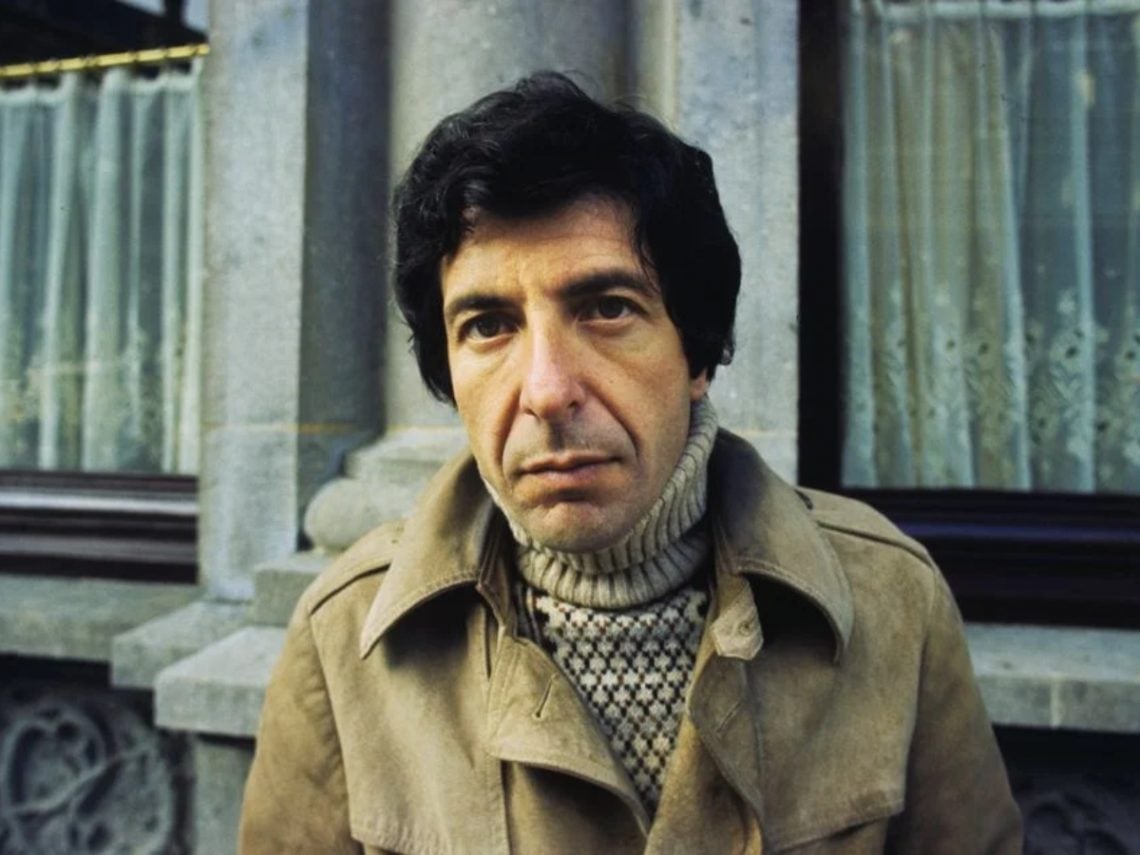
The poet who had the “greatest influence” on Leonard Cohen

Leonard Cohen once wrote, “Poetry is just the evidence of life. If your life is burning well, poetry is just the ash”. If that is true, few lives have burned as bright as Cohen’s, and few others have generated so much poetic ash.
Cohen was a poet first and a musician second. After spending the 1950s and most of the 1960s writing as a poet and novelist, he only expanded his writing into lyrics in 1967. Making his debut with the dense album Songs of Leonard Cohen, the Canadian singer-songwriter found that his talent for language lent itself to folk.
His second record, Songs from a Room, scaled down the accompanying instrumentation and placed Cohen’s poetry at the forefront. As his music career developed, he delved into genres like jazz and synth, but lyricism always remained his strong point. Jumping head first into weighty themes of love, loss, religion, life, death and everything in between, his background in poetry bestowed him with an unmatched lyrical prowess.
Cohen’s writing was so prolific and affecting, throughout his poetry and his songwriting, that he has retained an influence on generations of poets and artists that followed. From Julia Jacklin to Nick Cave, his emotive, eloquent lyricism inspired many.
Cohen himself cited Spanish poet Federico García Lorca as the most influential figure in his own love for poetry. A member of the Generation of ‘27, an important group of Spanish poets in the 1920s, García Lorca penned poems about identity, sexuality, love, death, and more, with all the weight and dramatics of Cohen’s own style.
He began reading García Lorca’s work at just fifteen years old and found that his poems had perhaps the “greatest influence” on his own texts. Cohen recalled: “He summoned up a world where I felt at home. His images were sensual and mysterious: ‘throw a fist full of ants to the sun.’ I wanted to be able to write something like that as well.”
It’s a description that could now easily be applied to Cohen’s own output – sensual, mysterious, homely. The folk singer-songwriter was able to portray the entire spectrum of human emotion throughout his writings, musical and non-musical, and he certainly achieved his goal of emulating the affecting impact García Lorca had on him.
Cohen once paid tribute to his greatest influence, as he recalls, “A few years ago I wrote a musical adaptation for Lorca’s ‘Little Viennese Waltz.’ Then I noticed what a complex writer he was: it took me more than a hundred hours just to translate the poem. Lorca is one of those rare poets with whom you can stay in love for life.”
Like García Lorca, Cohen has become one of those rare poets with whom you can stay in love for life, too.
