


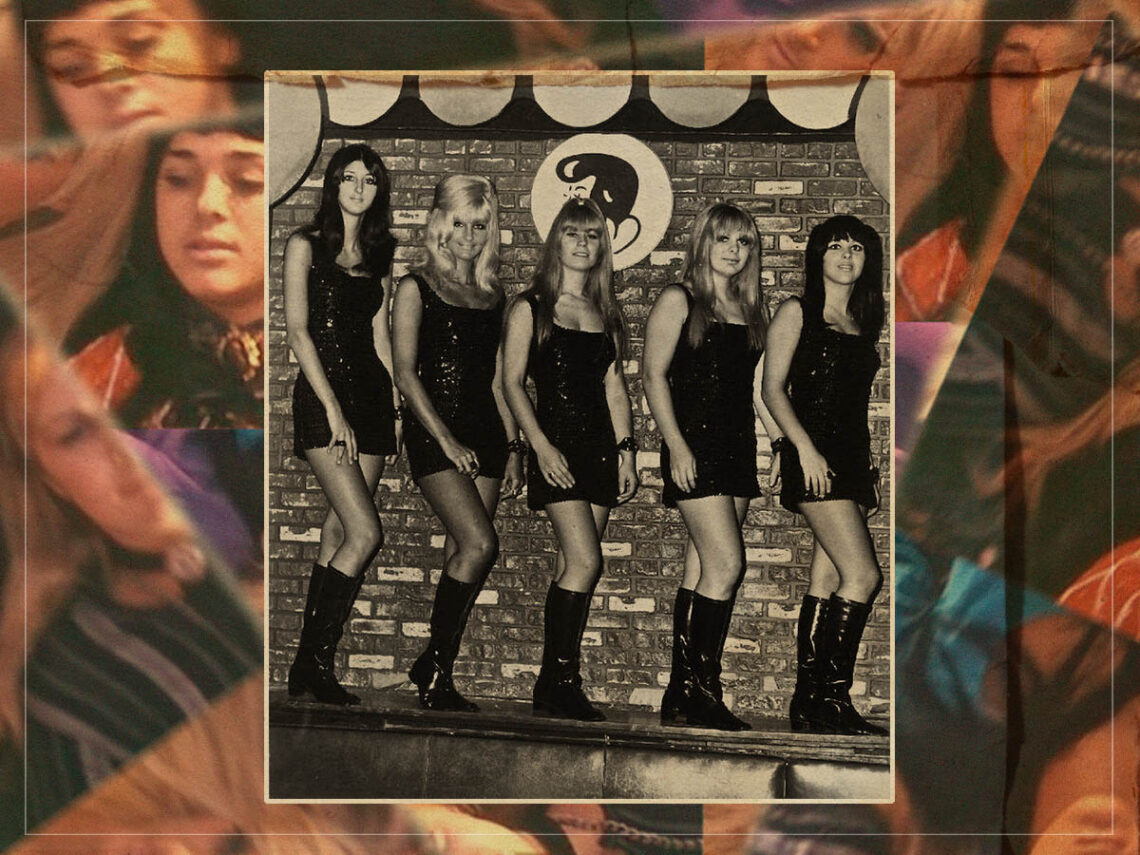
The Pleasure Seekers: the all-female garage rockers who gave the world Suzi Quatro

A rock revolution bedecked in leather and with a fiery attitude, few rock stars of the 1970s had quite the same impact as that of Suzi Quatro. One of the very few female figures to make a name for themselves in the landscape of hard rock, Quatro’s intense level of success and musical skill made her a pioneering figure, blazing a trail for countless future generations of women in rock. Like virtually every cultural revolution, the rock star’s career has always been rooted in grassroots expression, alongside the rich landscape of garage rock.
Garage rock emerged from the college towns of North America during the mid-1960s, and saw an unimaginable quantity of independent, grassroots groups begin to strip rock and roll back to its purest essence. Typically built around simplistic lyrics and basic chord structures, the broad appeal of garage rock was in its simplicity and its universal nature. In direct opposition to the unattainable heights of mainstream rock and the pop charts, anybody could start a garage rock group.
Despite this, the bulk of the garage rock scene–or, at least, the majority of groups who achieved widespread attention–were male-dominated, making The Pleasure Seekers something of an outlier. Formed in 1964 in the garage rock haven of Detroit, Michigan, The Pleasure Seekers were an all-female outfit, masterminded by a 17-year-old Patti Quatro and her 15-year-old sister, Suzi. A truly original outfit within the garage rock scene, The Pleasure Seekers were noted, not just for their gender, but also for their intense energy and raw power.
It was in 1966 that the Pleasure Seekers unveiled their debut single, ‘Never Thought You’d Leave Me’, but it was the B-side, ‘What A Way To Die’, that best encapsulated the appeal of the garage group. Built around the central lyric of “I may not live past 21, but woo, what a way do die”, the track was ahead of its time in reflecting a ‘live fast, die young’ attitude which went on to become iconic of the wider rock and roll landscape.
Although that debut single, released on Hideout Records, did not break The Pleasure Seekers into the musical mainstream, it did enough to court the attention of major record labels. So, in 1968, the band became one of the very first all-female groups to sign for a major label, Mercury, and their follow-up single ‘Light Of Love’ followed soon thereafter.
By this time, during the late 1960s, the garage rock sound had largely fallen out of favour with artists and audiences alike. The Pleasure Seekers, however, already had the foresight to diversify their sound, incorporating a vast range of influences, including the likes of Motown-infused R&B and the psychedelic mastery of The Beatles’ Sgt. Pepper era. What’s more, the allure of hippie-age psychedelia and hard rock was slowly creeping into the band’s repertoire.
These hard rock leanings eventually led to a complete rebrand for The Pleasure Seekers, who were rechristened Cradle in 1969. Throughout the band’s existence, the core of the group was always sisters Suzi and Patti Quatro, but that all changed in 1971 when Suzi Quatro was recruited by Mickie Most and RAK Records. Quatro’s solo career began there and then, and led her to relocate to the UK without her sister, or Cradle.
Quatro might have moved on to bigger and better things from her teenage years in The Pleasure Seekers, but those experiences were utterly invaluable for her later success as a solo artist. Not only did the garage group provide the musician with a wealth of experience as a rock and roll performer, but it also exemplified the power of grassroots rock innovation, which continued into Quatro’s iconic solo career during the 1970s.
