


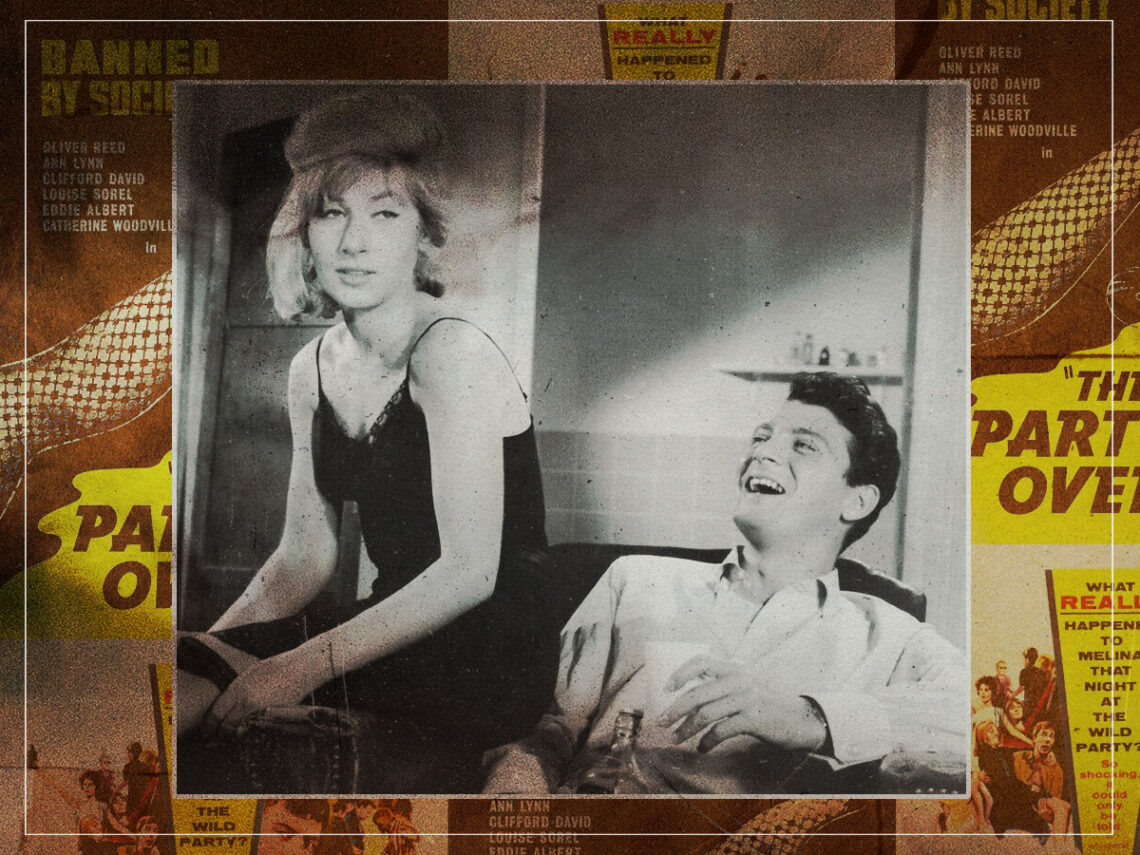
‘The Party’s Over’: a 1960s vehicle for British revelry and Oliver Reed

British cinema in the 1960s was incredibly exciting. It reflected the changes in society that were emerging as a result of increased awareness surrounding women’s rights, Black civil rights, nuclear disarmament and many other socio-political issues. These feelings of progressiveness were felt in much of the art, fashion and music of the time, which mirrored a more sexually liberated and independent class of young people who were ready to ditch the traditionalism of their parents’ generation.
Many men weren’t afraid to incorporate more stereotypically feminine prints and designs into their outfits, as demonstrated by key musical figures of the period, like Jimi Hendrix, who spent a lot of time in London. Mary Quant’s invention of the mini-skirt also revolutionised women’s fashion. Women started to wear outfits that were considerably more playful and, at times, revealing. Meanwhile, artists like The Beatles, The Rolling Stones, and their rock and roll contemporaries invited the new generation to get lost in their riffs and rhythms, helping to soundtrack a decade of prosperity and cultural development.
Many films from this period captured the swinging sixties, often depicting characters as they found themselves initiated into a world of partying, dancing, drinking, taking drugs, having casual sex and discovering new music and clothes. For example, Joanna follows a naive girl who enters into an opulent lifestyle in ‘60s London, The Pleasure Girls depicts the ups and downs of a group of 20-something-year-old women in the big city, and Darling chronicles one woman’s journey into the more ‘high-class’ side of the era.
Then there was The Party’s Over by Guy Hamilton, who also directed several early James Bond films. It follows an American woman, Melina, who gets herself involved with a group of British beatniks who have a hippie-like sensibility that entices her. While beatniks slowly faded out in the ‘60s, the film offers up a fascinating time capsule of an era where youth culture was starting to become more prominent and young people were becoming less entwined with their parents’ modes of thinking.
Opening with a group of hungover young men and women, the film depicts alcohol-fuelled gatherings that look like good fun—the kind that makes you wish you’d grown up then, witnessing the birth of a new counterculture in real time—but Hamilton soon suggests that acting too recklessly can result in tragedy.
Although the swinging sixties weren’t in full swing at this point, these early rumblings of the decade’s momentous cultural leap are on glorious display here. It’s a fun drama tinged with thriller aspects as themes such as death (and even a scene hinting at necrophilia) sit in tandem with John Barry’s fantastic score, amazing outfits, and extravagant parties.
Starring Louise Sorel as Melina and Oliver Reed as Moise, the film was not particularly well-received. Because of the implied necrophilia, the BBFC called for extensive editing before it could be released. After two years, the movie hit screens, but Hamilton was not happy with his work being tampered with. He removed his name from the credits as a result, but his work on James Bond soon came to overshadow The Party’s Over anyway.
Now, however, it is considered an underrated gem of British cinema – the perfect encapsulation of a time of immense change.
