


‘The Other Side of the Underneath’: Jane Arden’s radical British feminist horror

Despite the women’s rights movements of the 1960s and ‘70s ushering in second-wave feminism, female filmmakers were still few and far between. In Britain, just one film was released with its sole directorial credit attributed to a woman during the ’70s: Jane Arden’s The Other Side of the Underneath.
Released in 1972, not only is The Other Side of the Underneath a feat of feminist filmmaking, but it is also a highly influential work of experimental cinema, blurring the lines between psychological drama and outright horror. The best way to describe the film would be disorientating, consisting of two hours of surreal visuals designed to convey one woman’s experience with schizophrenia.
Arden, who began her career in the late 1940s, starred in and wrote work for the stage and screen. She worked with some successful figures, such as Charles Laughton, Richard Lester and Harold Pinter, before her interests shifted into increasingly radical territory. Soon, Arden began penning pieces of experimental theatre as well as writing the avant-garde film Separation, directed by Jack Bond.
The highly influential play Vagina Rex and the Gas Oven also came from Arden’s endlessly imaginative and boundary-pushing mind, as did A New Communion for Freaks, Prophets and Witches. It was this play that Arden decided to adapt for the big screen, resulting in The Other Side of the Underneath, which starred Sheila Allen, Penny Slinger and Liz Danciger. For many viewers, the arresting film is hard to watch, mainly due to its relentlessness.
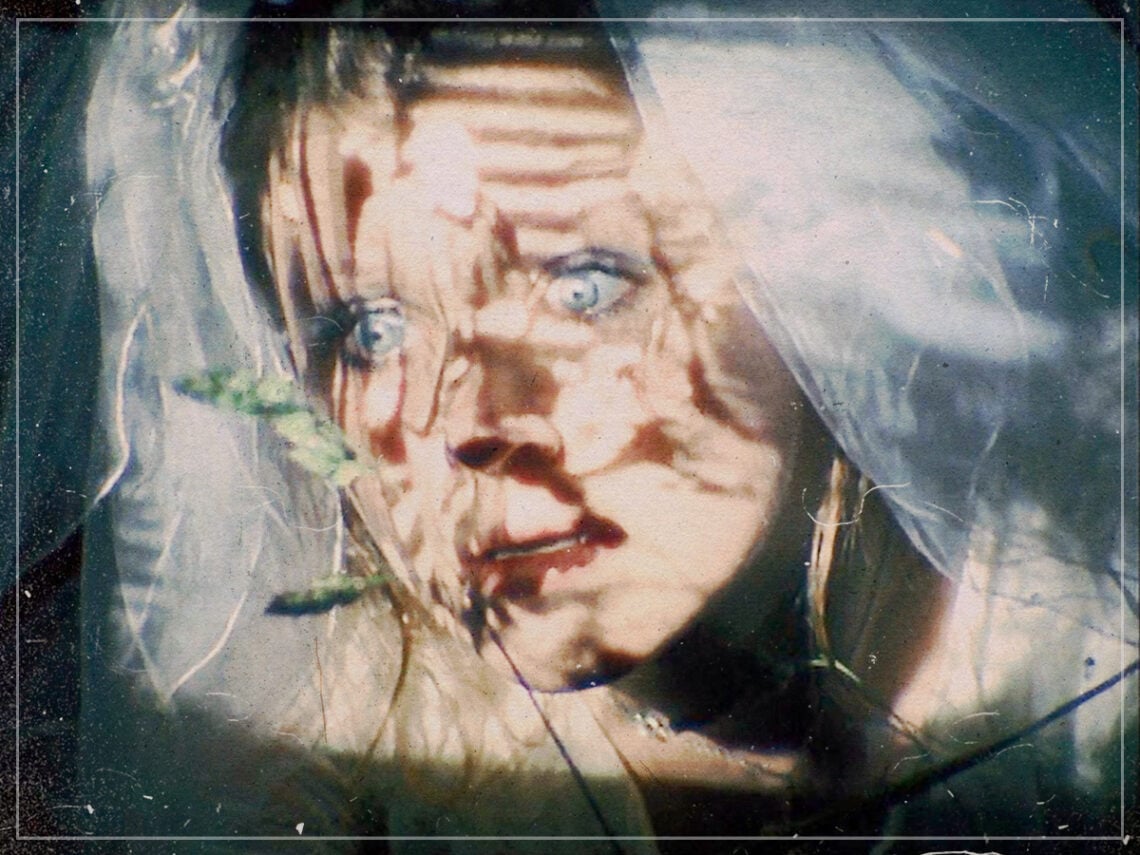
Arden presents us with the intense truth of facing a severe mental illness. In contrast to many polished and even romanticised Hollywood depictions of mental illness, Arden presents an honest depiction with no holds barred. The hallucinatory nature of the images projected in front of us, often shot through confronting close-ups or unconventional angles, reflects the character’s instability, so much so that the audience might feel uneasy themselves. By using avant-garde filming and editing techniques, Arden is able to communicate the experiences of extreme mental illness with a sense of visceral urgency.
In one intense scene, a woman wearing a bald cap and a long, red, fake nose appears through the window, tormenting another character as she lies in bed. Forcing a pair of false teeth into her face, the sound design is heightened alongside an unnerving cello-based score provided by Sally Minford. The camera often situates itself close to the characters as though we’re right there with them, either aligning us with the source of danger or facing it head-on.
Thus, by placing the viewer on both sides – the outside and the inside – Arden highlights that we (society) have a part to play in the perpetuation of certain mental health issues through the presence of taboos, stigma and the restrictive nature of social structures, which are all inherently patriarchal. By allowing different perspectives to merge, Arden creates a nightmarish concoction of causes and effects which convey just how damaging oppressive societal frameworks can be.
Through The Other Side of the Underneath, Arden suggests that we must experience rebirth to move forward, which is reflected in a bizarre funeral scene in which our protagonist wears a wedding dress as she is buried in a coffin. The film’s main priority is provoking intense feelings – a sensorial reaction to the lucid images presented to us – rather than giving us a strong, definable narrative.
That’s not to say that Arden relies on shock as a cheap trick to stun the audience. Every depiction of violence and sexuality is intrinsic to Arden’s exploration of womanhood and mental illness. Women are allowed to appear unhinged, aggressive, naked and even depraved – Arden gives her actors the chance to release everything that patriarchy has told them to suppress or has co-opted for its own gain.
The production of the film was rather turbulent, with Arden drinking heavily on set while the cast and crew indulged in hallucinogenic drugs to get themselves into an altered headspace. As a result, some of the people involved in the film’s creation were emotionally exhausted due to the intensity of its content, which was exacerbated when experienced during a psychedelic state.
Despite the claustrophobic nature of the movie, The Other Side of the Underneath is a vital piece of experimental cinema which relies on vivid, harrowing imagery to communicate themes that have rarely been explored to such potent effect in cinema.
