


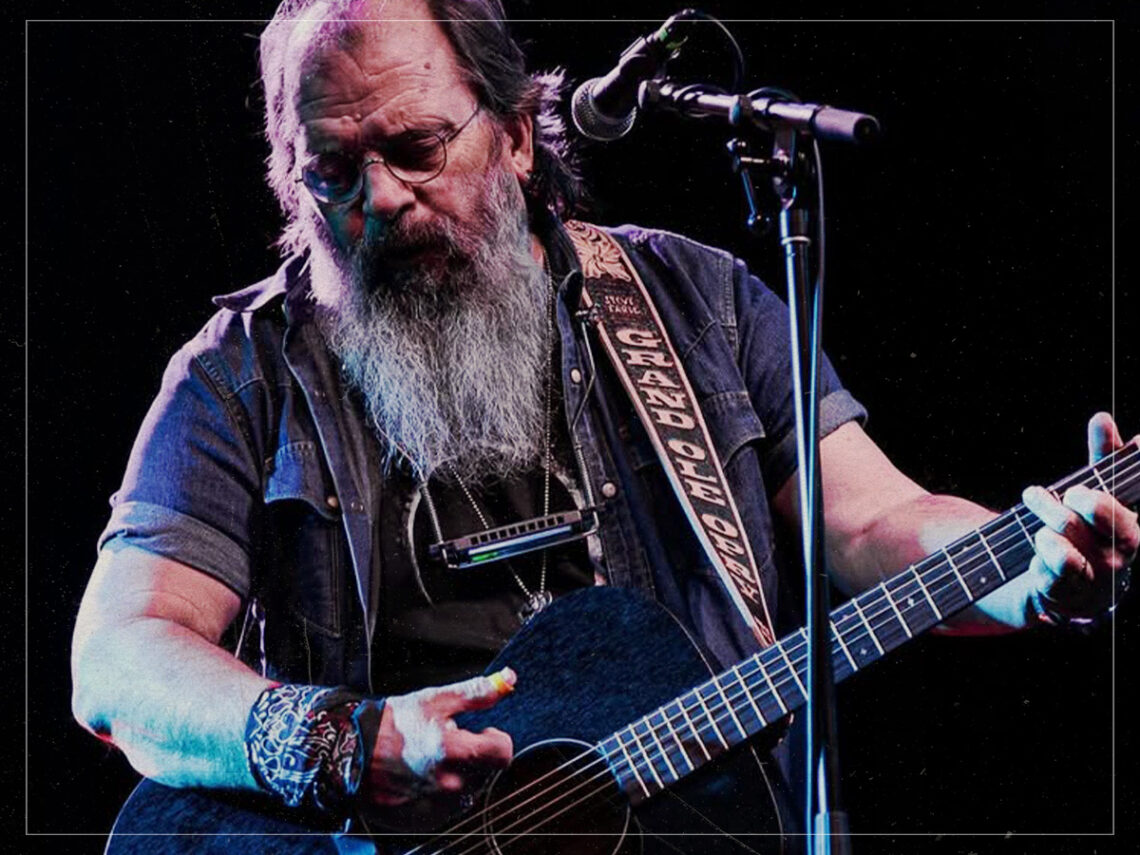
The three musicians Steve Earle thought were textbook geniuses: “I don’t think John Lennon was a genius”

It’s very easy to say that genius is an overused word, particularly when it comes to four-chord pop, but then you listen to something like ‘Like a Rolling Stone’ and it becomes impossible to find anything more apt. The Bob Dylan classic is hardly unfathomably complex or indicative of unmatchable skill, but still, it seizes significance untold in a matter of euphoric minutes.
This is a conundrum that Steve Earle has endlessly studied.
Not only is Earle a multi-Grammy-winning artist, but now he even teaches the art of songwriting. Along the way, he has studied the great and the good in the annals of musical history and applied a textbook definition of what constitutes a musical genius. And there aren’t that many of them around.
Speaking to Rock Cellar, he defined the term as thus: “Here’s what genius really means, if you look it up in a dictionary: A genius is someone who does something at a level that elevates it to a level that it’s never existed on before.”
These first-rate pioneers of elevated originality are rarities, but he thinks three aptly define the term, continuing, “So Jimi Hendrix was a genius. Dylan. Thelonious Monk.”
Those three luminaries seemed to stretch their field. Hendrix could do things seamlessly on the guitar that nobody had even thought of, giving a vocabulary to psychedelic guitar playing. Bob Dylan brought a new combination of literary depth, societal sagacity, and quipping coolness to simple pop that had never been combined in such a hip way before. And then Thelonious Monk left his jazz peers so puzzled by his oddly minimalist yet complex playing that they used to watch him play and secretly scribble notes down on the inside of their shirt cuffs.

But mostly, when you listen to their work still today, even after legions of imitators and people who have run with their influence, that genius still leaps forth with all the subtlety of a policeman’s knock. Ironically, you don’t have to intellectualise or study history to know it’s a work of rare genius, but Earle claims that isn’t always the case with some of the other icons frequently graced with the G word.
“Brian Wilson’s closer on his own [to being a genius] than any of the Beatles are individually,” Earle opines, “But I still don’t think Brian was a genius. I think he was elevating rock music by using ideas that could have been applied to classical music. So he had an almost genius grasp of harmony – and I’m not talking about the singing – I’m talking about harmony in terms of musical theory. He was inventing chords! So he was a visionary, certainly.”
However, maybe when you listen to ‘Barbara Ann’ you appreciate the pleasantry and invention, but it doesn’t quite grab your lapels and dumbfound you. That might be the case with ‘God Only Knows’, but perhaps one of the more anal criteria on the genius checklist is consistency?
Also on Earle’s checklist is a notion of something unknown. “Nobody knows why [Dylan] is a genius,” he says. While he believes that Cole Porter before him was perhaps the most consummate and maybe even greatest songwriter, his literary chops were self-evident, yet Dylan’s talents were mingled with myth.
This is also why Earle questions John Lennon. Maybe the Beatle was tryinng a little hard to assert himself in this echelon of artistry and it showed in his work. “There was a lot of guilt in Lennon, I think, about being a pop star instead of an artist,” Earle opines. And while he certainly thinks Lennon’s talents were astounding, that asterisk of uncertainty led him to conclude, “I don’t think John Lennon was a genius”.

Never Miss A Tale
The Far Out Bob Dylan Newsletter
All the latest stories about Bob Dylan from the independent voice of culture.
Straight to your inbox.