


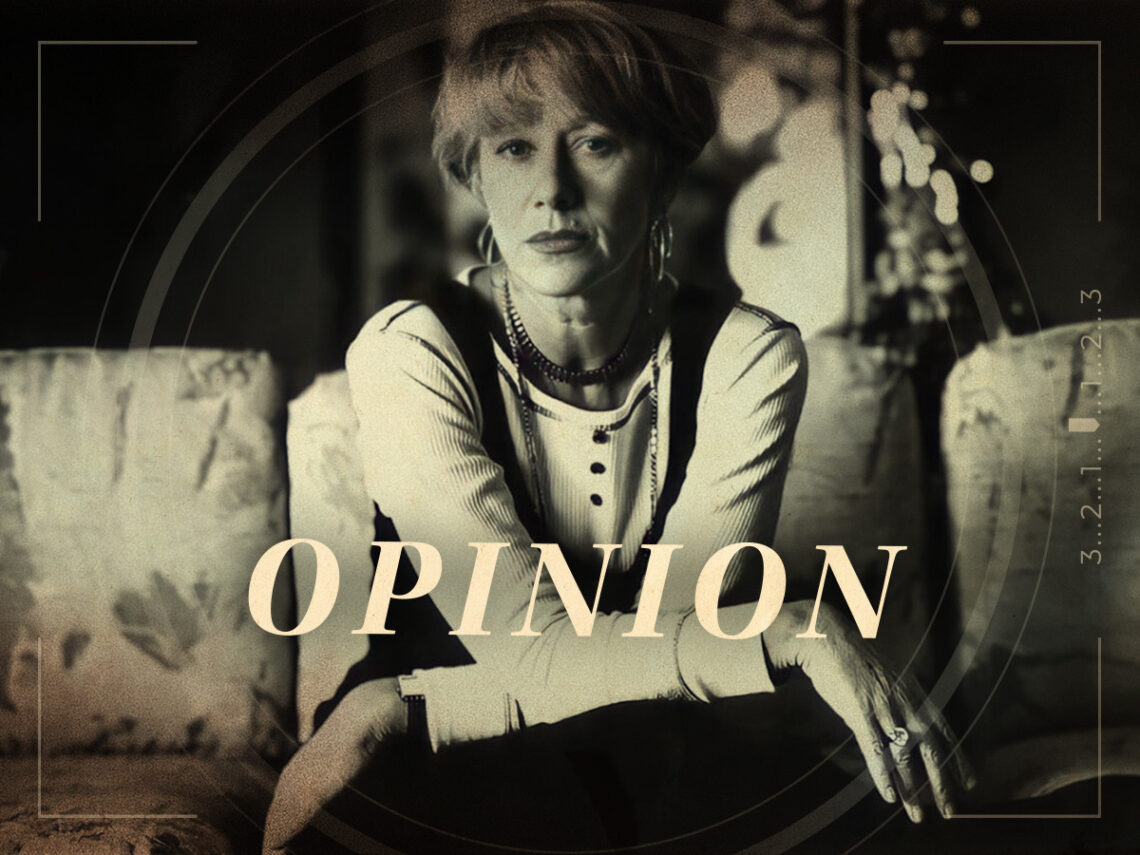
Helen Mirren’s dated perspective on female audiences: “It’s not the world of art”

Despite being mocked and dismissed by the majority of audiences, chick flicks have continued to hold huge appeal and successfully outperform other genres at the box office. From the sweeping success of films like 10 Things I Hate About You, Notting Hill and When Harry Met Sally, the romance genre is always looked down upon as being a lesser form of entertainment and something that holds less artistic value, with love somehow being less respected experience to explore within the medium.
While some audiences are praised and taken seriously for their interest in action movies and thrillers, women have historically been mocked for their taste in film, with anything made for female audiences immediately being relegated to the ‘chick flick’ category and seen as unimportant and frivolous entertainment, purely because of the fact that it revolves around women’s stories.
In recent years, filmmakers have attempted to redefine the limiting expectations associated with the genre, with groundbreaking television shows like Big Little Lies and films like Wild, 20th Century Women, Dirty Dancing and An Unmarried Woman, showcasing the power of women’s stories and how important it is to see the full range of our experiences on screen.
Dirty Dancing may be a romantic drama, or what people would call a ‘chick flick’, but it is also an insightful commentary on classism and elitism, with a central thread revolving around abortion rights. People are quick to dismiss it as containing no substance, but it contains more substance than any of the male ‘chick flick’ equivalents that just show men in suits blowing up cars (presumably with no abortion subplots).
But while I will remain impassioned in my defence of the genre, Helen Mirren is, unfortunately, another person to be brainwashed into thinking that stories about women contain no value and should be referred to with this degrading nickname. The actor initially discussed the clash between art and commercial films, saying, “It’s the film industry in America. It’s not the film art. It’s not the world of art. It can be very artistic. But a film, unlike a painting, or even a piece of music, certainly a novel, is an incredibly expensive thing to produce. And they know that the people that drive cinema-going are young men and their girlfriends. But it’s the young men who choose the movie. Girls go out together to see a chick flick or something. I loathe, I hate, chick flicks.”
It goes without saying that I—along with countless others watching—was shocked by Mirren’s reductive and offensive perspective on the subject, suggesting that women simply adopt the tastes of their partners and have no opinions of their own, merely being dragged to the cinema without a thought or preference.
Of course, with this, she seems to genuinely believe that women only enjoy silly or inconsequential entertainment, claiming that we can only enjoy chick flicks, which everyone knows is a coded way of saying a stupid film with no intellectual value. It is upsetting to hear a woman speak in this way, and it seems as though Mirren has fallen victim to these ideas in thinking that the majority of women cannot appreciate anything with substance or depth.
Unfortunately, female audiences have been continuously mocked and criticised for this very stereotype, despite the fact that cinema lovers of all genders will consume both forms of entertainment, whether it be light-hearted escapism or intellectual enrichment. But for some reason, this is only ever used to indict female audiences, with ‘chick flicks’ forever being seen as the hailing argument to dismiss women and belittle their intelligence, an idea that Mirren has sadly allowed herself to be indoctrinated by, having no faith in female audiences and the value they bring to cinema.
