


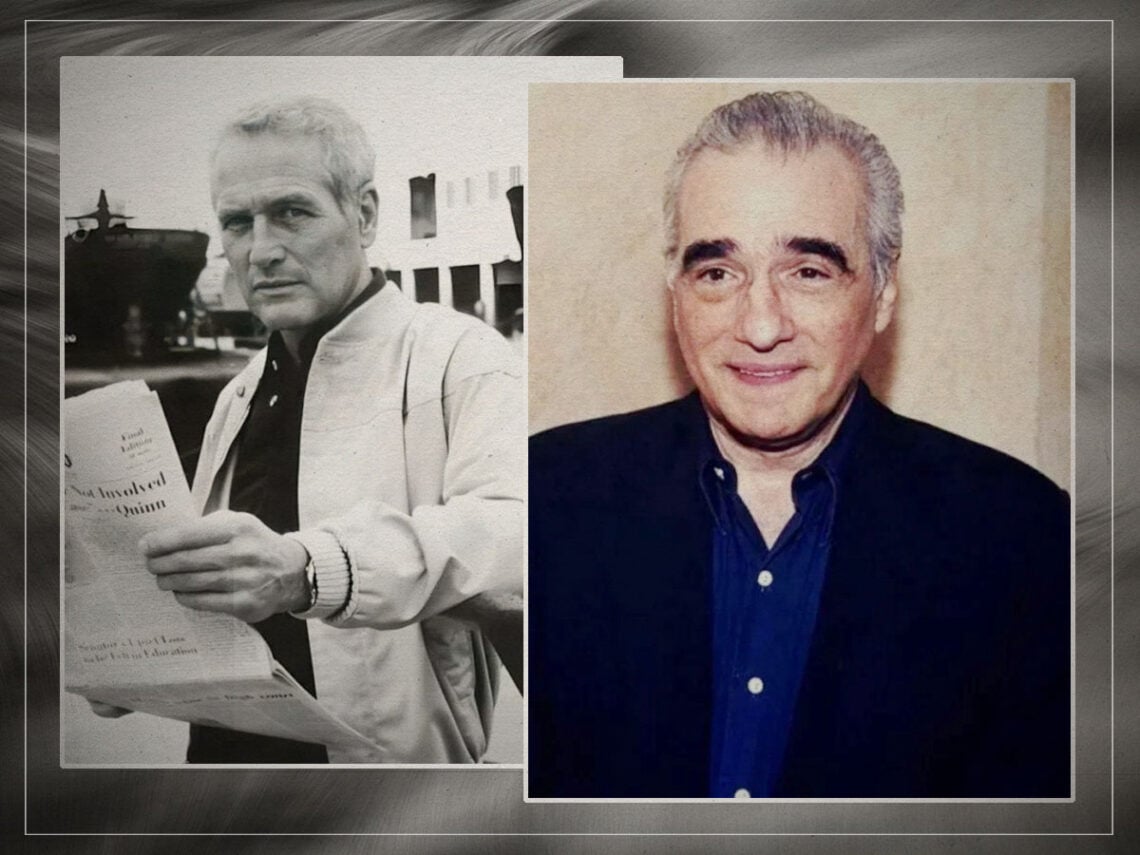
The one thing Paul Newman admired most about Martin Scorsese: “Most directors can’t”

Paul Newman was about as big of a movie star as it’s possible to be. He could pick and choose any project he wanted, and he turned down quite a few. In fact, he was the first choice for many projects, including Dirty Harry and The French Connection, which turned into career-defining jobs for Clint Eastwood and Gene Hackman, respectively. Newman’s career never seemed to suffer from the films he turned down. The Hustler, Cool Hand Luke, and Butch Cassidy and the Sundance Kid were all he needed to solidify his legacy, but he kept working right up until his death in 2008.
Throughout his career, he worked with everyone from Richard Brooks and Sidney Lumet to Robert Altman and Sam Mendes. Late in his career, he worked with a filmmaker who was nearly two decades younger than him but who had already proven himself to be one of the greatest directors Hollywood had ever produced. Martin Scorsese directed Newman in The Color of Money, the 1986 follow-up to the 1961 pool drama The Hustler. The actor reprised his role as ‘Fast’ Eddie Felson in the film, while Tom Cruise co-starred as his young protegee.
Although Newman was over 60 at the time the film came out, he hadn’t gotten crotchety and high-and-mighty the way other actors of his age and calibre might with a younger director. He admired Scorsese’s work and respected how he handled a set. In Robert J Emery’s book The Directors: Take Three, Newman is quoted as saying that the Raging Bulldirector had a unique ability to guide his actors through their roles when necessary.
“He lets you find your own way,” Newman said, “But the marvellous thing about him—which most directors can’t do—is that if you get in trouble, and you come to the director and say ‘I’m in trouble,’ the director sure as hell better know how to get you out of it. That’s what he can do.”
This was no small comment from Newman. Many of his directors pointed out that he tended to ask a lot of questions about his characters and their motivations. He came up in the Actor’s Studio in New York, where knowing a character inside and out was one of the key parts of the craft. This would not have gone down well with directors like Clint Eastwood, who is known for blitzing through scenes with little to no discussion, but Scorsese clearly had the perfect balance between letting his actors find their performances on their own, and helping them work through their questions whenever they arose.
The Color of Money was neither Newman nor Scorsese’s greatest film (though Newman did win a long-overdue Oscar for it), but they seemed to have been on the same wavelength professionally. When the actor passed away, Scorsese said that the history of cinema was “unthinkable” without him.
“My own experience working with him on The Color of Money was a joy,” the director added, “And my memories of our time together are precious.”
