


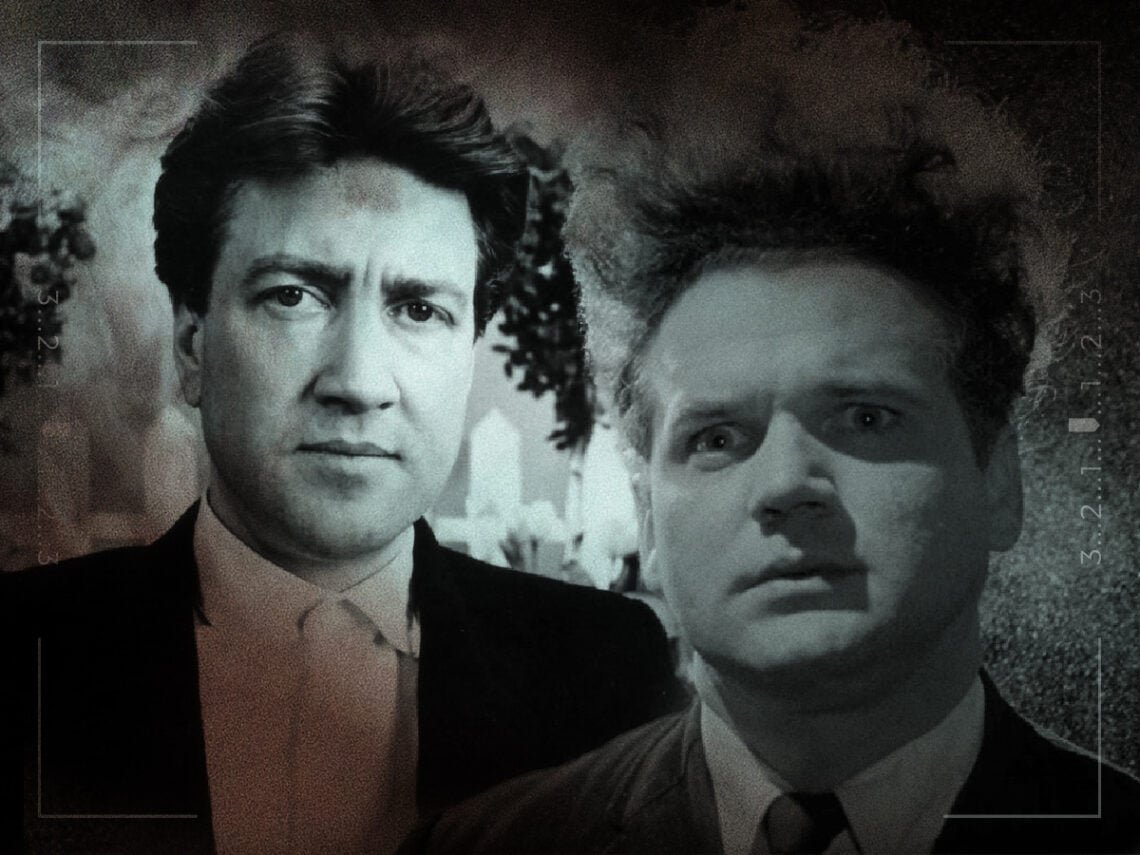
The one thing ‘Eraserhead’ definitely isn’t about, according to David Lynch: “No way”

One of cinema’s enduring mysteries is this: what on earth is David Lynch’s Eraserhead actually about?
Really, the question can be copied and pasted across each and every one of Lynch’s projects. Twin Peaks starts off simple enough as a murder mystery, but then descends into some unknown and confusing chaos. Blue Velvet verges on a crime movie, but again, it is littered with weird little details that throw the genre off. Even Wild At Heart comes close to being a Bonnie and Clyde-style romance, but with Lynch’s visions, it’s never that simple.
That’s what makes him such a love or hate figure. When it comes to the movie-lovers crowd, it tends to split into two. There are the Lynch fanatics, and then there are those who guiltily admit that they don’t really like his work, mostly because of a shy and sheepish confession that they don’t get it. But is there anything to ‘get’? For the most part, that didn’t seem to be a thing the director was at all occupied or interested in; instead more focused on evoking feelings, crafting atmospheres or mostly just playing around with ideas, as he said, “Ideas are so beautiful, and they’re so abstract”, describing them as slippery fishes.
Eraserhead was undeniably his slipperiest, though, as even the director himself didn’t really know what his debut feature was about. Lynch said it was his “most spiritual film, but nobody sees it that way”. He could never really explain why, or generally refused to go into any real detail about what he thought the movie might be about, but he once made clear what it definitely isn’t about.
After hearing countless theories about the film being about parental anxiety, modern existentialism, purpose, doom and so on, Lynch set the record straight on one theory. “Was Eraserhead a parody in your mind?” journalist George Hickenlooper once asked the director, and he was confused.
“No. No way,” he said, resoundingly definitive, adding, “What could it be a parody of?” The suggestion that Eraserhead was supposed to be satirical or ironic made no sense to him, as he said, “I didn’t really know what a parody was when I made Eraserhead, so it couldn’t have been that. It just was Eraserhead, that’s it.”
Hickenlooper was trying to suggest that the movie was “a very subtle parody of lower-middle-class existence in an industrial city”, pointing out strange, humorous moments amongst the gloom, but Lynch wouldn’t even let that suggestion linger as one of the many rumoured meanings. He shut it down, and he never really shut anything down when it came to interpretations of his work.
“I like to have people be able to form their own opinion as to what it means and have their own ideas about things,” he said to Vulture. That did come along with some frustration as he added, “But at the same time, no one, to my knowledge, has ever seen the film the way I see it. The interpretation of what it’s all about has never been my interpretation.”
Mostly, he was happy for his own interpretation to be lost amongst the theories, but he wouldn’t abide the idea that Eraserhead was a parody when he himself admitted that he wouldn’t have even known what a parody was when he was making his cultish debut.
