


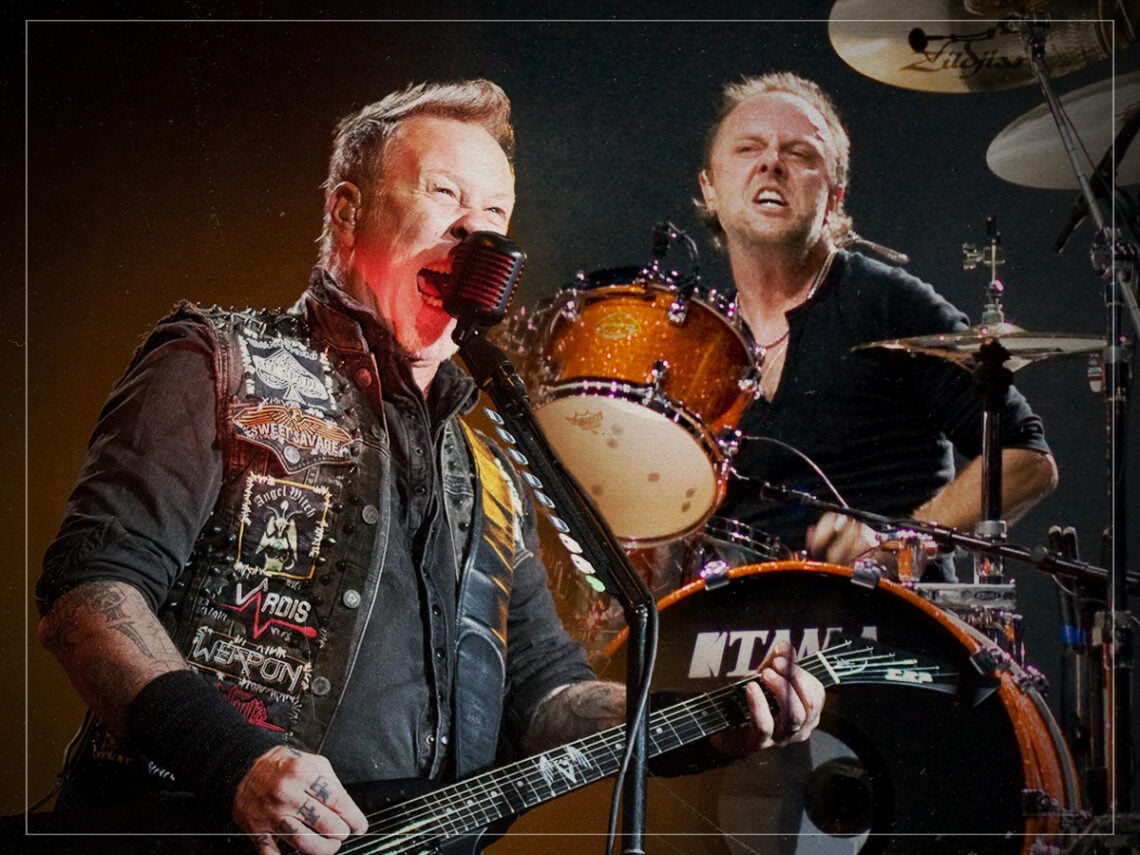
The singer James Hetfield and Lars Ulrich both agreed was immortal

When Metallica first got the ball rolling, there was no questioning the vision between James Hetfield and Lars Ulrich.
Every band needs their tandem to steer everything forward, and by the time they cut ‘Hit the Lights’ for the first time, heavy metal officially had its equivalent to Mick Jagger and Keith Richards. These were the closest thing to musical brothers that the metal world had ever seen, but the common language was about much more than playing riffs that are nearly impossible to keep up with.
Then again, Ulrich and Hetfield couldn’t have been more different if they tried back in the day. Hetfield had come from a broken home and saw both of his parents pass away before he was even out of his teens, and yet Ulrich was this Danish kid who had moved to California, planning on following in his father’s footsteps to be one of the greatest tennis players in the world. Once the stereo became their refuge at home, though, it was only a matter of time before they found each other.
Ulrich was already obsessed with the music coming out of England, and while Black Sabbath and Deep Purple paved the way for heavy music, it was a lot of the new wave of British heavy metal that first got him hooked. Hetfield could certainly appreciate what bands like Judas Priest and Iron Maiden were bringing to the table, but by the time he met Ulrich, he was being exposed to artists like Diamond Head and Raven that helped form the basis of what he wanted to make.
But no matter how hard he tried, Hetfield wasn’t going to be the kind of person to sing those massive high notes Bruce Dickinson could. He has said with pride that he sings like a sailor half the time he performs, and while that’s not necessarily a bad thing, hearing his voice gives faint echoes of what Lemmy was doing when he first burst onto the scene with Motorhead in the late 1970s.
While Motorhead has always been a bit off to the side compared to the NWOBHM scene, the influence he had on Hetfield would last for a lifetime, saying, “I went up to him and said, ‘It’s great to see you brother’, and he said, ‘Yes, we’re brothers more than you know’. That’s deep. I’m going to think about that forever. Lemmy is the only person that can call me Jimmy and get away with it.”
Hetfield had no problem calling Lemmy one of the godfathers of heavy metal elsewhere, but Ulrich agreed that what Lemmy did would be a part of Metallica’s repertoire until they finally bowed out, saying, “I got a chance to sit with him for about 10 minutes, just him and me. I told him it was his obligation to the rock & roll community to live forever, because he was the reason we could all get together and celebrate hard rock and celebrate Motörhead and see familiar faces because we’re all so scattered now. His spirit with always live in us.”
And despite the band doing their own tribute to him on the song ‘Murder One’, there are countless tunes that are a lot more reminiscent of what Lemmy was all about. Hetfield had a much higher voice than Lemmy towards the end, but whether you’re listening to ‘Motorbreath’ from their debut or ‘Fuel’ from the Load era, there are pieces of Lemmy’s voice that still come out in full force.
So when Metallica would play a handful of covers during their shows back in the day, any kind of Motorhead wasn’t something that was taken lightly. It’s the same way that most rock artists think about putting their spin on a Jimi Hendrix guitar solo. Sure, you could try your hand at bringing your own rendition to the forefront, but why try when the perfect one already exists?
