


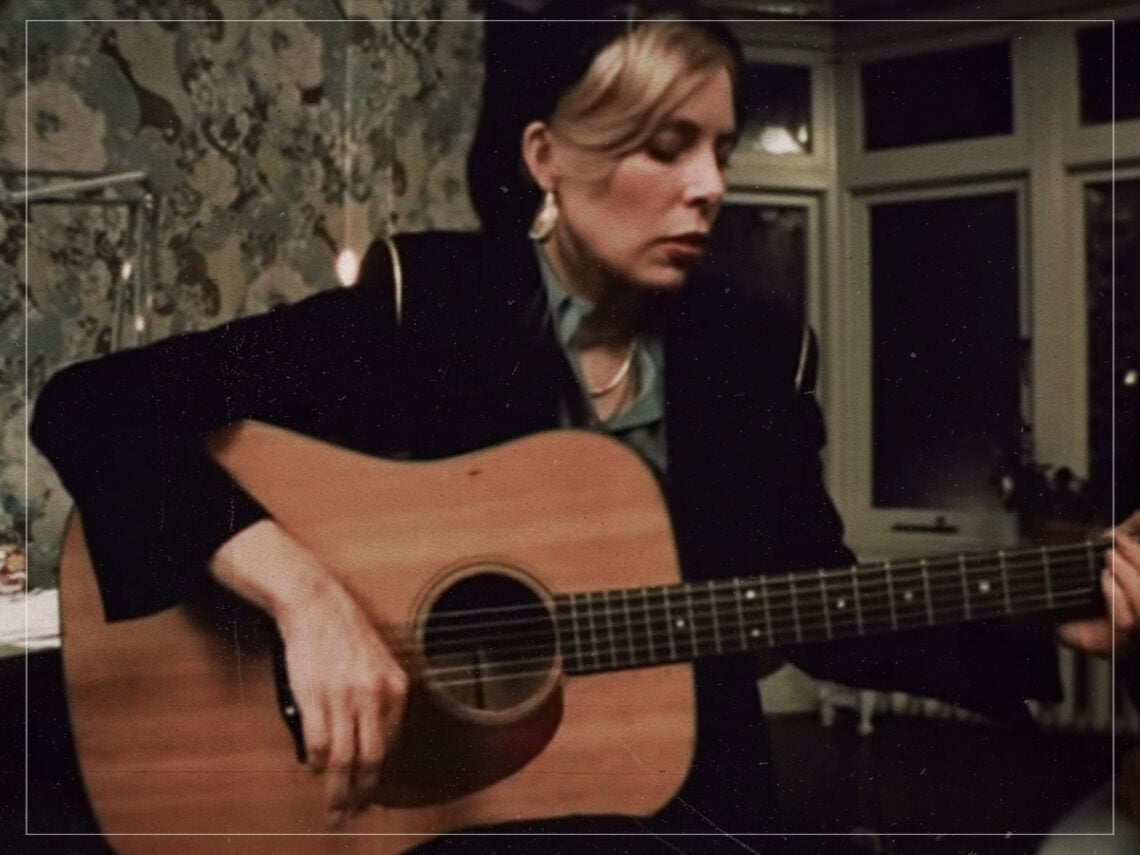
The one show Joni Mitchell wished she never played: “Not good at all”

Being one of the greatest songwriters in the world wasn’t something that Joni Mitchell took lightly.
She knew that her contemporaries were some of the finest songwriters that anyone had ever heard, and when you look at her track record, she was clearly in a different league than most other folkies that had come out around the same time as her. There was a lot more that she had to offer whenever she picked up a guitar, and getting the right ideas down on record meant using the right person for the job whenever she worked on any of her albums.
For Mitchell, any song is like bringing art to a blank canvas, and even if she wasn’t familiar with the ins and outs of what studio practices were supposed to be, she could always settle on the common language of music whenever she performed. She understood that everyone was there trying to make the best music that they could, and whenever she worked with the LA Express, it was almost like they had a sixth sense of knowing exactly where she was going whenever she worked on one of her tunes.
But there came a point where she needed more than a stable band. Any artist needs the right musical colours when they’re fleshing out their tunes, but compared to some of the greatest studio musicians in Los Angeles, Jaco Pastorius was in a class by himself. He was the closest answer to Jimi Hendrix on the bass guitar, and when you listen to the way that he played with Mitchell, he seemed to understand exactly what her music needed whenever she ventured into jazz territory.
Then again, Pastorius’s technique was always a bit less conventional than normal. He was interested in exploring every part of the bass, and even if some of his technique didn’t make the most sense for someone who heard his version of ‘Donna Lee’ for the first time, there’s no one who was able to fly across the bass the same way that he did when he locked in on the right groove with his bandmates.
Having already had years of jamming with Weather Report under his belt, Pastorius was ready for anything, and when listening to Mitchell’s smoky voice, his harmonics were the best compliment to every word she sang. But time can catch up with even the greatest musical minds, and by the time that Mitchell saw what Pastorius had become during the final years of his life, she was shocked at how much his spark had dimmed over the years.
He already had some drinking problems for a while, but when Pastorius asked her to jam with him during one of his shows, Mitchell felt like she was watching one of her friends slowly wither away in real time, saying, “I went to an art opening in Soho and there was a club across the street. I went in and found him at the bar. He asked me to jam with him, but he trailed the cord of the microphone so it got in my way. He was playing way outside the chord. It was not good. Nothing about it was good at all. He was praising me too much. And that was the last I saw of him.”


And the fact that Pastorius ended up meeting such a sad end only a little bit later was the real tragedy. Any artist usually has those moments where they try to clean themselves and get themselves back together, but after getting in one bar fight and getting beaten so badly that he passed away, it felt like the light was snuffed out of him well before he was able to truly share his gifts with the world.
He was meant to be one of the shining lights of what jazz could sound like if it had a bit more attack to it, but like Hendrix before him, it’s important that everyone remembers him for what he gave to the world. Mitchell knew the person who had worked with her on Hejira, and even if everyone else didn’t recognise him at the time, the fact that his delicate touch created ‘Continuum’ is enough to put him in the conversation of the greatest musicians who ever lived.
