


The one musician Phil Collins knows he will never come close to: “Much better than I’ll ever be”

Whether directly credited or not, it’s easy to stumble across a Phil Collins affliction in almost every musical corner.
Whether listening to his music or the music by those he inspired, Collins’ influence seeps into most realms, existing in genres far beyond his own, with fingerprints that can be felt in the sounds and aesthetics of countless artists. For some, that can be a hindrance to enjoying the artist, but while his music may or may not be in your preference, one thing cannot be underestimated: he truly loves making music, and it has kept him in the business for decades.
While most artists, big and small, enjoy one specific period of time deemed their peak, Collins emerged from Genesis’ widespread success and prog rock’s time in the sun to a solo force, reinventing his sound to resonate broadly throughout the 1980s and beyond. Even better, Collins was something of an underdog from the beginning, notably when he stepped up within Genesis, but quickly proved himself as one to watch. In fact, for a time, he became one of the most unlikely pop stars the world has ever known.
Although Genesis’ early years were crucial in solidifying them as a powerhouse, Collins’ most obvious contribution was helping to transition their sound from complex prog rock to a more accessible and pop sound after he took over as lead vocalist. Collins had always exhibited a certain drumming delicacy that could switch up at any moment with more purposeful vigour, but a more active leadership position enabled the band to survive well into their next phase of commercialism.
Funnily enough, despite Collins’ continuous proliferation, he remains humble and observant, as evidenced by the many instances in which he openly discusses and praises the work of others. Always diligent and quiet in his knowledge of his prodigious aura, it wouldn’t be too much of a stretch to assume Collins finds his successes serendipitous, especially considering the expanse of collaborative names he has accrued under his belt over the years.
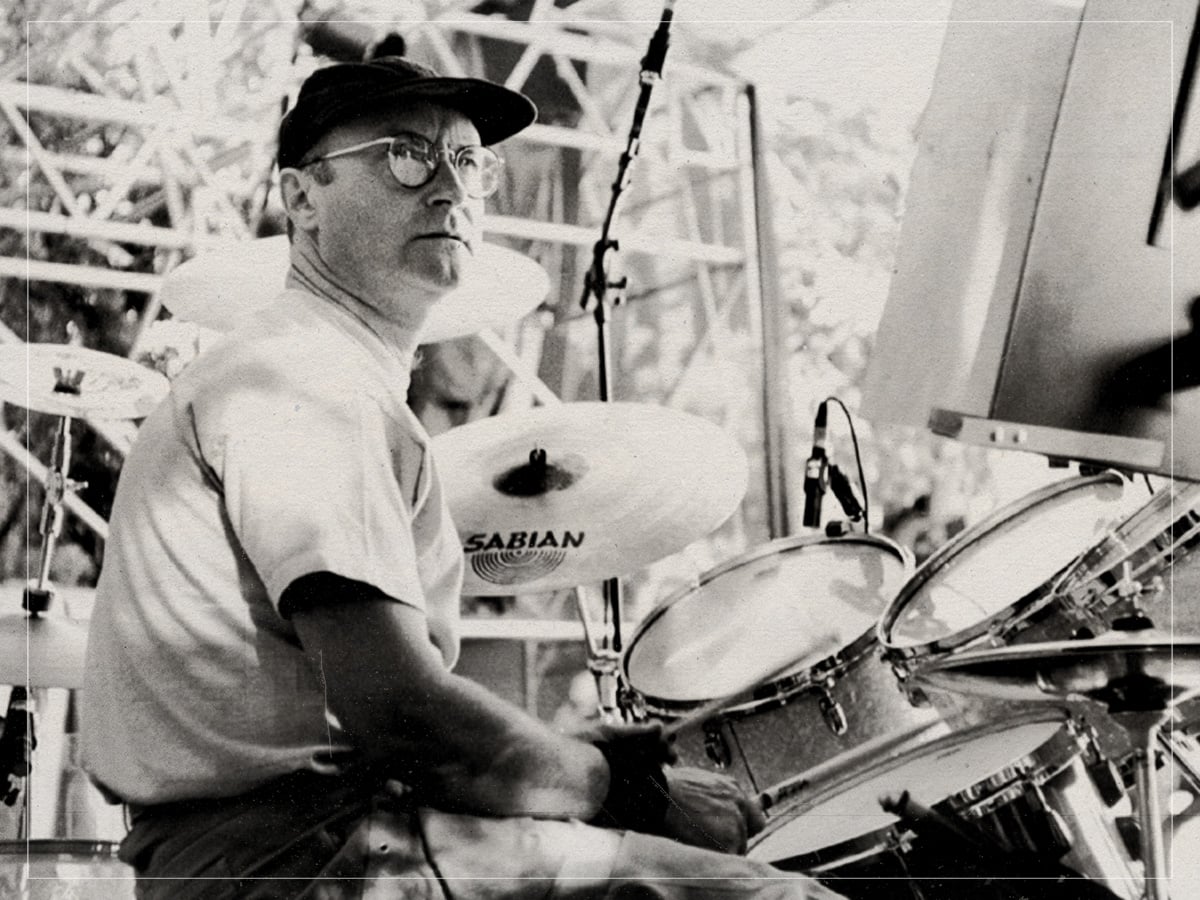
One of which includes John Martyn, a figure Collins has long been enamoured by, and who he felt lucky about the opportunity to work alongside on his largely overlooked 1980 project Grace and Danger. After which, Collins enjoyed working with Martyn so much and respected him so immensely that he vowed to work on a follow-up album the moment he was free from Genesis deadlines.
Discussing the venture with NME in 1981, Collins recalled the hardships they were each going through with their marriage while describing Martyn as someone he would rather work with than do a follow-up to Face Value, mainly because he finds it far more rewarding working with someone he admires musically. “I’d rather work with someone like John Martyn [than do another Face Value] who is much better than I’ll ever be,” he said.
Expanding on his preferred position in the broader creative process and dynamics, he added: “I like to participate possibly more than to lead, no matter how much of a façade the ‘democratic rock band’ usually is. It’s like there are all these certain rules attached to rock that have now become restrictive to that form of music as self-expression.”
With so many people pushing you to become something you don’t want to be, here Collins is exhibiting an understandable stance. No, he doesn’t want to be a part of a continuous cycle in which he trots out his old style for an oversaturated market to eventually become disillusioned with him as a boring artist. He wanted to work with great musicians and push himself into new spaces.
Clearly, even at Collins’ most disillusioned, it’s artists like Martyn who reinstall his own faith in the business and remind him that feeling accomplished and a sense of creative belonging is best shared with others who understand the power of great art. Collins might be prolific, but he is far from immune to commercial exploitation and seeks inspiration from the authentic minds of others.
