


The one historical error in Christopher Nolan’s ‘Oppenheimer’

When Christopher Nolan unleashed his sprawling, three-hour-long epic Oppenheimer, even he and the producers weren’t expecting the level of success it reached. While the filmmaker is one of the most sought-after in the industry, with dedicated fans worldwide and legions of devotees online chanting “In Nolan we trust”, his eleventh feature was still somewhat challenging – even for a Nolan film.
Based on the book American Prometheus by Kai Bird and Martin J. Sherwin, Oppenheimer chronicles the life of J R Oppenheimer, the renowned nuclear physicist known as “the father of the atomic bomb.” Many historians have contentiously suggested that thanks to his significant contributions to the development of nuclear weapons during the end of WWII, the loss of life was paradoxically reduced. Spanning over 30 years, Nolan’s singularly labyrinthine biopic fluctuates back and forth between Oppenheimer’s early years as an unsure physics student at Oxford, his time working on the Manhattan Project in Los Alamos, and government hearings during 1950.
It was, by all accounts, Nolan’s most ambitious and audacious film project to date – especially considering his breathtaking recreation of a nuclear explosion on camera, without computer-generated effects. Nevertheless, it was ostensibly a biopic about a scientist, so no one could have predicted the enormous impact it made in theatres and at the box office, having now earned over $1billion and proving that people are still willing to pay to see original art in the cinemas – especially in the 70mm or IMAX formats.
The stunning and harrowing central performance of Cillian Murphy as the titular scientist, the use of practical effects to recreate quantum mechanics and jaw-dropping atomic detonations and the painstakingly vivid attention to period authenticity in rendering the 1930s, 40s and 50s have all been universally praised. However, certain eagle-eyed fans have spotted a minor historical accuracy, which stands out as a glaring error considering the level of perfection in the rest of the film.
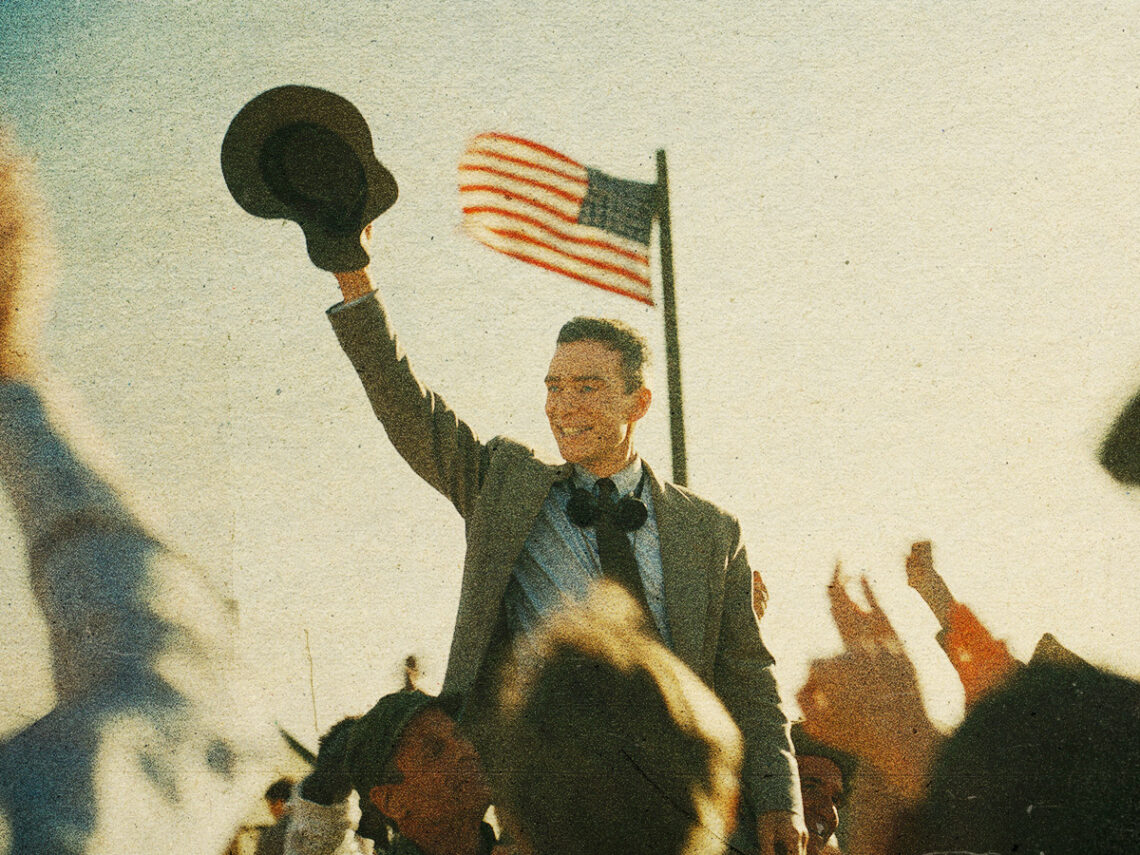
During one sequence at a rally in 1945, Oppenheimer galvanises a crowd into support for the Manhattan Project. Dotted among the sea of people are some patriotic attendees waving small flags. However, it’s been noted by some that the flags have the wrong number of stars on them. At that time in American history, neither Alaska nor Hawaii had been granted statehood.
In fact, that wouldn’t happen for well over ten years until 1959 – meaning that, up until the end of the 1950s, all American flags would have shown 48 stars. Oppenheimer features the incredible talents of production designer Ruth De Jong, who assisted on There Will Be Blood in 2007 before becoming a fully-fledged designer in her own right. It’s doubtful that she let something as apparent as this slip, considering the stunning period-accurate work displayed throughout the rest of the film.
Instead, some fans think this choice is deliberate. Considering a significant portion of the movie takes place post-Manhattan project, with Oppenheimer under interrogation in the 1950s, they’ve concluded that the historical discrepancy serves as a reminder that we’re watching the movie through his perspective – a fractured and unreliable narrator.
