


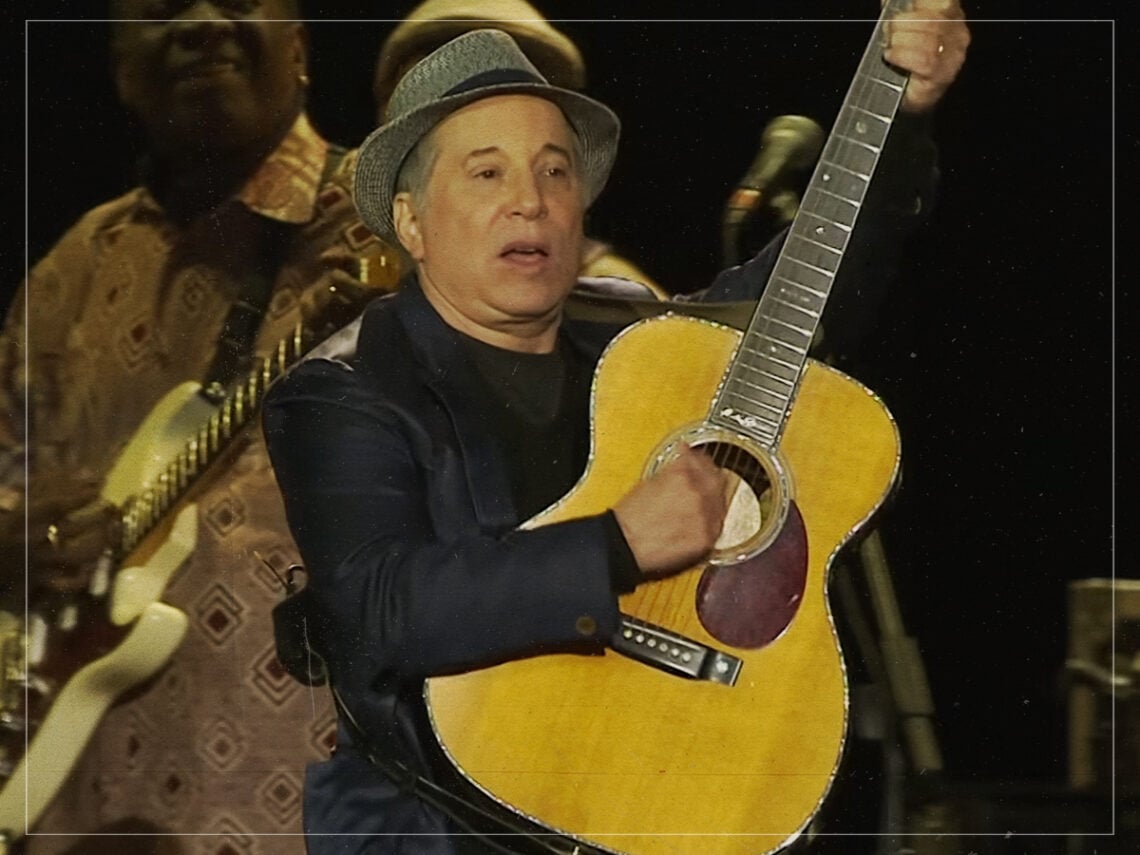
The one genre Paul Simon was “bored to death with”

Paul Simon wanted to have a far more refined palette for music than the average folk singer when he started.
He could get most of his points across with only an acoustic guitar in his hands, but when you look at the kind of ground that he covered on Graceland and Still Crazy After All These Years, he would have never been able to make those classics without having a more trained ear for what the public wanted out of him half the time he played. But as he grew older, he started to realise that some pieces of music were best left outside of his comfort zone for the rest of his life.
Then again, it’s not like Simon is a snob when it comes to music, either. He was always open to trying new things whenever he heard something that he liked, and considering he put himself out on the line when making Graceland in South Africa, he was certainly willing to bend over backwards if it meant that the rest of the world got a taste of something that they had never heard before from him.
That didn’t just apply to world music, either. A lot of what Simon was doing throughout his solo career was based on different rhythms influencing his sound, and while there are more than a few great moments throughout his Simon and Garfunkel days, you can hear a better sense of groove from the moment that he started working with jazz-oriented players like Steve Gadd on tracks like ‘50 Ways to Leave Your Lover’.
But every rock star tends to have a certain stumbling block when it comes to any form of hip-hop music. There are still the Gene Simmons stripe of musicians who claim that all rappers aren’t real musicians because they are just talking over the beat, but Simon was never one of those people. He saw them as improvising the same way that some of his greatest inspirations had done, but it was a lot easier to justify the assembly-line style of music that was happening around the mid-2010s.
This was the era when the biggest names in music were pumping out as many songs as possible, and as much as Simon could appreciate the hustle of someone like Drake, for instance, their approach to music was about to get a lot more stale for him. Everyone wanted to make their records sound more like playlists whenever they put something out, and Simon didn’t have time for it when more and more started to sound the same whenever he turned on the radio.
It was bad enough that David Bowie had left us in 2016, but Simon felt that his problems with pop music stretched far beyond being an old man who didn’t know what the kids were into, saying, “I know how easy it is to become bored with popular music. Because I am bored to death of it. I know that applies to me as it applies to every other artist … If you want people to listen, you really better make it interesting, because there are a lot of choices of things to do — not only things to listen to.”
And judging by what the charts were serving up at the time, there was reason to be more than a little bit underwhelmed. No one was going to make songs with the same kind of strange chords that were in Simon’s songs, but since some of the biggest tunes at the time were being written by The Chainsmokers, it was a lot easier to find great songs that were more genre-specific like what the hip-hop sphere was doing or the new advancements in electronic music.
The era of poptimism was right around the corner, but Simon hadn’t quite latched onto that kind of mindset by the time he started fleshing out his new tunes. He was always open for someone to surprise him, but he was also looking around at the rest of the world and wondering where all the artists with something to say had gone.
