


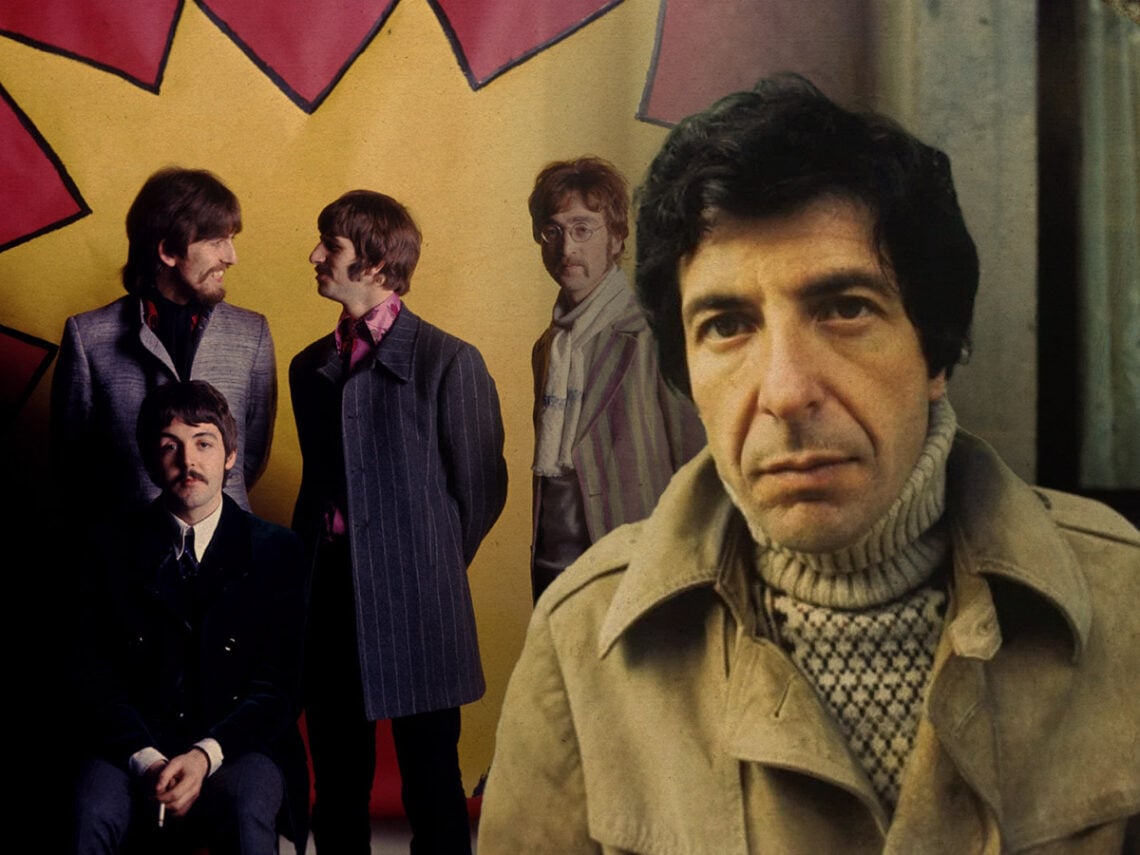
“Very, very beautiful”: The Beatles song Leonard Cohen always appreciated

Leonard Cohen has always felt oddly reference-less, even though we know he wasn’t.
He was in tune and interested in the musical world going on around him, especially as he landed in the Greenwich Village folk scene, yet somehow, when it comes to his own music, it almost feels beside the point to note what he was listening to.
What I mean is this: when Cohen was writing ‘Hallelujah’, he refused to let it go. The story goes that he wrote more than 100 verses, revising and redrafting it over several years, driven by a need to get it right. He kept working at it, never quite satisfied that he had done justice to the scale and poetry of the idea, until he finally recorded it. Even though the song went on to become a hit, the way it was created feels far removed from the usual pace and process of the music industry.
Instead, Cohen approached music not like someone wanting to be a rock star, but like a novelist or a poet tortured by perfectionism because that’s what he was, and so somehow even imagining him listening to the radio, rather than scribbling at a desk or praying at a silent Buddhist retreat, feels almost impossible, but he obviously listened to music.
No one becomes an artist without loving the art form, so, of course, he was a musical fan, and in particular, he loved the master of blues, 1960s girl groups, country classics and French icons. In a treasure trove piece called Leonard Cohen’s Jukebox, 21 of his all-time favourite songs revealed those insights, which included Bob Dylan, along with Joni Mitchell, Joan Baez, Janis Joplin and a whole other class of icons, except one key one that tends to crop up time and time again, and that is The Beatles.
It’s tough to find an artist, especially an artist working in the 1960s and ‘70s, who doesn’t consider The Beatles a key influence, but Cohen was admittedly pretty indifferent, telling The New Yorker, “I’m interested in things that contribute to my survival,” seeing art that prompts emotions as a necessity to life. To him, the Fab Four didn’t provide that fix, as he admitted, “They didn’t seem to be essential to the kind of nourishment that I craved”.
However, he didn’t write off each and every song and found that eventually he had to concede and find at least one track he could get into, as he said, “I had girlfriends who really irritated me by their devotion to The Beatles. I didn’t begrudge them their interest, and there were songs like ‘Hey Jude’ that I could appreciate.”
Out of all of them, he could at least get on with that old crowd pleaser, able to sing along with the “na na na nas” if his relationship required him to.
Later in life, though, he seemed to change his tune, eventually opening up to ‘Tomorrow Never Knows’ too, calling the song “very, very beautiful”. Maybe one girlfriend was powerful enough to fully change his mind, as he later complimented the group, saying, “They are dealing with some essence, and handling it in a state of grace, certainly they are poets”.
Two clicks to support independent journalism, add us to your Google preferences.

Never Miss A Beat
The Far Out Beatles Newsletter
All the latest stories about The Beatles from the independent voice of culture.
Straight to your inbox.