


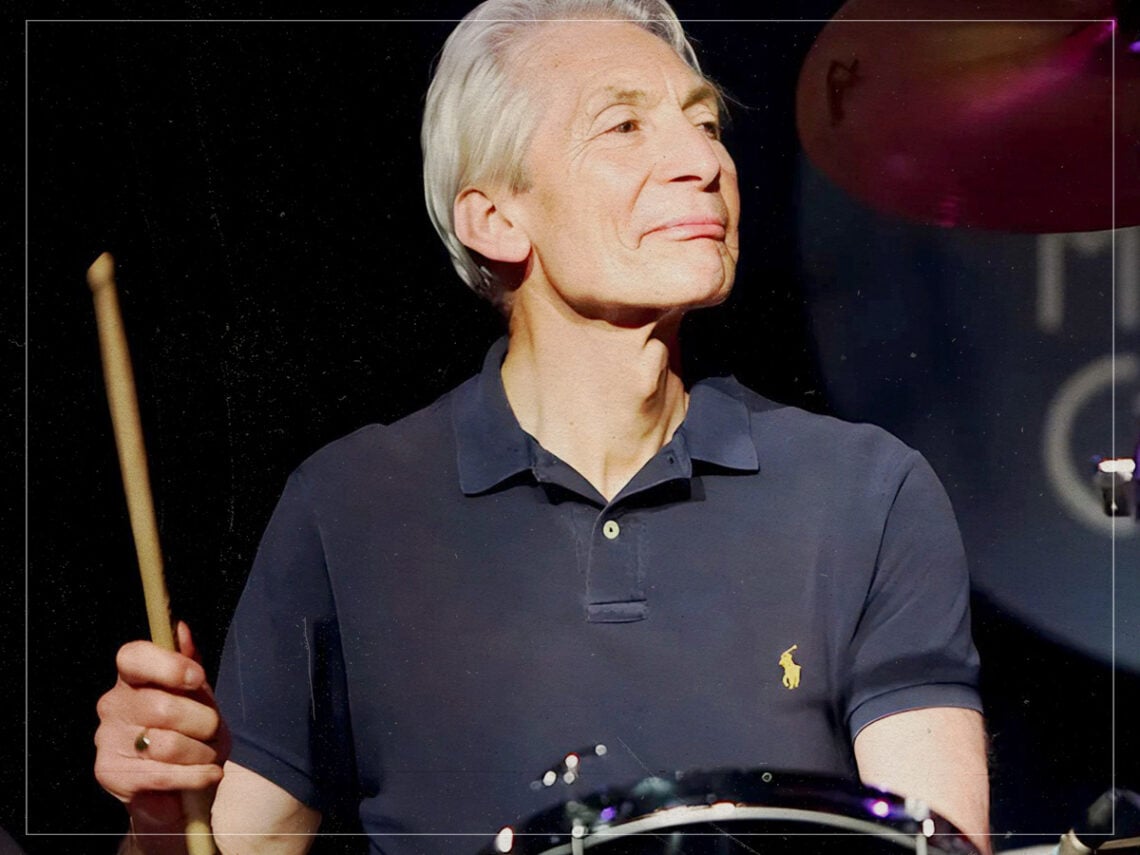
“If you want to talk about The Rolling Stones, you should talk to Keith”: The mystery of Charlie Watts

Recent pictures of The Rolling Stones on tour seem to represent the personality dynamics of the band better than anything from the musical archives.
Still rocking in their 80s, the band could be seen donning skinny jeans, sequinned blazers and in Keith Richards’ case, a scruffy headband fitting of the pirate cinematic world he inspired in Hollywood. Simply put, Mick Jagger, Keith Richards and Ronnie Wood still embraced the youthful zeal of The Rolling Stones brand, whereas the muted style of the late great Charlie Watts would be the opposite.
Often in a soft gilet and purpose-built trainers, the understated drummer would essentially hide away from the spotlight. But this wasn’t an age thing, brought upon him by the modesty of his own wisdom. No Watts had always been this way, the quiet anchor of one of rock’s most raucous bands.
Admittedly, in the peak of The Stones’ powers, Charlie Watts was far more of a fashionista than his later self would let on. The sketchers would be replaced with a slick set of brogues, often paired with a well-tailored suit, befitting of the clean-cut mod aesthetic he had cultivated. But even back then, that was a more modest antidote to the flamboyance of his bandmates.
Often, the drummers are the heartbeat of the band, given their consistent presence within a song and Watts’ cool, calm and reliable demeanour, a strong case for him to be The Stones’ beating heart can be made. Not least when you consider the fact that his playing style injected an unmistakable sound due to its mixed rock and jazz profile, which famously “swung” to give the band its signature swagger.
But in keeping with his diffusive demeanour, Watts was keen to swat away any such praise and label Richards as the true embodiment of the band. The sheer fact that his behaviour and outlook acted as the antithesis to Watts is what made him the band’s beating heart.
He said, “I don’t really have that much to say, I mean, if you want to talk about The Rolling Stones, you should talk to Keith, who, I think, embodies the whole Rolling Stones image.”

Ultimately, opposites attract, and so Watts and Richards struck up an unlikely partnership. While the guitarist may have been busy maximising the rock and roll lifestyle, while Watts stood more assured in the background, delivering consistent and technically proficient fills, they managed to meet in the middle and combine rhythm and melody in a way that became the backbone of the band.
“Keith Richards is the easiest person in the world to play with, and so we just play like we normally play,” Watts explained. “I just start [it] off, and he comes in, or he’ll start off, and I come in. And we’d do three goes at it, look at each other, and he’ll say, ‘Try it tomorrow.’ Keith usually calls the shots because he’s writing the thing. And he knows if it’s right or wrong.”
This kinship is ultimately what kept the band together throughout the six decades they operated. It meant that a headband-wearing Richards could stand side-by-side with his conservative bandmate in the latter days of their touring life, delivering hit after hit to a crowd of hungry Stones fans.
Watts may claim that Richards was the heart of the band, but he could only pump out the lifeblood with Watts alongside him.
