


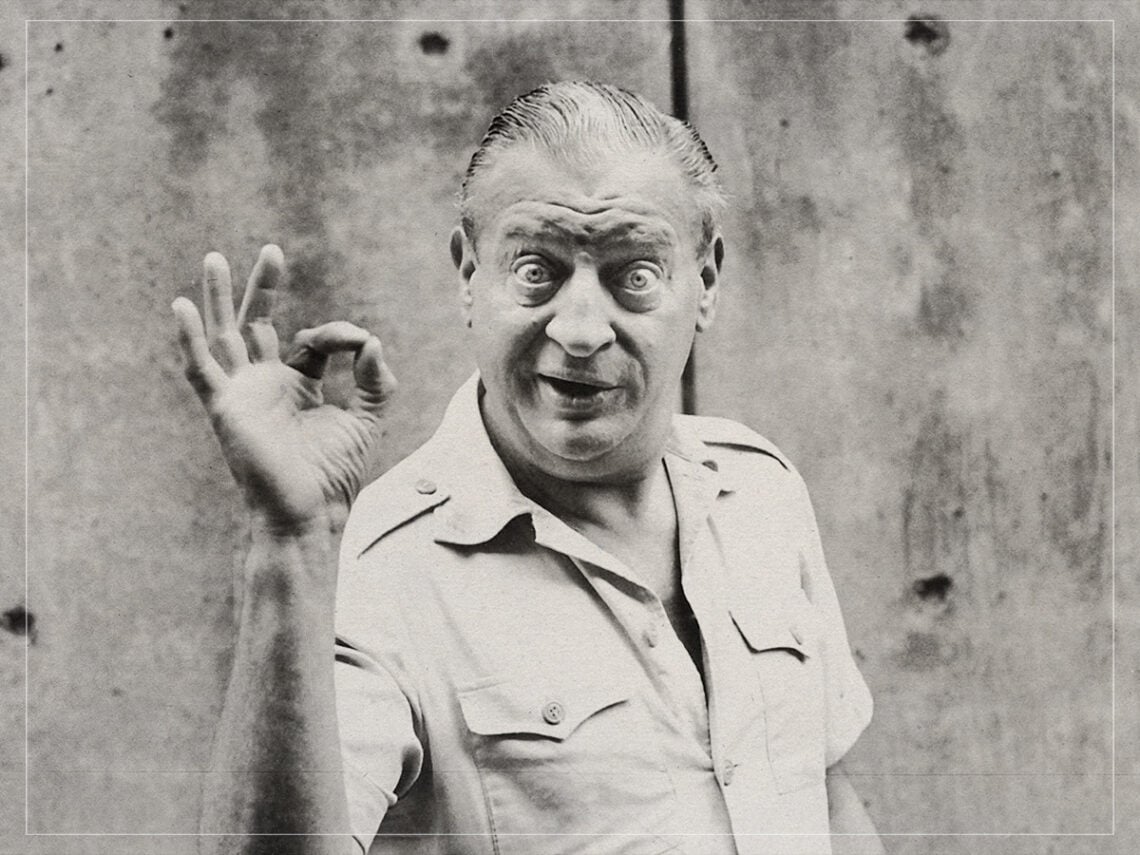
The ultimate respect: The musician who gave Rodney Dangerfield his name

Kids who grew up in the 1980s knew the comedian and actor Rodney Dangerfield as a living cartoon character of sorts, who, already in his 60s by that point, had appeared in a string of low-brow comedy films (Caddyshack, Easy Money, Back to School), always essentially playing himself: quippy, bug-eyed, gravelly-voiced and sarcastic, with exaggerated mannerisms and a penchant for mischief.
During that same period, Dangerfield was a frequent guest on the US talk show circuit, often performing a few minutes of stand-up built around his well-established “I get no respect” conceit; then sitting down with the host to riff further on the same theme.
“I tell ya, life isn’t easy. My psychiatrist told me I’m going crazy. I said, ‘If you don’t mind, I’d like a second opinion.’ He said, ‘Alright, you’re ugly, too’”, or “I was so poor as a kid, if I hadn’t been born a boy, I wouldn’t have had anything to play with!”
These jokes were evergreen and always generated laughs, partially because they were like the comedy equivalent of the great American songbook; one-liners that had been passed around the community of East Coast, Jewish-American comics since the 1920s, openly recycled and adapted into each performer’s unique style.
Rodney Dangerfield was very much a part of that tradition. Born Jacob Cohen on Long Island, New York, in 1921, he originally gave up his comedy dreams in the late 1940s, settling down with a wife and a career as a paint salesman. After divorcing at the age of 40, however, he found himself adrift and in debt, and decided to give stand-up another try, eventually landing gigs in the famous Jewish-American resort known as the Borscht Belt, where comedy legends like Milton Berle, Red Buttons, and George Burns had cut their teeth.
Like those three men and countless other Jewish-American performers of the time, Jacob Cohen changed his name to the Anglicised Jack Roy, as the rule of thumb was that mainstream American audiences wouldn’t be as keen on paying a ticket to see a Jewish act. In Jack Roy’s case, the Jewish audiences in the Catskills weren’t that thrilled about seeing him either, and so, a couple of years into his comeback in the early 1960s, he decided to reboot his persona, developing a hard-luck, self-deprecating character who “gets no respect, I tell ya. No respect at all”.
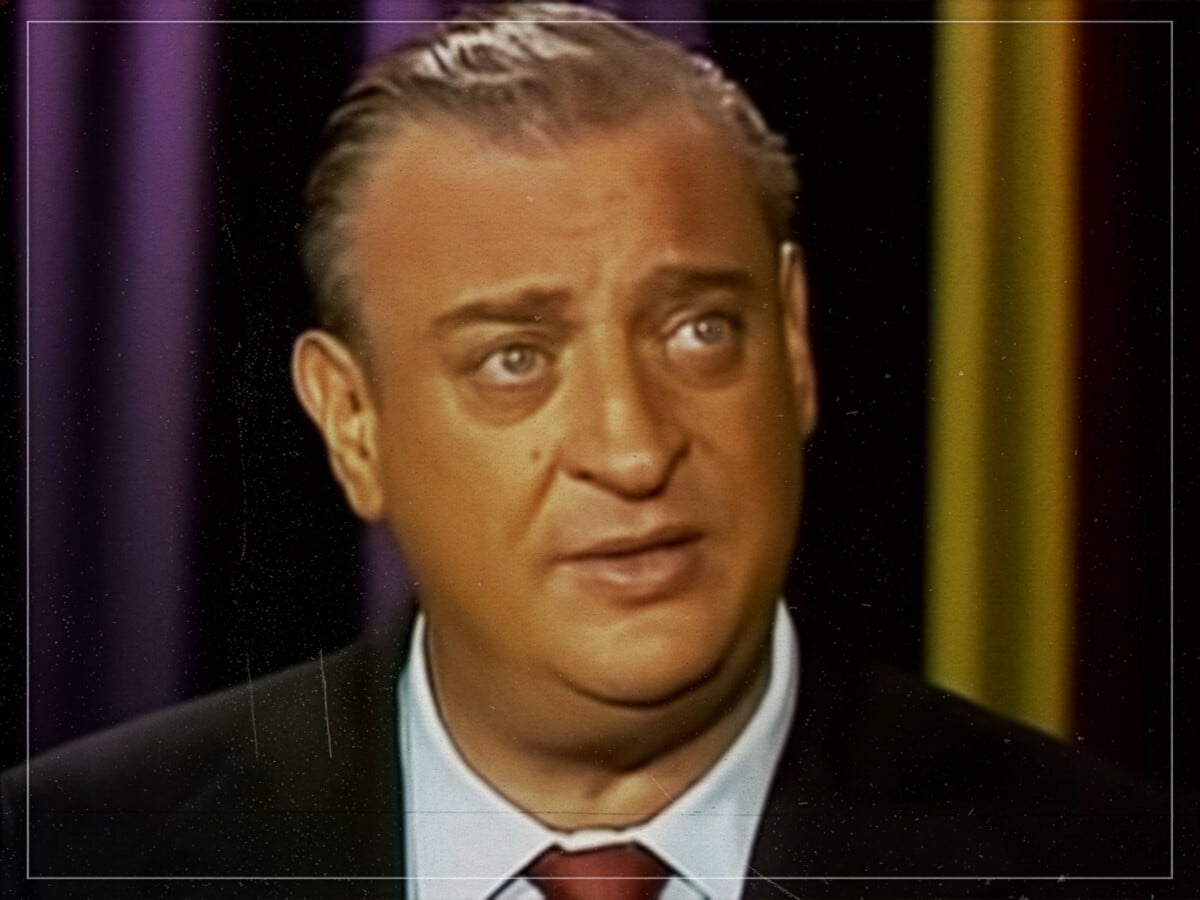
As a middle-aged, divorced man who’d felt like an outcast most of his life, the character had a real vulnerability lurking under the silliness of the one-liners, and it immediately connected with crowds. In order to fully separate himself from his previous stand-up career, though, Cohen/Roy decided to change his stage name once again, and, supposedly on the advice of New York club owner George McFadden, went with the marvellously poster-topping pseudonym Rodney Dangerfield.
From there, it was off to stardom, with TV appearances in the late 1960s, and soon enough, a Grammy-winning comedy record and an esteemed position as one of America’s most popular stand-up comics. To his own surprise, Dangerfield was particularly popular with young people, serving as a bridge from the old school sensibilities of the Borscht Belt to the new stand-up explosion of the ‘70s and ‘80s, which had produced the likes of Robin Williams, Steve Martin, and Jerry Seinfeld.
As for that unusual name, Rodney himself claimed that George McFadden had essentially pulled the words ‘Rodney Dangerfield’ out of the ether. But a little archival research shows that the name had been drifting around comedy circles for quite a while. In the 1940s, a ‘hillbilly’ comedy trio called the Milltown Morons was led by a character using the name, and it appeared again in the 1950s as one of the personas of Chicago TV comedian Bob Bell, who later rose to fame as Bozo the Clown.
Some folks, however, think the timing of Jack Roy becoming Rodney Dangerfield lines up more conveniently with a 1962 episode of the TV sitcom The Adventures of Ozzie and Harriet, in which the title characters’ son, played by their own real-life kid and emerging singing sensation Ricky Nelson, goes on a blind date with a girl, and tells her that his name is ‘Rodney Dangerfield’.
Maybe the use of the name was a tongue-in-cheek callback to its previous incarnations, but nonetheless, it’s certainly possible that either Jack Roy or George McFadden saw the episode (there were only three TV channels at the time) and had the name floating around in the back of their minds at the moment that Roy decided he needed a new persona.
In retrospect, it’s somewhat amazing that Ricky Nelson was still a cast member on Ozzie and Harriet in 1962, as he was five years into his separate career as a pop star and Hollywood film actor by that point, and at 22 years of age, probably wasn’t thrilled about still playing “little Ricky” on his parents’ sitcom. Nonetheless, he remained attached to the show until its final episodes in 1966, and, in an unofficial capacity, may have inspired the name of the country’s favourite stand-up comic along the way.
