


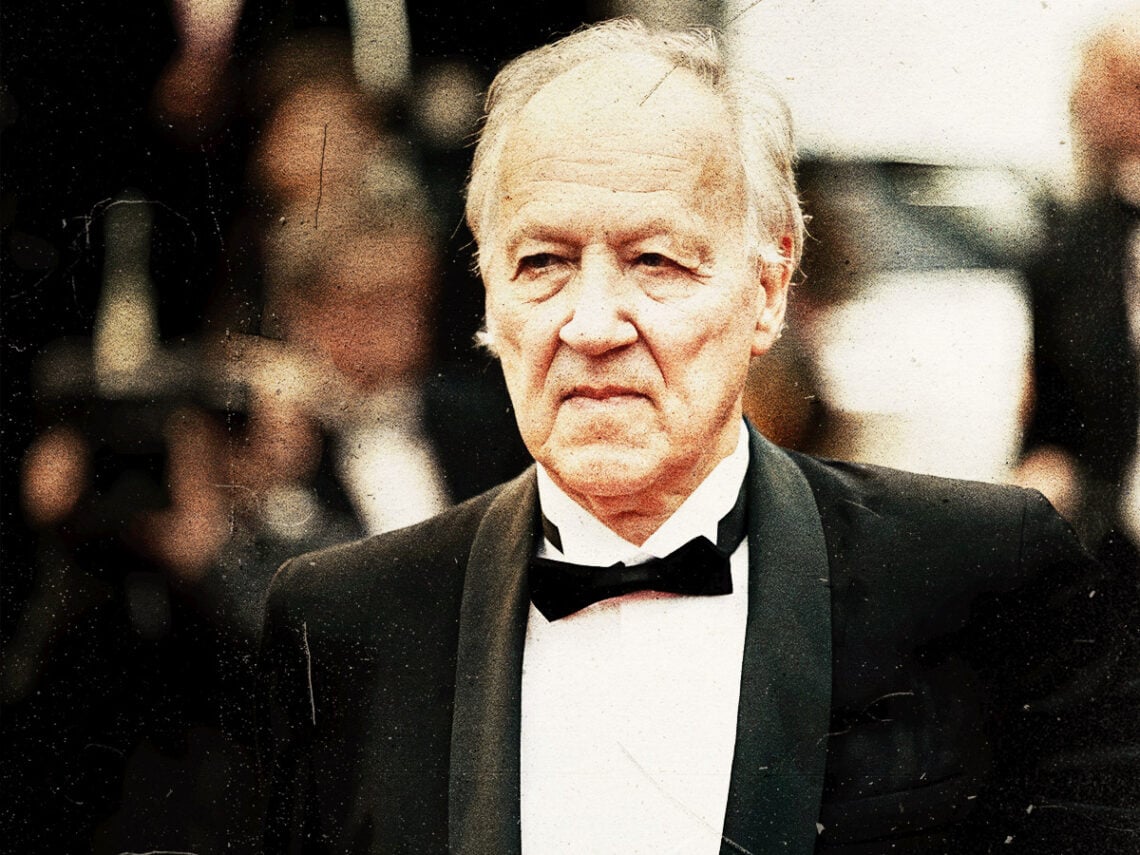
The musician Werner Herzog called “400 years ahead of his time”

As an auteur, Werner Herzog has several key characteristics that have made his work so widely influential. Although the pioneer of New German Cinema has encompassed a host of different genres in his long career, ranging from the historical epic Aguirre, the Wrath of God, to the tragicomedy of Stroszek, music has always been an area he has weaponised, adding a completely different sensation to what is visually on display.
Nowhere is this idea more prominent than with the storied 1972 effort, Aguirre, the Wrath of God. Although the project is notorious for the extreme working relationship between star Klaus Kinski and Herzog, and its style was an influence on everything from Francis Ford Coppola’s Apocalypse Now to Terrence Malick’s The New World, the ethereal soundtrack by German innovators Popol Vuh was critical to its success.
Notably, Popl Vuh was founded by keyboardist Florian Fricke in 1969. Under his direction, they gradually moved away from being an electronic project to something more cerebral and distinctive, as they abandoned synthesisers for organic instrumentation and a palette resembling world music. Creating a deeply spiritual palette, their transcendental score for Aguirre was perfect for a minimalist movie centred on madness and the search for the mythical city of gold, El Dorado, which was shot in the heart of the Amazon, perhaps the most mysterious of earth’s untamed corners.
When speaking to Red Bull Music Academy in 2017, Herzog recounted his friendship with Florian Fricke and how the composer comically brought him back to earth after he first discovered the 16th-century Madrigals by composer and Prince of Venosa, Carlo Gesualdo. A madrigal is a secular vocal performance popular in the Renaissance and early Baroque periods. Despite Fricke telling him that every musician knew who Gesualdo was, Herzog knew he had stumbled across magic with the music and called the composer “400 years ahead of his time.”
He said: “When I discovered Gesualdo, Carlo Gesualdo, the Principe of Venosa. And I was totally out of my mind because I thought I had discovered a whole continent, early 1600s Madrigals. It’s the sixth book of Madrigals. It’s similar like Hercules Segers, 400 years ahead of his time. Only since Stravinsky we have heard similar sort of tones.”
Recounting his excitement, he continued: “And I woke Florian up in the middle of the night, and he laughs and he says, “Everybody who is into music knows who Gesualdo is, it’s not you who discovered him.” And I said, “Yes, I understand. But I still, until the end of my days, I find it unacceptable that anyone else has discovered Gesualdo.” So it was a little bit like this.”
Watch the interview below.
