


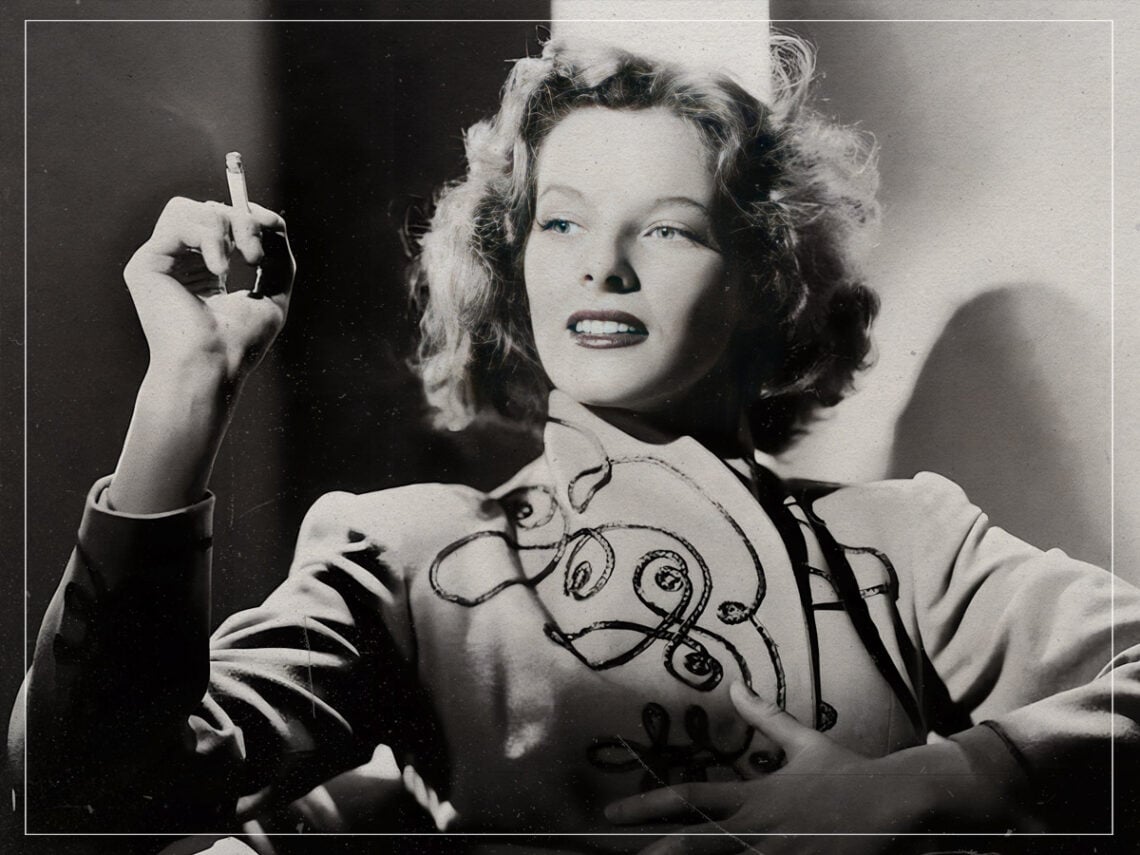
The “muddled” movie Katharine Hepburn never wanted to see again

Katharine Hepburn was famously labelled ‘box office poison’ in the late 1930s after she’d won an Oscar but before she’d win three others, speaking to how rapidly Hollywood can turn against stars that it worships as soon as their bankability is called into question.
Throughout her career, Hepburn experienced more ups and downs than most of her peers combined, partly because she refused to stop working, and while others might have taken the hint and retired or switched to television, she, like Bette Davis and Joan Crawford, just kept reading scripts and turning up to set, ultimately prevailing to earn her historic fourth Oscar at the age of 75.
Her low point in the late 1930s has been widely documented, in no small part because it was, ironically, the period in which she made some of her greatest movies. Bringing Up Baby was a disastrous flop when it was released, and is now considered to be one of the greatest screwball comedies ever made, but one of her other low points does not enjoy such a legacy.
In the 1950s, Hepburn was enjoying a renaissance of sorts with hits like The African Queen and Summertime, and earning rave reviews for her Shakespeare performances at the Old Vic. Then, she nearly squandered all that goodwill with the 1956 venture, The Iron Petticoat, which saw the Oscar-winner playing an icy Soviet pilot named Captain Vinka Kovalenko who meets and falls in love with a deeply irritating American pilot played by the deeply irritating comedian-in-name-only Bob Hope.
It was a terrible film with the actors sharing zero chemistry, and ever the pragmatist, Hepburn didn’t try to sugarcoat her experience, noting that Hope, who was more of an entertainer than an actor, wasn’t exactly her type of performer.
“It’s a different medium if he’s in it, let me say,” she remarked in 1990, adding, “but you know, Bob sold himself, and I was trying to sell the story. We were in different mediums. So it got sort of muddled up.” “Muddled” is a polite way of describing the film; unwatchable is the term, and even Hepburn conceded that she had zero interest in seeing it.
It’s hardly surprising that the stars didn’t get along; it would be like pairing Ricky Gervaise with Cate Blanchett or MrBeast with Saoirse Ronan, one would be showboating for a very specific audience, and the other would be acting. Throw in an incomprehensible Soviet storyline, and you have yourself a very bad idea indeed.
Apparently unable to recognise just how bad the film was, Hope used his powers as a producer to take control of the final cut, removing 12 minutes of footage to shrink Hepburn’s role and turn himself into the protagonist. Screenwriter Ben Hecht was so disgusted by this that he took out a full-page ad in The Hollywood Reporter to chastise the comedian for ‘blowtorch[ing]’ Hepburn’s work.
He also announced that he had removed his own name from any association with the finished product. Unfortunately for Hepburn, Hope didn’t remove her work entirely, which meant that her name remained in the credits.
