


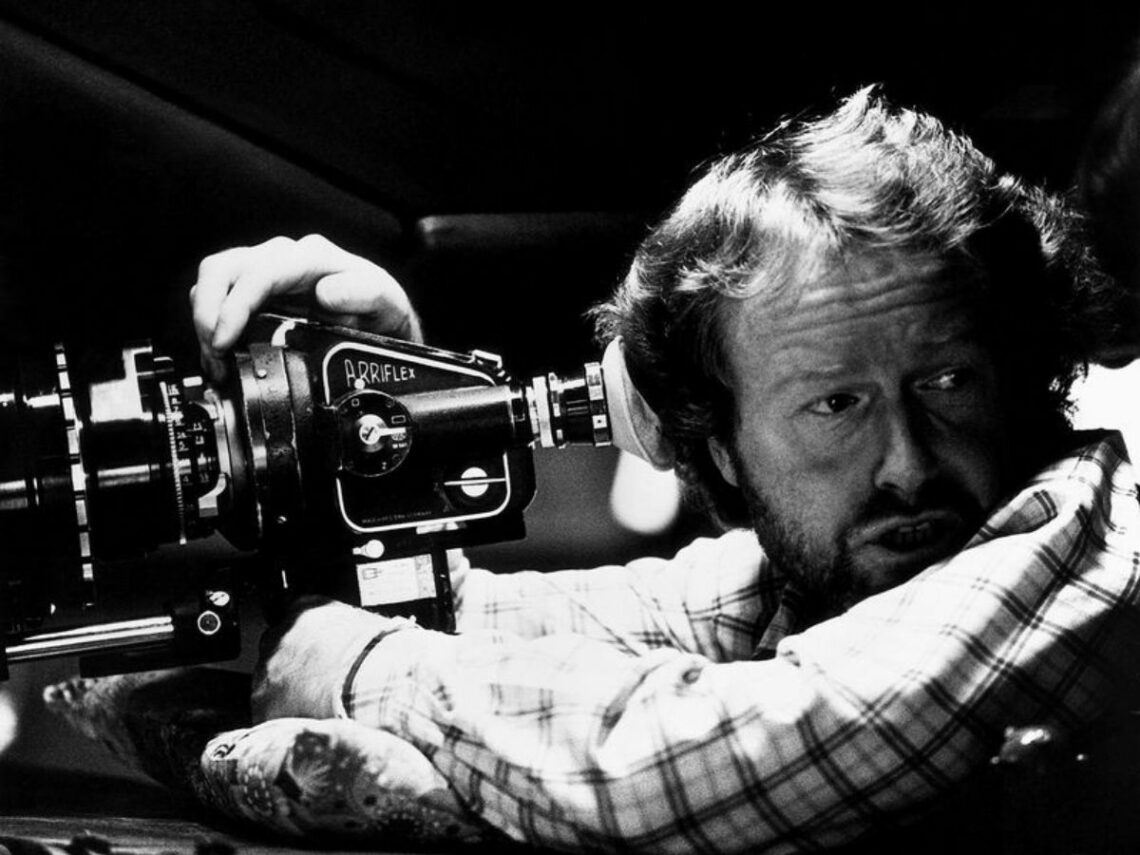
The movies that shaped Ridley Scott

Over recent decades, very few directors have been as prolific as Ridley Scott. He occupies a particular space within cinema today as one of only a few directors creating intelligent and big-budget movies. Looking at the vast number of films he’s made over the last decade and the shocking rate at which he churns out new pictures, it’s often easy to forget he has also made arguably some of the best genre movies of all time with Alien and Blade Runner. With his latest offering, Napoleon, doing a cavalry charge through box offices as we speak, let’s take a look at the movies Scott himself has said have shaped his own work as a filmmaker.
Scott cites the Stanley Kubrick epic 2001: A Space Odyssey as having a big impact on him, telling Deadline: “The design on 2001… That’s the threshold for everything being so real. Stanley’s design influenced everybody. I’ve never shaken it off”.
Interestingly, Ridley told a fascinating story when being interviewed by The Hollywood Reporter round table, a conversation in which he explained how he called Kubrick to ask if he could have some of the sweeping aerial footage Kubrick didn’t use at the opening of The Shining, hoping to use it for the final scenes of Blade Runner, to which Kubrick surprisingly agreed.
Meanwhile, Stanley Kramer’s 1959 movie On The Beach, the Australian post-apocalyptic drama, is another influence of Scott’s: “The one I thought was really good, which was more about the cold war, with Gregory Peck… Very beautiful black and white movie,” he told Wired.
Scott also acknowledges George Lucas’ Star Wars films. Scott is one of the few directors to ever dare venture back into the sci-fi genre on multiple occasions; the feat of making a movie set in outer space is clearly a gruelling task for many directors and a journey back into space they rarely do more than once. So, his admiration for the Star Wars franchise is perhaps unsurprising. “To me, it was an absolutely perfect rendition of a great comic serial,” Scott told Deadline, “There’s artistry in comic strips and George was obviously a devotee of that, and what he did was brilliant.”
Finally, and perhaps most surprising on the list, is when Scott was asked which single film he would choose to save in a time capsule, and his answer was Muriel’s Wedding. “I’ve seen it six times. It’s fantastic,” he told The Hollywood Reporter. The movie, directed by P.J. Hogan, follows Muriel, played by Toni Collette, a social outcast who journeys to happiness and love. It’s an excellent film that perhaps doesn’t get the recognition it deserves and is certainly one of the more interesting and best of the “romance-comedy” genre.
It’s an intriguing list of films cited by Scott, unsurprising in some senses, but an eclectic bunch. I imagine when it comes to shooting one of Scott’s films, it is closer to commanding an army rather than directing a film set. But the scale of the production rarely seems to hinder the story, with great characters and performance at the heart of them. And his choice of films here, perhaps, points to a more personal understanding of what makes a film truly captivate an audience.
Head over to Far Out’s review of Ridley Scott’s latest epic, Napoleon.
