


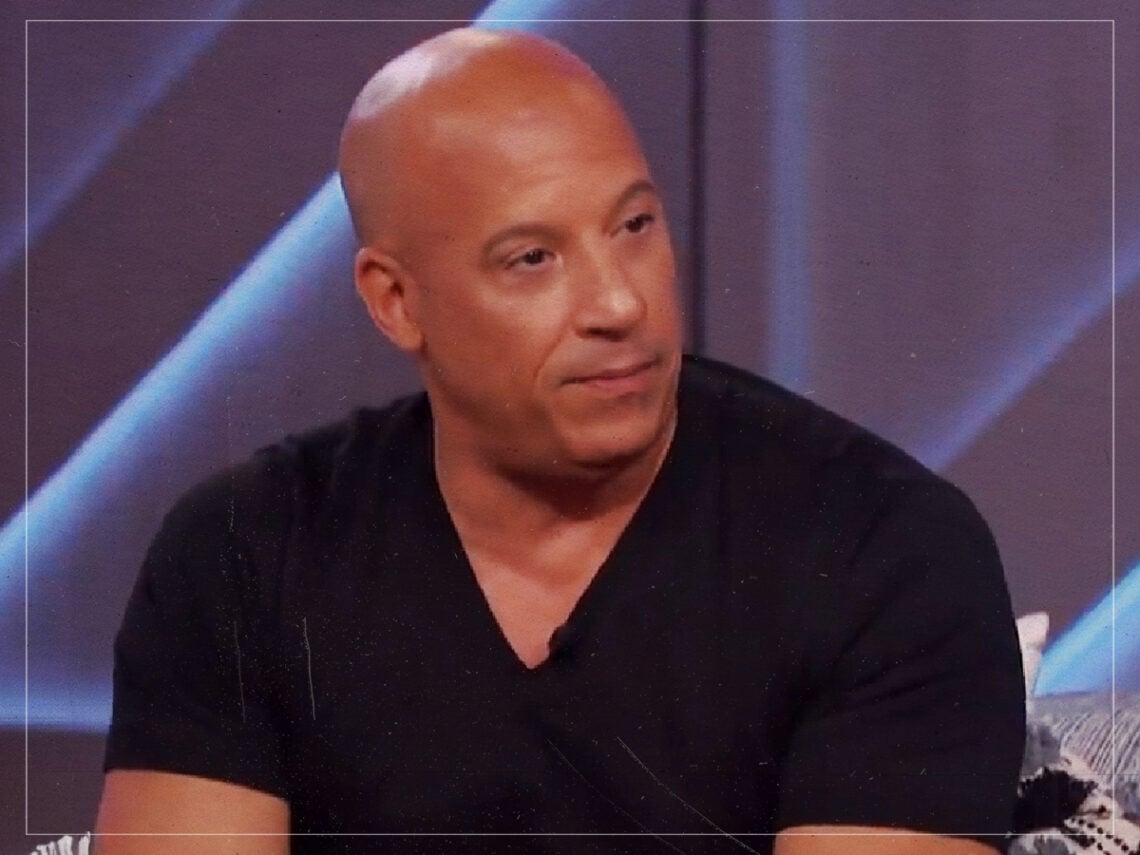
The 2002 movie Vin Diesel turned down a $25 million paycheque to make: “My ego is that big!”

Vin Diesel’s delusions of grandeur nearly cost him his most iconic role.
Hollywood has never had a star quite like Diesel, whose dominance as a cultural force and box office champion has always been inexplicable. While it goes without saying that he is not a good actor, he doesn’t even possess the traits that are common among other action stars; he doesn’t have the charisma of Dwayne Johnson, the actual martial arts background of Jason Statham, the self-awareness of John Cena, or the pathos of Gerard Butler.
Diesel has forced his way into franchises and exasperated his collaborators, but it has somehow managed to turn out in his favour. His big break came when the original The Fast and the Furious debuted in 2000 and performed surprisingly well, despite the fact that it was a complete ripoff of Point Break. While a sequel was quickly announced, he didn’t sign on immediately with his co-star, Paul Walker. His interests lay in the development of xXx, a spy thriller that would contend with The Bourne Identity and Die Another Day in 2002.
Diesel refused to budge and proclaimed that he wouldn’t return to the franchise that made him into a star. “If somebody wanted to say my ego prevented the second one from being a real sequel, that’s cool,” he said, “I turned down $25million for my ego? If my ego is healthy enough to say, ‘I’m not going to do a rehash of the same film just because you want me to do it quickly’. That’s my ego! My ego is that big!”
It would ironically take another egocentric franchise non-commitment from Diesel to get him back in The Fast and the Furious, as he exited the sequel to xXx so that he could make The Chronicles of Riddick, a spinoff of the cult classic science fiction horror film Pitch Black.
It was a flop, but Diesel managed to score a cameo appearance in The Fast and the Furious: Tokyo Drift, the first instalment of the series directed by Justin Lin.
Lin proved to be the breath of fresh air that the franchise needed in order to transform from a street-racing saga into an action franchise. With 2009’s Fast & Furious, the fourth film in the series, he brought both Diesel and Paul Walker back into the fold for what was essentially a legacy sequel to the 2000 original.
That Lin was allowed to make four films in a row without facing any conflicts from Diesel feels miraculous today, given that the egocentric star has managed to bully and irritate every other filmmaker who has joined the series. After James Wan had to reconfigure Furious 7 into a tribute to the late Walker, Diesel’s ego caused creative conflicts with The Fate of the Furious director F Gary Gray as well as Lin, when he returned to direct F9.
The current status of the 11th film in the series, Fast Forever, is unknown, given that Fast X ended on a cliffhanger that doesn’t seem like it will be resolved anytime soon. Fast X made over $700m worldwide, but was still not financially successful because of its inflated budget. A recent sexual assault lawsuit against Diesel has only further muddied whether The Fast and the Furious series will ever get a proper ending.
