


The movie Stanley Kubrick tried to erase forever: “A bumbling amateur film exercise”

When you think of the director Stanley Kubrick and war movies, you might think of 1957’s Paths of Glory, 1964’s Dr. Strangelove, or 1987’s Full Metal Jacket.
Throughout his career, Kubrick found rich texture in the notion of battle, how it had a habit of shaping stories and putting them through an unstoppably brutal lens, allowing us to see the very pits of society unfurl among the screams of its members. But this is to be expected from a man who was privy to the terrors of war.
The filmmaker was certainly obsessed with the multiple existential issues that grow from humanity’s obsession with war, illustrated in the depravity of authority in Paths of Glory, to the absurdities of battle in Dr. Strangelove. Aside from Kubrick’s historical epic Spartacus, which the director had numerous issues with, there is one other war movie the iconic director would prefer you to forget altogether.
In the mid-1940s, before Kubrick’s foray into cinema, he was a budding photographer with a meticulous artistic eye. Having sold photography to Look magazine for many years, he moved on to short film features, releasing documentaries Day of the Flight, and Flying Padre in 1951, putting the money he had raised from showcasing these films into his first feature-length project Fear and Desire in 1953.
This anti-war film, directed, produced and shot by Kubrick, followed four soldiers trapped behind enemy lines who are forced to confront their ‘fears and desires’ as they try to escape to safety. The movie was unlike anything of the time, not only in its focus on the awful aspects of war (rather than championing the victors) but also the comparatively small production crew that helped bring it to light.
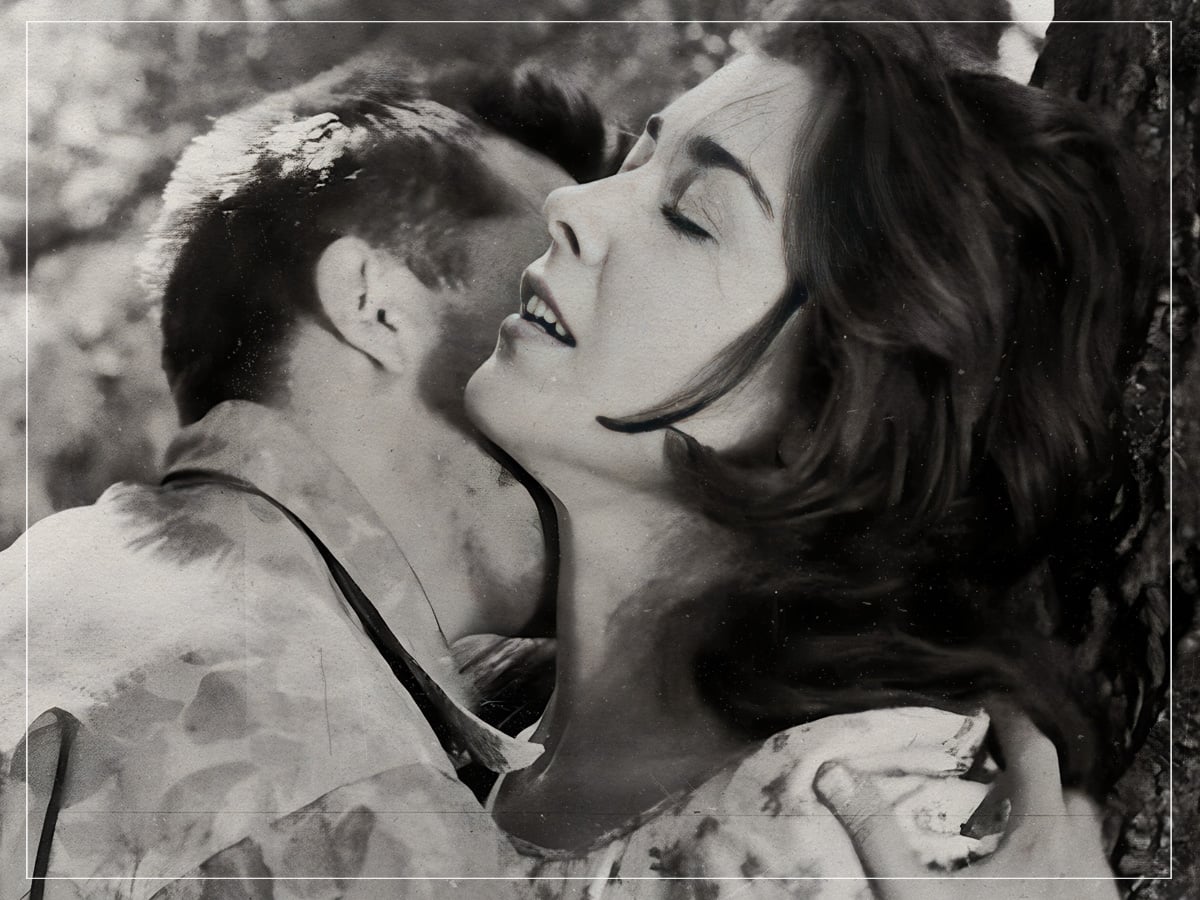
Made with a production team of just fifteen people, Kubrick’s directorial debut co-starred a young Paul Mazursky, a director later responsible for highly acclaimed critical success including Bob & Carol & Ted & Alice, and Down and Out in Beverly Hills. Later, when Mazursky was asked about his collaboration with Kubrick, he was less than complimentary, saying: “I thought he was a crazy guy with black eyes”.
Kubrick’s dogged determination to complete his debut project seemed to overwhelm him as if an obsession. This would become a regular feature of Kubrick’s filmography. Known for putting his actors under so much duress that one might consider it torture rather than tutoring, the director was meticulous in everything he did.

Even in Fear and Desire, many of the thematic concerns that would come to define Kubrick’s later career are already visible beneath the film’s rough edges. The story’s faceless enemy, unnamed country and dreamlike atmosphere give the film an abstract quality that feels less interested in military victory than psychological collapse. Kubrick was already exploring how conflict strips away identity and pushes ordinary people toward irrationality.
Part of Kubrick’s frustration with the project may also have stemmed from how personal the production became. Unlike his later studio-backed work, Fear and Desire was held together almost entirely through stubbornness and improvisation, with the director forced to solve every problem himself as they arose. While that relentless approach would later become central to his reputation as a perfectionist auteur, the film preserved every limitation and compromise in a way he could never fully escape.
He would build scale models of the sets, demand that lighting be moved inch by inch to achieve the perfect shot, and, once he had the perfect angle, would require take after take until he nailed exactly what he wanted to see on the screen. But Fear and Desire was an obsession of a different kind. This was not about how well he could make the movie, but about making it in the first place.
Without enough money to complete the film, the director reportedly raised part of the budget by hustling chess games in Central Park, while the rest he demanded from a pharmacist uncle during Fear and Desire’s production. “He got so determined — ‘I’m going to get the five. I’m getting the five thousand’ — that he spat on the windshield. That kind of determination I’ve never seen,” Mazursky reported.
Of course, Stanley Kubrick’s intent spitting led to the completion of his debut film, even if he wasn’t too happy with the result, considering the film “a bumbling amateur film exercise” and a “completely inept oddity”.
He was so possessed by his resentment toward the film that, according to Marzursky, “Stanley tried to have the negative burned. He hated the movie. Hated it”. The director also managed to succeed in pulling the film from circulation, so much so that for years it was only available as a rough bootleg, however as the director’s fame grew, so too did the interest in his debut feature. 22 years after his death, with help from several restorations from private copies, the film is now readily available and even in the public domain, ready for your viewing pleasure down below.
The film itself is an interesting exercise in anti-war filmmaking and certainly far from a disaster, even if Kubrick considered pyromania to rid it from history. But when one considers the artistry he would go on to make, and the care he would take to create it, then perhaps there is no surprise that the movie he so nearly didn’t get made at all is considered at the bottom of the pile by the man himself.
