


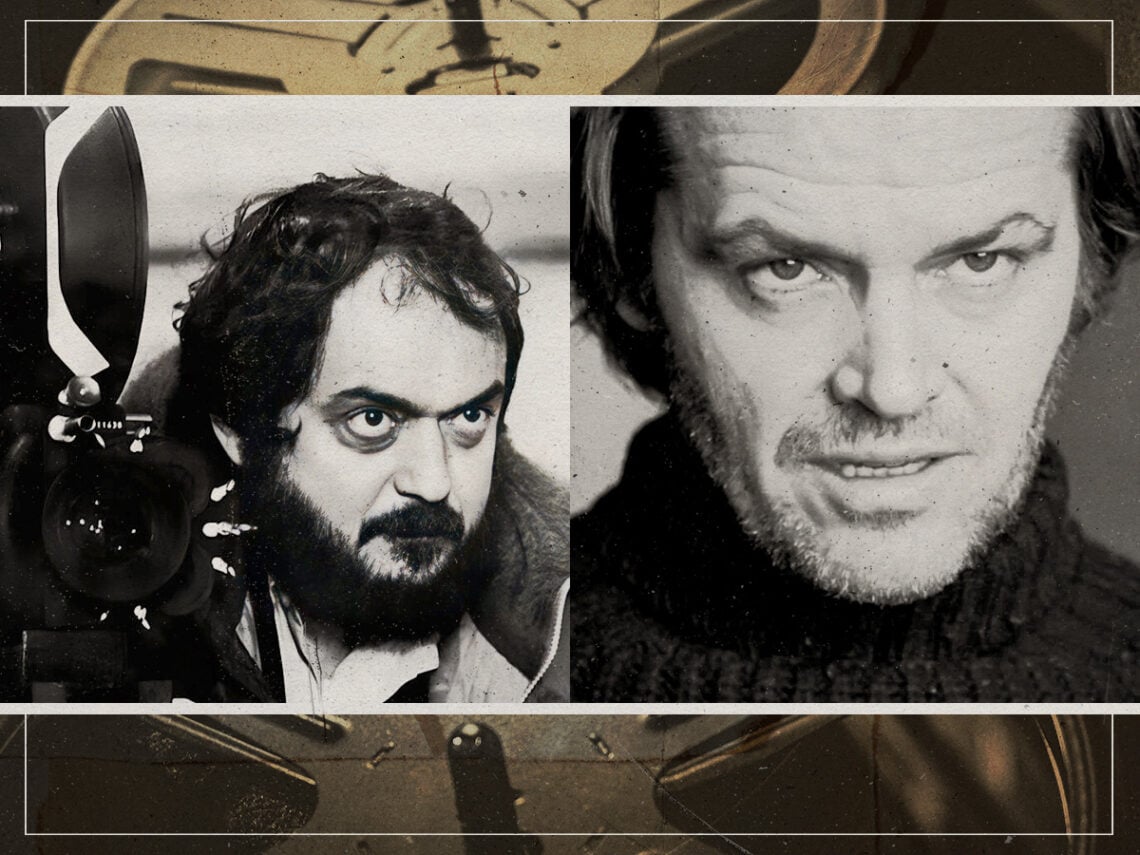
The movie-making advice Stanley Kubrick gave Jack Nicholson

There are countless stories of what it was like to be on set with Stanley Kubrick, from the harrowing to the encouraging. But throughout them all, one thing is clear: the director demanded a lot from his cast and demanded it in a certain way. He expected every actor to be a student of his specific process. Jack Nicholson remembers it well, taking one piece of advice with him throughout his career.
Out of all the actors that Kubrick worked with, his relationship with Jack Nicholson seemed to stand out. It was a perfect coming together of a director and an actor, but also an artist and a muse. When they were making The Shining, Nicholson was the director’s first choice. He knew immediately that he would be able to bring the role of Jack Torrence to life with exactly the kind of complex yet terrifying energy it required. Kubrick said that Nicholson brought to his work “the one unactable quality – great intelligence”.
Nicholson was also the perfect actor for Kubrick’s specific approach to directing. He was a perfectionist to a terrorising degree, demanding take after take from his cast until they got it exactly right and exactly matched the vision in his mind. While plenty of performers have criticised that and spoken about their negative experiences with Kubrick, that approach seemed to be precisely what Nicholson wanted. Of his dream director, he said, “I want them to have the control.”
The actor seemed more than willing to be a student to the master, keen to take in his teachings and carry them forward. He recalled one lesson: “One of the things he said to me that I’ve always remembered was ‘In movies, you don’t try and photograph the reality, you try and photograph the photograph of the reality.’”
But realistically, what on earth does that even mean? At first glance, that just looks like a pretentious mush of words jumbled together so the director could sound profound. But let’s attempt to unpack it.
The idea of ‘photographs’ feels essential to understanding Kubrick’s work. He was also willing to take on vast and adventurous stories, sometimes even controversial ones like Lolita, that no other director would touch, and approached them with a distinct stylistic eye. Any film fan could see a still from one of his movies and take a good guess that it was his. His visual world is full of symmetry and artfully crafted shots where characters move through it in a considered way. No detail is left untouched. Everything is considered.
So, even when his stories were set in the real world, Kubrick wasn’t interested in capturing reality. Instead, he wanted to capture an artistic take on reality, where every detail and every aesthetic touch serves a greater purpose of building a world or mood. It’s part of telling the story rather than just being the setting within which the story exists.
As he passed down that less to Nicholson, it’s clear that he also treated his actors in that way. He had no interest in his characters being common, every day people, he wanted them to be bolder. In the same way that our memories of people who come into our lives hinge on key characteristics or key moments we have with them, where the day-to-day boring details fade into the background, he wanted his characters to exist in that snapshot approach.
In that way, his films aren’t photographs of reality because they aren’t trying to capture how things are. Instead, with the stylistic details and emotive characters, he’s trying to capture people’s remembrances or impressions of how things are, removing his viewers one more step until all that’s left is emotion and how that emotion taints our perception.
That could be what Kubrick was getting at. Or, it could just be a philosophical one-liner he passed down to impress his favourite student.
