


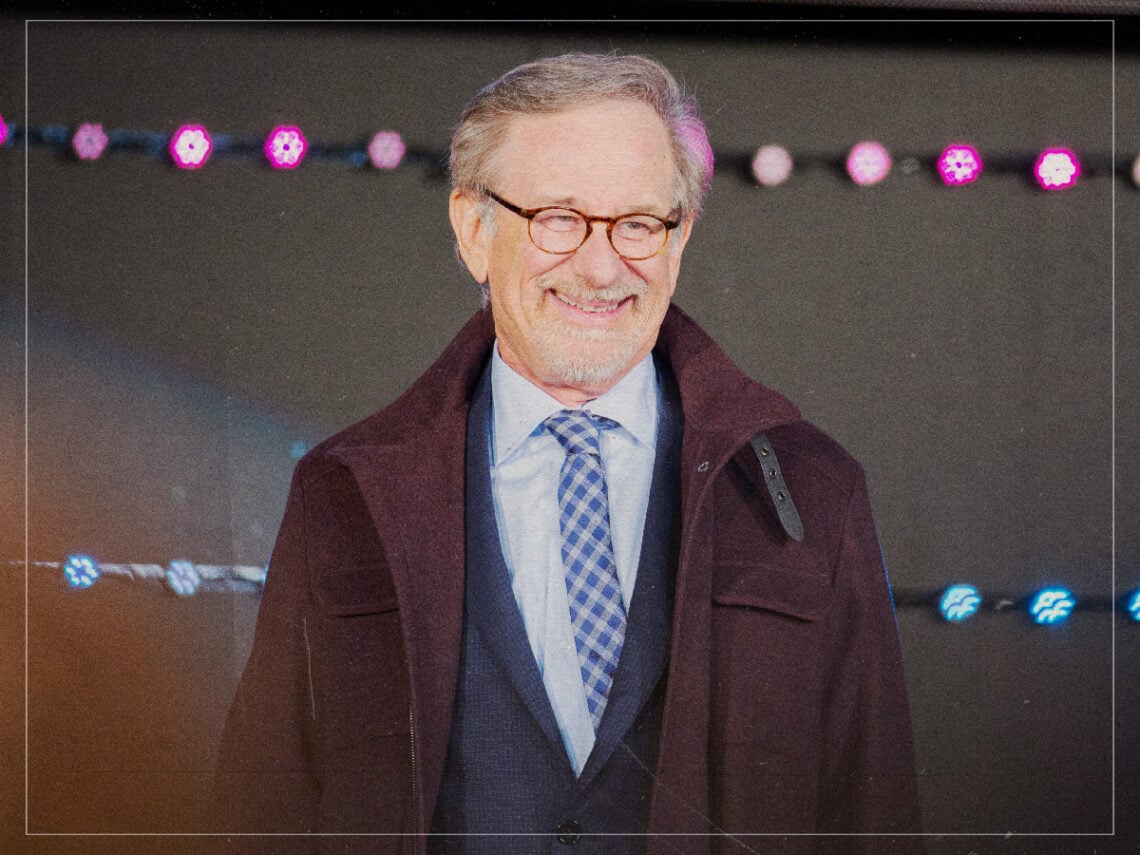
“I didn’t have the courage”: the movie genre that scared Steven Spielberg for 40 years

It isn’t too long now until we get to lift the curtain and take a proper peek at the latest Steven Spielberg sci-fi, Disclosure Day, the closely guarded Hollywood secret and the director’s first alien-related work in more than 20 years.
June will bring the Emily Blunt-starring blockbuster to cinema screens everywhere, and we’ll get to see if Spielberg still has it when it comes to sci-fi, some eight years after his last effort, Ready Player One and almost 50 years since Close Encounters of the Third Kind had people making pretend mountains out of their mashed potatoes all over the world.
That was the film that showed Spielberg was a young master of multiple movie genres; he’d come up through the ranks making New Hollywood gems like The Sugarland Express and the wildly tense trucker thriller Duel, before he made swimming a global hazard thanks to the incomparable Jaws in 1975, not just one of the greatest horror films of all time but one of the finest movies ever made, full stop.
And then two years later, Close Encounters represented his first foray into sci-fi, accompanying his friend George Lucas’ venture with Star Wars the same year, with a very different, more thoughtful exploration of the idea of aliens visiting Earth as compared to Lucas’ space opera. Again casting Jaws’ Richard Dreyfuss, this time as a UFO-obsessed electrical worker, Spielberg even got the legendary French director François Truffaut to appear in his film, which would bring in a staggering $300million on release, not far off the numbers done by Star Wars.
Now that he had two successive blockbusters in a row, all eyes were on the director to see what he would do next. What he did was turn down the offer to make Jaws 2 and instead pivoted hard to comedy, with 1941, a film written with the Back to the Future creators Robert Zemeckis and Bob Gale about Los Angeles residents panicking about recriminations in the aftermath of the Japanese attack on Pearl Harbour in World War II.
But despite his growing reputation and success, the movie was anything but straightforward for Spielberg, who worried about his inexperience in the genre. Back in 2015, Spielberg admitted, “One of the things that confused our approach is that I always saw 1941 as an old-fashioned Hollywood musical and had fantasised with [composer] John Williams about doing eight musical song and dance numbers as well. But I didn’t have the courage at that time in my life to tackle a musical.”
Spielberg instead put his all into producing one of the great dance scenes of the era in the film, a complex moment of choreography set to a piece by Williams titled ‘Swing, Swing, Swing’ involving hundreds of extras and equally complicated camera work.
Spielberg added, “I think the most satisfying experience for me in making 1941 was shooting the Jitterbug contest. (The sequence) is sort of a fragment of what I really wanted to do. I always regret not making 1941 a real old fashion, golden era musical.”
Although the film was a success on release, making a tidy profit, it was not in the same realm as his previous two, and some critics felt disappointed, not deeming it funny enough for a comedy. Featuring a host of stars from the time, including John Candy, Dan Aykroyd, Mickey Rourke and John Belushi, it was still nominated for three Academy Awards and has since become something of a cult movie for Spielberg fans.
