


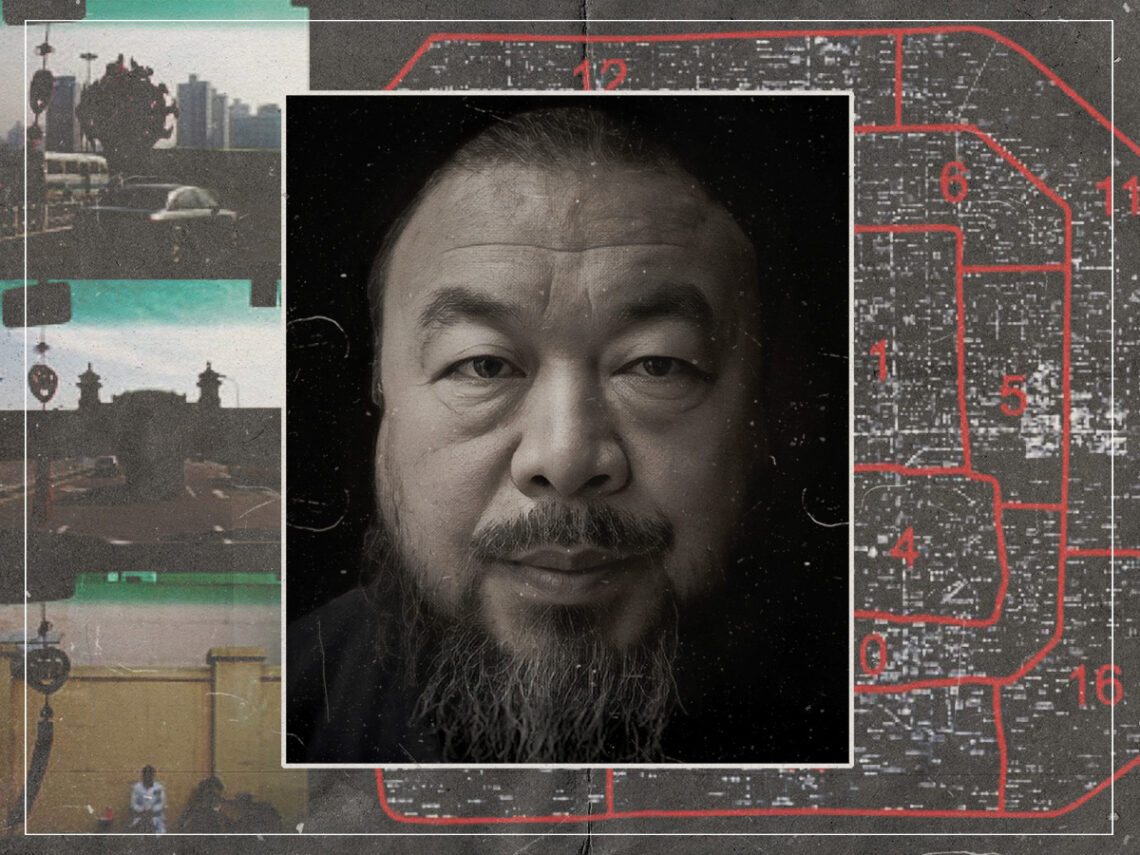
‘Beijing 2003’: The Ai Weiwei movie that charts every single street in the Chinese capital

A true luminary in the world of contemporary art, Ai Weiwei has radiated creative brilliance across a wide range of artistic mediums. His dedication to visual art, filmmaking, sculpture, and architecture, defined by a fearless sense of political activism, has made the art hero of China one of the most respected of his kind, creating a reputation that can occasionally precede him.
Having challenged the authoritarian regimes of China and other countries across the world and casting the spotlight on issues of human rights and freedom, Weiwei possesses ingenuity and his belief in pushing the boundaries of art to provoke those in power and dive headfirst into our inner societal works have cemented his legacy as one of contemporary art’s all-time greats.
Many of the works of Weiwei defy belief with the sheer amount of creative energy that has gone into them and the kind of personal risks that the artist himself has taken in order to point out the politically negative. However, there are few pieces associated with the Chinese art icon that showcase his unbreakable commitment to the very nature of art than his film Beijing 2003.
In a truly extensive undertaking, typical of his creative dedication, Beijing 2003 saw Weiwei attach a camera to a vehicle and make his way through the towering urban expanse that is the Chinese capital. Rather than focus on a sense of the random, Weiwei opted for a meticulous approach, traversing every possible thoroughfare within the city – grand boulevards, highways, main roads, side alleys or backstreets – if he could go down it, Weiwei did.
What came out the other side of the production was a remarkable opus of artistic cinema, a 9,000-minute (or 150 hours in old money) offering to showcase all the visual delights of every nook and cranny within Beijing. By affording audiences a very special voyeurism through the lens of the driver, Weiwei gave them a vision of the Chinese capital unlike any other.
Now, of course, Google Maps has pretty much assimilated this kind of cartography for almost every major urban hub across the globe, although Google’s static, sometimes blurry offering completely pales in comparison to Weiwei’s gloriously twisting and dynamic video document. Released back in 2003, the film still serves as a remarkable feat of filmmaking and a testament to Weiwei’s prowess as a fearless artist.
Weiwei’s film works are vast and varied and have all drawn acclaim for widespread reasons, but it’s this monumental project that seems to exalt his dedication to his craft as a visionary creative. Some of his art directly criticises the Chinese government (often at personal risk), while more is more innocuous in nature. Beijing 2003 simply serves as a love letter to the city in which Weiwei was born and the one he has mostly called home.
