


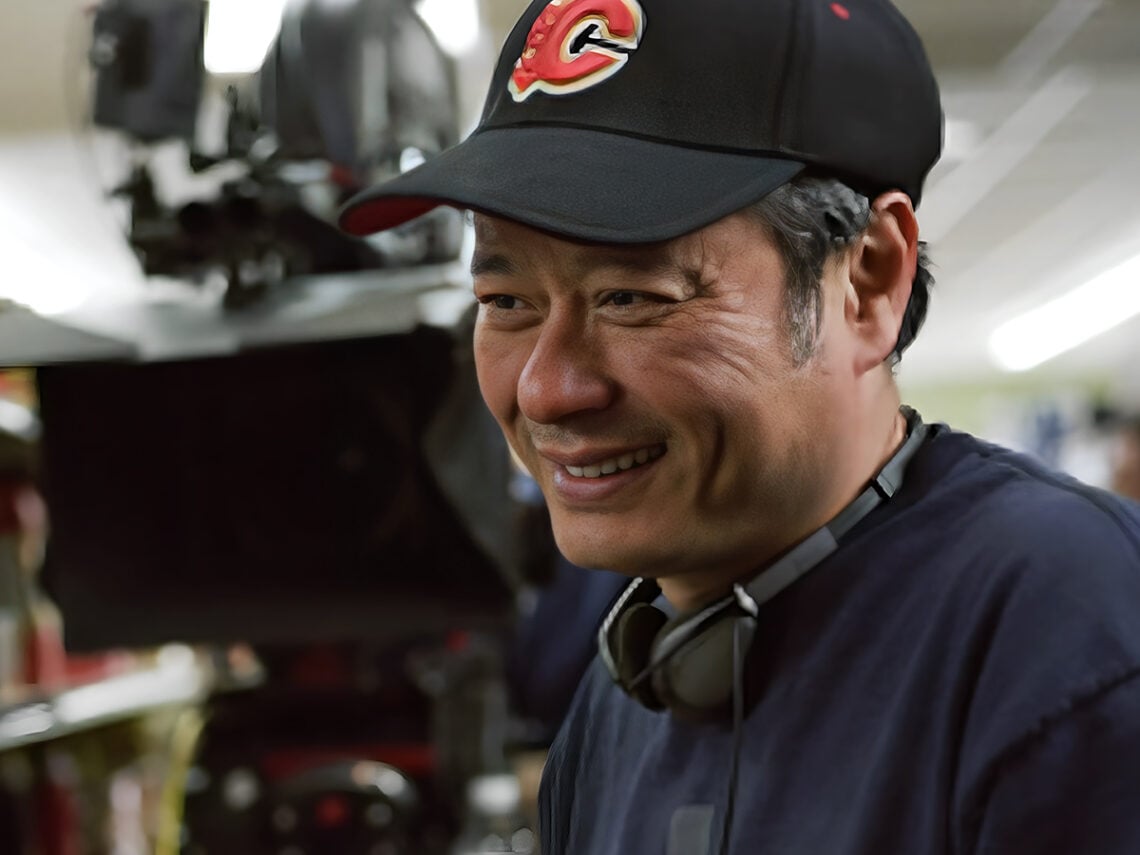
“I got beat”: Ang Lee thinks audiences were brainwashed into hating his work

The unstoppable march forward of technology is one that some embrace while others entirely reject.
It can sometimes feel like progress for progress’ sake, and personally, I think we peaked around 2008 once we had decent sat-nav and had never heard of doom scrolling, but to directors like Ang Lee, the advance of new tech seems to open up creative possibilities, who, over the years, has made use of it every time he could.
A leading director in Hollywood for more than 30 years now, Oscar nominated in 1995 for Sense and Sensibility, the seeds of Lee’s love of special effects were first sewn on a global scale with 2000’s Crouching Tiger Hidden Dragon, the martial arts extravaganza which seemed fairly ‘standard kung fu’ until one of the characters randomly just ran up a 100ft tree and floated through the air before kicking someone in the face.
It was pretty mind-blowing stuff at the time, and the film won ten Academy Award nominations, the most for any foreign language film in history. By now, Lee was a huge name, and he was duly handed the reins for Marvel’s Hulk in 2003, starring Eric Bana, which came with a production budget of $150million. He worked with Industrial Light and Magic on the film to create a realistic-looking, fully CGI Hulk, but some critics were not impressed, not with the film or the angry green creation. While it was financially successful, the criticism of the movie hit him hard, and he seriously considered retirement.
So, instead, he moved away from special effects and made the 2005 gay cowboy classic Brokeback Mountain, again earning a raft of awards, including an Oscar for ‘Best Director’, which he followed up with the erotic WWII drama Lust, Caution in 2007 before in 2009 he made Taking Woodstock, the film about the making of the legendary festival, but that was a huge flop.
He decided to go all out for his next film, 2012’s Life of Pi, a novel which for some time had been considered impossible to film, but Lee was able to convince studio bosses to splash out $120m in order to do it, despite the success of the film relying heavily on post-production special effects including 3D, which at the time was the focus of not just big budget movies but also TVs in the home, with manufacturers investing billions in the technology.
Life of Pi proved to be money well spent; it picked up ten Oscar nominations, including another for Lee as ‘Best Director’, and made $680m at the box office. The problems came a couple of years later when he tried to again embrace emerging technology with his next film, Billy Lynn’s Halftime Walk, the story of a returning Iraq veteran who struggles with his celebrity status back in the US.
The filmmaker threw almost everything at it, again employing 3D but twinning it with 4K Ultra High Definition, plus shooting at an extra-high frame rate of 120fps, tech that increased production costs massively. Despite an all-star cast including Steve Martin and Kristen Stewart, the film bombed, making a large loss, leading Lee to tell The Guardian, “I was proud of that film. But I got beat, and that’s hard to swallow. I want to figure it out this time. I want to make it work and prove I was right, like anybody would.”
Lee fervently believed that the ‘soap opera effect’ that 120fps adds was the future of filmmaking, firmly in the mindset that audiences had been “brainwashed” by the conventional way of viewing content. He again employed the technology for 2019’s Gemini Man, a Will Smith action thriller that required two Will Smiths to be on screen at the same time, sometimes fighting each other. The film also used de-ageing on Smith and a high frame rate, but again bombed at the box office, losing tens of millions.
As a result, he hasn’t made a film in the seven years since, although it seems he has signed up to direct a new movie called Gold Mountain, set in the Gold Rush era of the United States, adapted from the novel How Much of These Hills is Gold by C Pam Zhang. Hopefully, it sees better days.
