


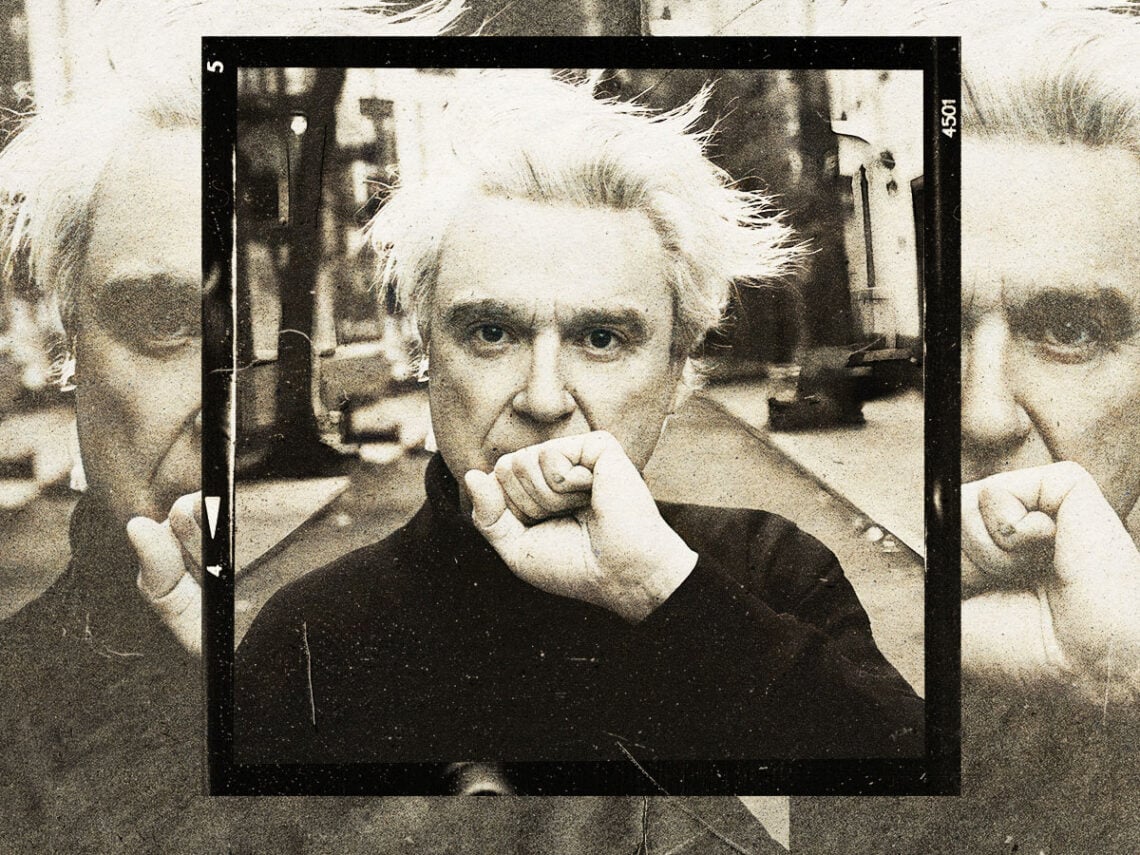
The trademark move David Byrne lived to regret: “I don’t deny it”

Thinking Man’s Dance Music: that’s how the Talking Heads defined what they were trying to do. When they burst onto the scene after signing to Sire Records in 1976, they endeavoured to ensure that making flippy floppy was somehow an intellectual act.
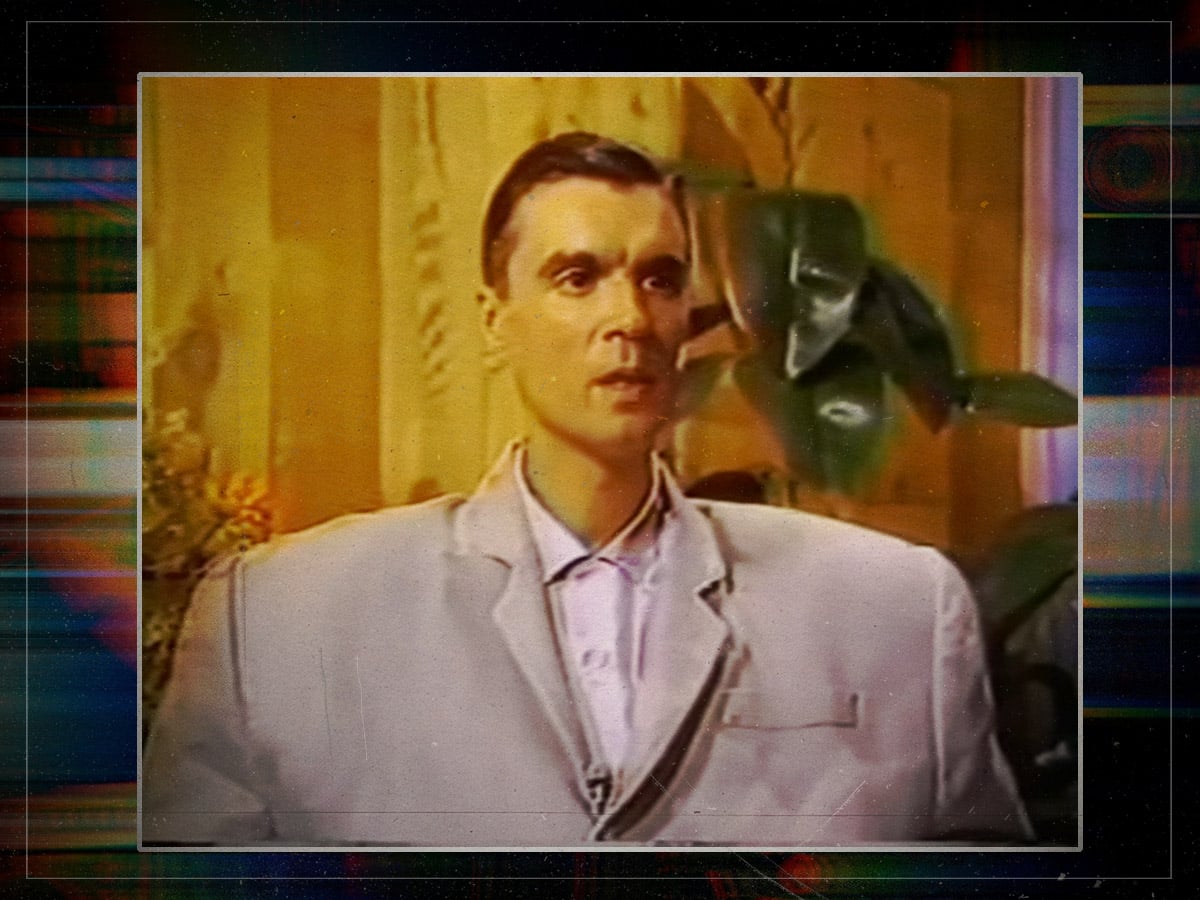
They succeeded with a quirky sense of joy that has proven hard to replicate, no matter how hard some ‘fun’ bands have tried. More than anything, they represent the infectious thrill of watching unburdened creativity unfurl, at the centre of that is David Byrne and his many manic creations. Chief among those being his oversized suit.
In a bid to ‘shrink his head’, he sadly created such a startling image that it has since become synonymous with him from a purely visual perspective, while the depth behind the bagginess has disappeared beyond his broad shoulders. Is that his fault? Almost certainly not. Has he lived to regret it, nevertheless? Well, he divulged just that to the writer Ian Gittens.
After facing the same question for the thousandth time, the singer joked, “That will be the inscription on my tombstone. Here lies the body of David Byrne. Why the big suit?” Worn out by the sheer subsumption of the association, Byrne regretted how not only the meaning of the suit itself was lost, but also how the wardrobe choice began to obscure the band’s further moves. The suit, in effect, became an albatross that weighed them down, until they cracked under its irreplicable enormity.
So, why the big suit?
Jokes aside, the repetition of this remark prompts a question that Byrne would relish if only it was rephrased: is it the duty of the artist to ensure that their messages are fully understood, or does that reduce the glorious ambiguity of a baggy suit in the first place?
Well, Byrne, as a scholar of the arts, would no doubt be aware of Roland Barthes’ classic line, “The birth of the reader must be at the cost of the death of the author.”
In the short essay The Death of the Author Barthes argues that as soon as the suit became public, Byrne’s intention became meaningless and the new meaning was applied by the endless different interpretations of the people who saw it. So, if the prevailing view was that it was an absurd image that caught the eye with enough of a hint of an unknown undercurrent for him to be asked about it in every interview, then that’s what it now meant.
But what did it actually mean?
Interestingly, the same year that Barthes’ essay was published, 1967, just as The Beatles were getting weird, ED Hirsch ran with the opposing view in the Validity of Interpretation, explaining, “A text means what its author meant.” If that’s the case, beyond shrinking his head in a more painless method than a microwave, what has Byrne said about the meaning of the suit himself?
“People have interpreted it as meaning like, oh, this is the archetypical businessman kind of imprisoned in his suit, imprisoned in his whole situation,” Byrne once told NPR. “That might be unintentional, but it might be there. I don’t deny it. But it wasn’t my intention to kind of make fun of businessmen.” So, for the love of god, David, what was the intention?
Well, the grey suits came before the inflated size. “Everything was going to be stripped down to the bottom,” he said of the Talking Heads’ artistic outlook in the fraught era of the 1970s. “We were going to reinvent everything from scratch. We were going to dress like normal people. Of course, we didn’t dress like normal people, so we had to appropriate something that looked like normal people,” he told Desert Island Discs.
The idea was to camouflage yourself as the everyman. In part, this was an original idea because enough of his peers were being so fancy beyond reason that grey and boring was suddenly radical. While serving to eliminate distraction from the music, it also made the point that normalcy is itself a performance, and the juxtaposition of a businessman cutting loose proved utterly refreshing.
“I went from trying to camouflage myself as an everyman, to making a kind of statement by kind of enlarging the suit to giant size – the man is then lost in his suit.” At the same time, the band had developed a level of theatrics that embellished the show with something that they felt “belonged to us”. So, inspired by Japanese theatre, this was another flourish that added to their world, much like our world, only more fun.
