


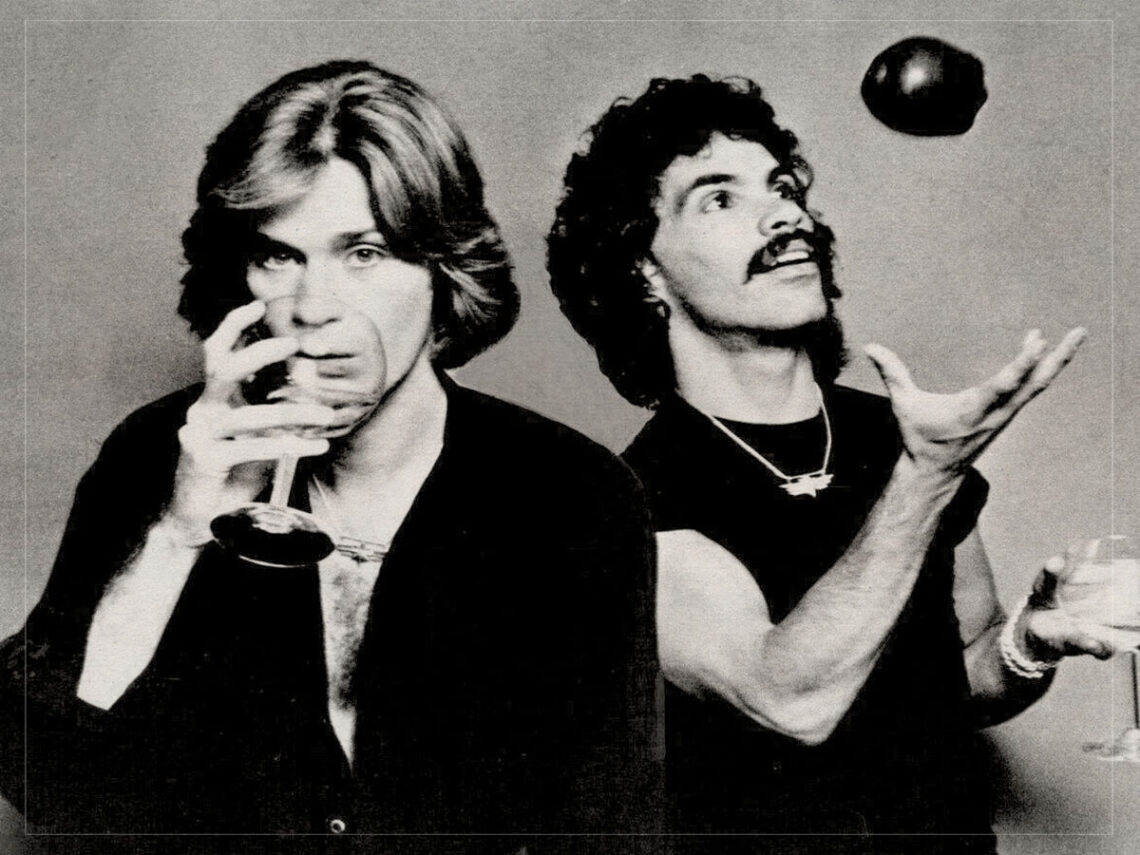
The Motown group that was everything to Hall and Oates: “It was everything”

“I wanted everybody to enjoy my music,” Motown boss Berry Gordy once recalled of the musical empire he built back in the 1960s, and it is fair to say that the Detroit music mogul succeeded in those aims.
From The Beatles to Bruce Springsteen, nobody was immune to the pop-soul brilliance of Motown’s output, and 1980s pop heroes Hall and Oates were particularly infatuated with one legendary group on the label’s roster.
Vocal groups were always the bread and butter of Motown’s output, going right back to its earliest origins in 1959. In fact, it was the vocal prowess of The Marvelettes which earned Gordy’s label its very first number-one single, in the form of the 1961 classic ‘Please Mr. Postman’, so it is perhaps no surprise that the label boss focused a lot of his attention on vocal groups in the years that followed – after all, hit records are what kept the lights on at the Hitsville offices.
The Supremes were inarguably the label’s greatest success within the realm of vocal groups, affording Motown more hit records than any other outfit and almost single-handedly carving out the famed ‘Motown sound’, albeit with the aid of songwriting geniuses Holland-Dozier-Holland. For fellow pop sensations Hall and Oates, though, it was The Temptations who marked the gold standard of Motown vocal groups.
First signed to the label in 1961, The Temptations gave Motown no shortage of defining moments. Their inaugural number-one, 1965’s ‘My Girl’, for instance, became one of the most recognisable hits of the year, and firmly established the vocal outfit as a regular feature of the American pop charts.
Unlike many of their Motown contemporaries, though, The Temptations managed to keep those success stories coming.
During the counterculture heyday of the late 1960s, when Motown’s cultural relevancy was at risk of waning, it was The Temptations who thrust the label headfirst into the psychedelic age with ‘Cloud Nine’ and, for Hall and Oates, that transformative power only served as the cherry on top of what was already an otherworldly discography.
“In the mid-’60s when Daryl and I got together, there were a million vocal groups,” John Oates recalled during The Temptations’ 1989 induction into the Rock and Roll Hall of Fame. “In those days they had uniforms, right? Well, The Temptations always had the best uniforms. They were always the best dressers. Of course, you had to have steps, and The Temptations had the best steps. Now, you know you had to sing, and you know that The Temptations could sing.”
In short, the Motown outfit offered the complete package. Inevitably, then, The Temptations formed a colossal influence on Hall and Oates during their early years, with the songwriter going so far as to claim Melvin Franklin might be “quite possibly the best bass singer of all time.”
He added, “To us, it was everything. We tried our best, and we still haven’t even got close.”
Whether or not Hall and Oates ever came close to replicating the vocal mastery of Franklin and his group, The Temptations’ influence always loomed large over the pair, as it did the entirety of the pop charts in the wake of their golden age. After all, a discography as masterful, successful, and enduring as the Motown group’s is not one that can be forgotten in a hurry.
