


The 1959 album that became the most critically acclaimed of the whole decade

“I can’t imagine there has ever been a more gratifying time or place to be alive than America in the 1950s,” historian and author Bill Bryson wrote. “No country had ever known such prosperity.”
Indeed, the world was changing in a whirlwind, and America was leading the charge towards a new dawn. Technological advancements had unlocked a fresh wellspring of goodies for society, and a bright future seemed to be at hand.
Art was responding to this blossoming boon in an equally bombastic manner. Expression was at once rendered multifaceted and ubiquitous. “The modern artist is living in a mechanical age and we have a mechanical means of representing objects in nature such as the camera and photograph. I, therefore, see the need to express my inner world,” Jackson Pollock said of the era, “in other words, the energy, the motion, and other inner forces.”
Those “inner forces” were flooding into living rooms. The decade began with a rapid rise in affordable home radios. Before long, DJs like Alan Freed from Cleveland began using funky new-fangled phrases like rock ‘n’ roll, christening an emerging genre that seemed to perfectly match the mood of liberation. The very first birth control pill then arose alarmingly close to when Elvis Presley’s hips started thrusting.
With television ownership in the US surging beyond 50% by 1955, plenty of the American public were on hand to witness the boy wonder shaking his stuff, too. At the same time, 45 RPM singles made new tracks easily transportable and tradable on the playground, so suddenly you could easily listen to more of your favourite artist at home, and on demand, than ever before.

From the launch of the Hot 100 to ‘Johnny B Goode’, it was all going off in the 1950s. However, we often view it as a mere formative decade—the cracking of fire before we really got cooking. Sure, it was gathering pace like never before, but artistically, it seems like a precursor, more artifice than art.
We often view it as a commercial boom before the likes of Bob Dylan and The Beatles steered the revolution to deeper, more meaningful waters.
So, what was the best album of the 1950s?
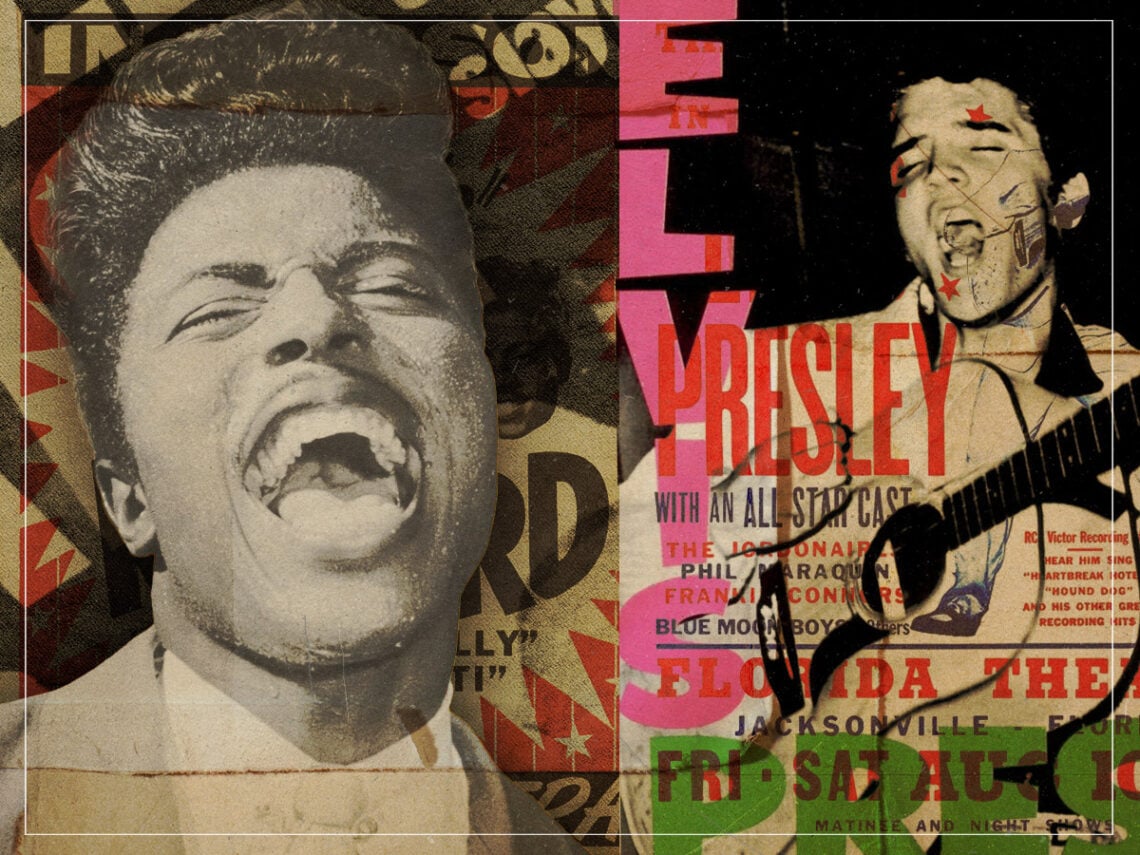
But that wasn’t necessarily the case. While literature still certainly held the paramount position when it came to critical reverence in the arts, music was beginning to flex its muscles. The rise of pop culture was dragging other, less commercial subgenres along with it. Jazz was beginning to see the appeal that the likes of Elvis Presley and Little Richard were offering, and making strides to add swagger to their swing.
Enter the coolest cat of the era, or almost any era for that matter: Miles Davis. He was determined not to let America move forth with its classiest genre in the lurch. So, for Kind of Blue, he assembled a jazz dream team. His trembling trumpet was joined by John Coltrane on tenor sax, Cannonball Adderley picked up the alto, Bill Evans plodded out the modal piano melodies, Paul Chambers was the steady hands on bass, and Jimmy Cobb asserted himself as the classiest drummer in the West.
Together, they endeavoured to invent a new form of jazz, based around modes. In doing so, they created space, something that seemingly sat at odds with the frenetic nature of the 1950s. But that was exactly the point. While everyone else was getting all shook up and excited, these cool maestros were kicking back and reflecting the flipside to Bill Bryson’s proclamation. Even in boom times there’s plenty of space for the blues.
With greater space, they were able to generate greater atmosphere, bringing a beautiful depth to the music. So, the innovation was applauded by the critics, but the easy sway of the melodies also made it lusciously accessible to listeners.
So, just like that, it became the most critically acclaimed album of the 1950s, with data analyst Henrik Franzon running the figures and bringing it out on top of Elvis Presley’s self-titled 1956 album in second, and Frank Sinatra’s classic from the same year, Songs for Swingin’ Lovers, in third.
“No chords,” Davis said of the secret of the record, “[it] gives you a lot more freedom and space to hear things. When you go this way, you can go on forever. You don’t have to worry about changes and you can do more with the [melody] line. It becomes a challenge to see how melodically innovative you can be.”
