


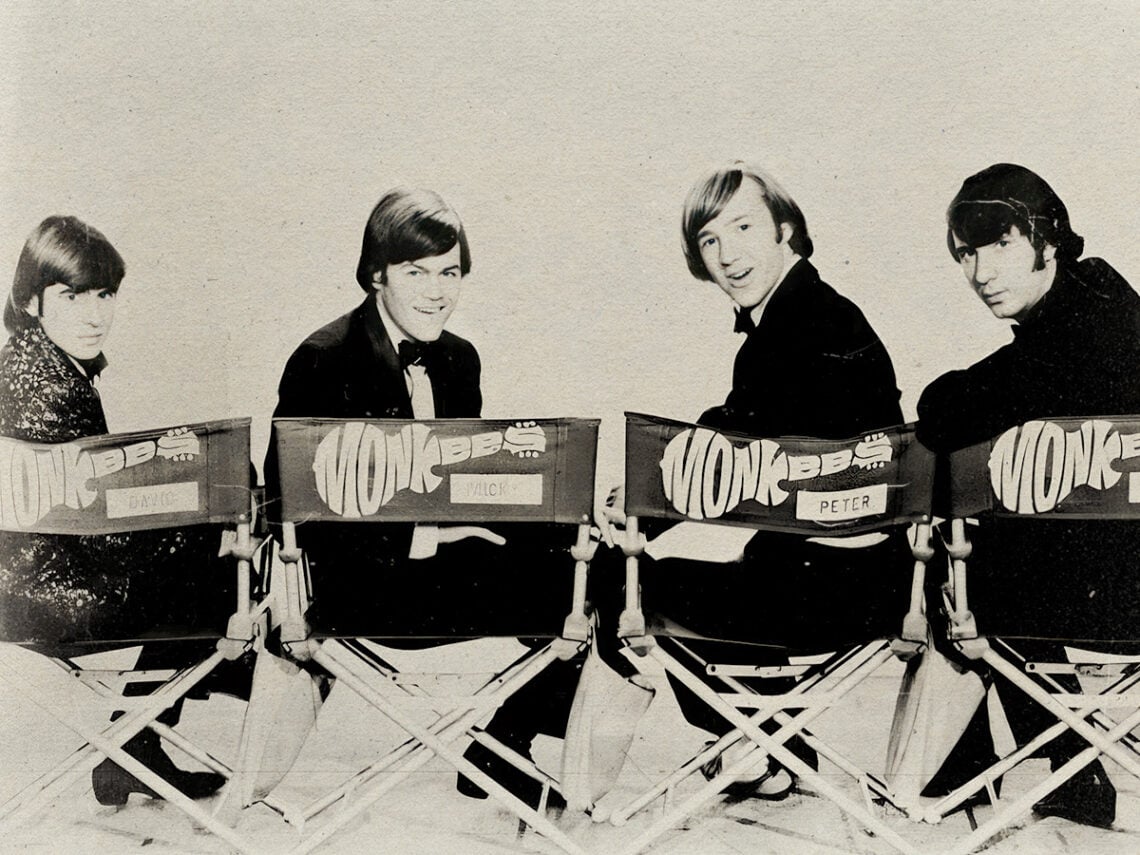
How The Monkees escaped their “manufactured” beginnings

Just as Andrew Loog Oldham engineered The Rolling Stones to counter The Beatles’ affable nature with a darker, bad-boy visage, The Monkees assembled as an American answer to the British invasion. Indeed, The Monkees are often dismissed as a fabricated house band devised to reclaim the US charts from The Beatles and The Rolling Stones. But should The Monkees be discredited?
Unlike The Beatles, who evolved from John Lennon’s school band The Quarrymen, The Monkees’ existence can be traced back to a casting call placed by producers Bob Rafelson and Bert Schneider. The shrewd suits sought several young, musically inclined performers for a new television series. The advert, published in the Hollywood Reporter on September 8th, 1965, famously read, “Folk & Roll Musicians-Singers for acting roles in new TV series”. The posting attracted a diverse pool of aspiring musicians, with hundreds of hopefuls auditioning for the opportunity.
From the extensive audition process, just four performers were selected to become The Monkees: Davy Jones, Micky Dolenz, Michael Nesmith, and Peter Tork. Each member brought a unique musical background and personality to the group.
Davy Jones was a seasoned performer fresh from the cast of Oliver on Broadway and in London’s West End. In February 1964, he appeared on The Ed Sullivan Show with Georgia Brown, a co-star on Oliver. This happened to be the same night The Beatles made their famous US television debut on the show. “I watched the Beatles from the side of the stage, I saw the girls going crazy, and I said to myself, this is it, I want a piece of that,” Jones once recalled.
Co-lead vocalist and drummer Micky Dolenz was also a former child actor with a passion for music. Meanwhile, Michael Nesmith and Peter Tork brought their singing, songwriting and instrumental skills to round out the foursome.
Despite being strangers initially, The Monkees quickly developed chemistry during rehearsals and formed a brotherhood of shared passions. The TV show, also titled The Monkees, debuted in 1966 and featured the band’s comedic and musical exploits, blending scripted scenarios with their genuine musical talent. The Monkees’ unconventional formation and subsequent success highlighted the innovative ways in which entertainment was evolving during the 1960s but left some questioning their validity as a group.
Can a relationship founded via Tinder or a similar online dating platform be considered just as real as one formed between high school sweethearts? The answer to this question is, “Absolutely! It all depends on how the relationship evolves, not how it is formed”. In The Monkees’ case, their true, gregarious personalities shone forth in the TV show, but music soon became their central export.
One misconception The Monkees’ detractors often posit is that they didn’t write their own songs. The songwriting duo Tommy Boyce and Bobby Hart contributed most of the lyrics to The Monkees’ classic era albums, with the likes of Neil Diamond or Carole King and Gerry Goffin also making famous contributions. However, the members were writing from the off, with Nesmith’s ‘Papa Gene’s Blues’ appearing on the 1966 self-titled debut album and his first big hit, ‘Mary Mary’, arriving the following year on More Of The Monkees. Members contributed around half of the material by the time they entered the studio for their third album, Headquarters.
In 1967, The Monkees visited the UK for their first tour across the Atlantic. They sadly weren’t received well in The Beatles’ homeland, with several major news publications denouncing the band as the “Pre-Fab Four”. The Sunday Mirror even called The Monkees a “disgrace to the pop world.”
All the same, The Monkees met The Beatles and saw the band recording ‘A Day in the Life’ at Abbey Road Studios. During the visit, Nesmith asked John Lennon, “Do you think we’re a cheap imitation of the Beatles, your movies and your records?” Lennon allegedly replied, “I think you’re the greatest comic talent since the Marx Brothers. I’ve never missed one of your programmes.” Elsewhere, George Harrison praised The Monkees for their self-written and self-produced music. He would later invite Tork to play Paul McCartney’s banjo on his 1968 album Wonderwall Music.
The Monkees television series was wrapped up in March 1968. It had followed a fictionalised narrative of a pastiche band trying to make it big, but off-screen, The Monkees truly had made it big and continued to record music together for several years, much of it from their own pens.
Towards the end of the 1960s, they began to turn their backs on the bubblegum pop aesthetic of yore, embracing the concurrent psychedelic wave with abstract lyrics and progressive composition. Many fans began to see The Monkees as a real band in its own right and an iconic voice of the countercultural movement.
Listen to The Monkees’ 1968 song ‘Writing Wrongs’ below. The classic track, written by Michael Nesmith, embodies the band’s embrace of abstract composition.
