


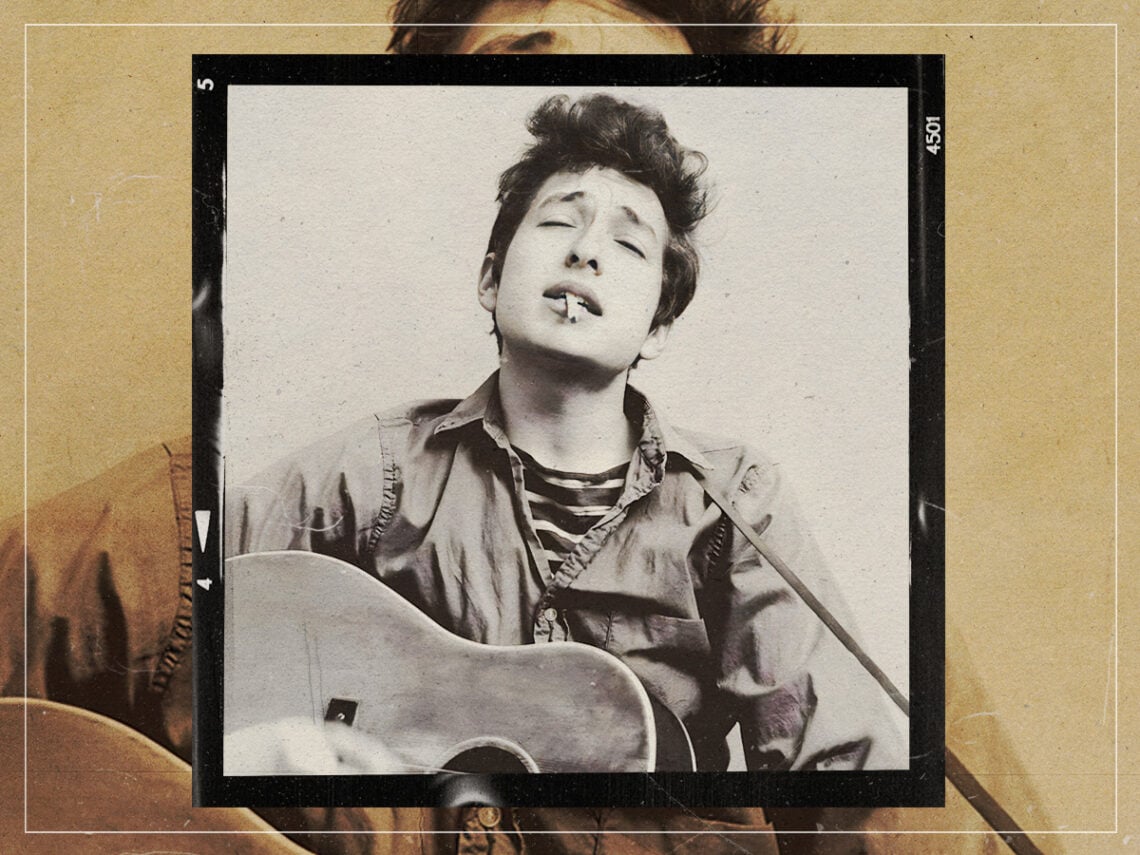
The moment Bob Dylan surprised himself with it his own cruelness: “I must have been a real schmuck”

“I look back at that particular one and say, of all the songs I’ve written, maybe I could have left that alone,” Bob Dylan once said in a rare moment of humble reflection. Alongside love and grand feelings of spirituality, if there’s one emotion that crops up time and time again in Dylan’s work, it is spite, but on one track, even he can admit he took it too far.
Dylan is a master at the veiled insult. Actually, perhaps veiled isn’t quite the right word, given that he’s writing songs, singing “You’re an idiot, babe, It’s a wonder that you still know how to breathe”, but there’s something about Dylan’s cultural reputation that seemed to protect him.
Dylan is a poet, and he’s handled like a prophet, a sage, a sire. He’s treated like god himself when it comes to songwriting, proven when he was granted the Nobel Prize for Literature because of his songs alone. Other artists queue up alongside hordes of fans to worship at his feet as Dylan is truly considered by so many to be the highest of the high when it comes to lyric writing; so naturally, none of those people are also going to admit that he’d kind of a bitch.
But he is, and the bitchiness is palpable in so many of his songs. ‘Positively 4th Street’ sees him singing, “I wish that for just one time you could stand inside my shoes, you’d know what a drag it is to see you”, and on ‘Leopard-Skin Pill-Box Hat’, he’s taking shots at Edie Sedgwick’s signature look, or tearing into her naivety and ill-health on ‘Just Like A Woman’. ‘Idiot Wind’ is so harsh that Sinéad O’Connor claimed it taught her how to write angry music, while even somewhat love songs like ‘Don’t Think Twice, It’s Alright’ can’t resist a dig as he throws in, “You just kinda wasted my precious time”.
It’s not at all passive aggression, but it’s outright, and the fact that Dylan has always famously refused to say who his songs are about, avoiding any suggestion of real-world inspiration, ensures there’s at least some protection there.

However, on ‘Ballad In Plain D’, that protection slipped a little when, given the timing and given the public nature of their relationship, the track was very clearly about Suze Rotolo.
Only a year earlier, Dylan was arm in arm with Rotolo on the cover of an album, and never again has the world seen the artist be so public about his relationship as he is on the cover of The Freewheelin’ Bob Dylan, and perhaps an instance like this song is the reason.
After the split, Dylan went for the throat; not so much Rotolo’s throat, but the throats of her entire family as he calls her mother a “parasite”, one sister a “scapegoat”, and declared that the other didn’t even need mentioning as he only liked the younger one.
He saw raging against the family the outcome for his girlfriend’s leaving, as he took the end of their relationship to be the completion of a master plan by Rotolo’s circle to pull her away from him. We know that because he lays it all out, verse by savage verse, in some of his most outright and bitter lyrics. He leaves nothing to the imagination here as the entire situation, from the psychology of her relatives, to his infidelity, to a screaming match with her sister, is all laid out in the top.
In the habit of releasing music fast, clearly, Dylan at the time didn’t stop and think much about it. But years on, he reflects on the track with rare shame, stating in 1985, “I look back and say ‘I must have been a real schmuck to write that’”.
Luckily, Rotolo seemed to have the forgiveness of a saint and seemed to forever understand Dylan’s artistic mission. “I understood what he was doing. It was the end of something, and we both were hurt and bitter. His art was his outlet, his exorcism. It was healthy,” she said, chalking the track up to the impassioned outpouring of a genius, even if that genius was getting a bit too bitchy.

Never Miss A Tale
The Far Out Bob Dylan Newsletter
All the latest stories about Bob Dylan from the independent voice of culture.
Straight to your inbox.