


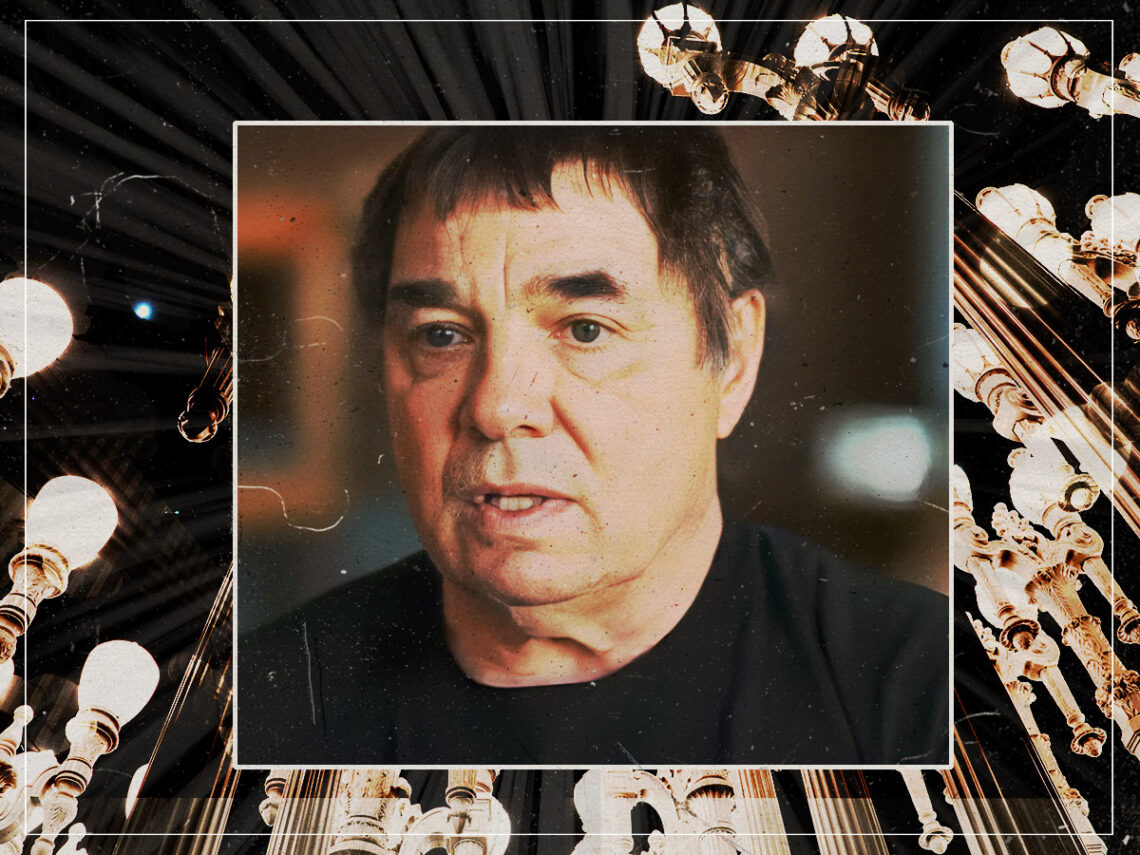
The moment Chris Burden found mainstream success

Chris Burden might be best known for getting willingly shot in his 1991 performance piece Shoot, but his first major break into the mainstream came from art that was far more sedate by comparison. Swapping small-calibre rifles for sentimentality allowed him into the gracious arms of audiences outside the fringe by branching into sculpture. In 2008’s Urban Light, he transformed the space outside the Los Angeles County Museum of Art (LACMA) into a grid of 202 street lamps illuminating the path at nighttime.
In between various performance-related arrests and controversies, Burden had been steadily collecting streetlamps since 2000. Without a specific piece in him, he was first drawn to two lamps he bought at a flea market. Jeff Lavine has been restoring the old lamps and went on to sell Burden the bulk of his collection.
Other purchases came from Anna Justice, the collector tasked with their restoration and painting – all a uniform grey. In the years leading up to the creation of Urban Light, visitors at Burden’s studio would be confronted with hundreds of streetlamps, which he lovingly referred to as his “lamp carcasses”.
In 2003, satisfied his carcass collection was extensive enough, he started talking about installing the hundred-odd lamps at New York’s Gagosian Gallery. While Burden, at this point, was a celebrated avant-garde artist, his reputation didn’t offset the cost of running the lights. Nevertheless, he still envisioned the huge collection being displayed all together. He only briefly diverted from this aim when he sent 14 lamps on a trip to London for an exhibition.
Unperturbed, he invited visitors to the streetlamp graveyard scene cluttering his Topanga Canyon studio. Here, like in their eventual permanent assembly outside the Los Angeles museum, he arranged them in tight rows along the sides of the building. Buyers came and went, and most saw flashes of brilliance in the uniform bulbs of his lamps – then shuddered at the thought of the electric bill.
However, one unfazed party was Michael Govan, the newly appointed director of the LACMA, who visited the studio at prime time. He drew up to the property in the evening, saw how the lights looked and almost instantly decided they were a great investment. Handily, his visit was followed by Andrew M. Gordon’s, a Goldman Sachs suit who’d go on to become chairman of the museum’s board. Gordon approved the purchase of all 202 streetlamps for an unknown price.
Once installed, Urban Light was a hit, and Burden’s years-long treasure hunt for 1930’s streetlamps was made worthwhile. Naturally, these days, it’s become synonymous with selfies – perfect lighting, apparently. But Burden intended to illuminate something else. “It sounds kind of corny,” he once explained, “But when you walk through the lamps into the museum, it’s like a pathway to enlightenment. It’s symbolic.”
