


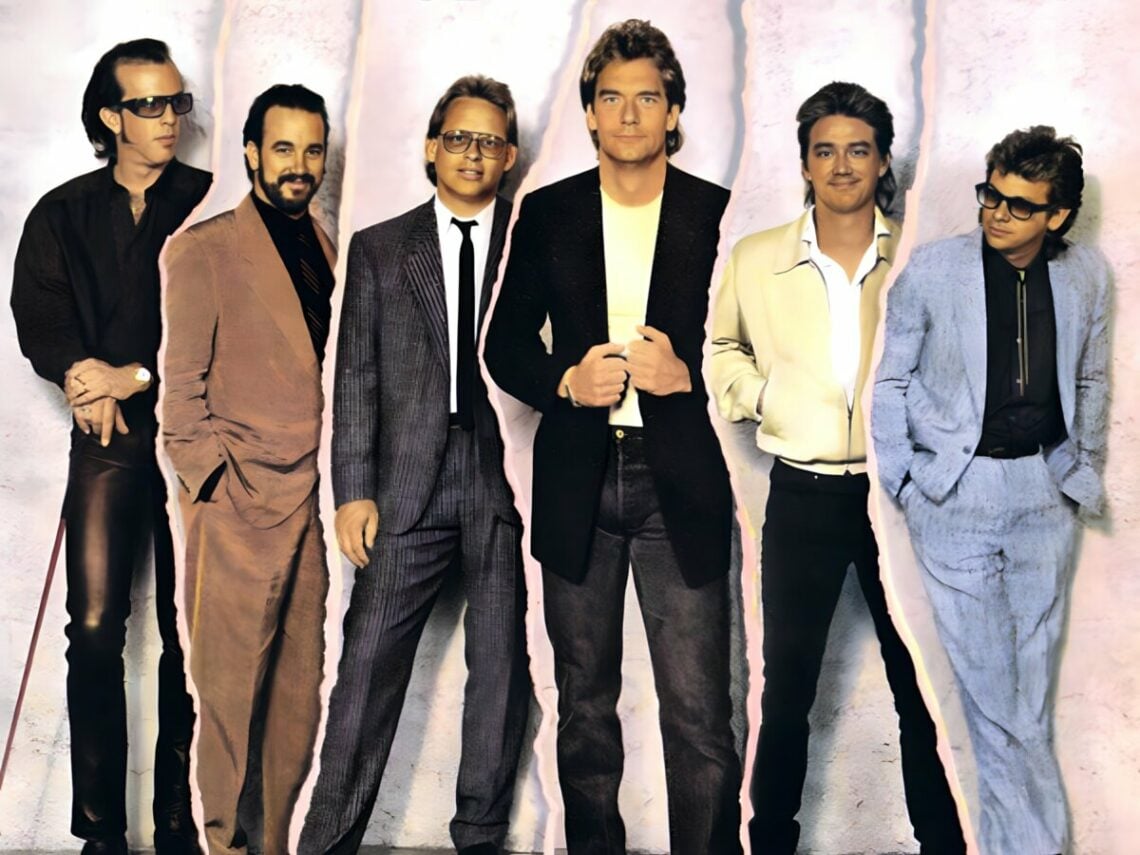
The misunderstood message of Huey Lewis’ ‘Hip to Be Square’: “Bourgeois bohemians”

While Huey Lewis and the News have enjoyed a stellar career, they are best known for the 1986 hit ‘Hip to be Square’.
A song closely aligned with the era’s yuppie culture and the general life of a square – thanks in part to its association with American Psycho – it transpires that its meaning is widely misunderstood. It does not celebrate square culture at all. Rather, it is a biting parody of the type of people described as ‘Bobos’.
Famously, the first portion of the song’s lyrics read: “I used to be a renegade/ I used to fool around/ But I couldn’t take the punishment/ And had to settle down/ Now I’m playing it real straight/ And yes, I cut my hair/ You might think I’m crazy/ But I don’t even care/ ‘Cause I can tell what’s going on/ It’s hip to be square”.
Taken at face value, it seems as if Lewis is celebrating being a square and turning your back on a bohemian lifestyle. This idea was then reinforced by Patrick Bateman, the main character of Bret Easton Ellis’ 1991 novel American Psycho, providing a lengthy critique of Lewis and the News’ career.
Part of the song’s enduring appeal stems from that ambiguity. Its bright, upbeat production and undeniably catchy chorus make it easy to interpret as a sincere celebration of conformity, which is precisely why so many listeners overlooked the satirical edge buried within the lyrics.

When the hit movie adaptation arrived in 2000, it featured ‘Hip to be Square’ in a scene where Christian Bale’s Bateman delivers a shortened version of the critique from the novel to colleague Paul Allen just before murdering him.
In an iconic sequence and a significant point in the film, Bateman says, “In ’87, Huey released this … Fore!, their most accomplished album. I think their undisputed masterpiece is ‘Hip to Be Square,’ a song so catchy most people probably don’t listen to the lyrics. But they should because it’s not just about the pleasures of conformity, and the importance of trends, it’s also a personal statement about the band itself.”
That scene ultimately gave the song a second life in popular culture, transforming it from a successful 1980s hit into something far darker and more ironic. Bateman’s obsession with surface-level success and consumerism perfectly mirrored the kind of personality Lewis was subtly mocking in the first place.
When speaking to Entertainment Weekly in 2008, Huey Lewis revealed that he originally wrote the lyrics in the third person and outlined the cultural phenomenon that inspired it. He also explained that he later modified the words to be in the first person to enhance the joke, which ultimately made it misinterpreted as a square anthem.
Lewis said: “The truth of the song is, I wrote it originally in the third person. ‘He used to be a renegade/ he used to fool around/ he couldn’t take the punishment and had to settle down.’ It was about a phenomenon that’s articulated much better in a book called Bobos in Paradise.”
Lewis continued, “The phenomenon where people from the ’60s started to drop back in, cut their hair, work out, that kind of crap, but they kept their bohemian tastes. And that’s why today, the ruling class are Bobos. They’re bourgeois bohemians. I thought it would be funnier in the first person, but I kinda mistold the joke a little bit, and I think some people thought that, in fact, it was an anthem for square people.”
Ironically, that misunderstanding may have helped cement the song’s legacy. Even if audiences missed the joke, ‘Hip to be Square’ captured the contradictions of 1980s culture so perfectly that it continues to resonate decades later as both a pop anthem and a sly social critique.
