


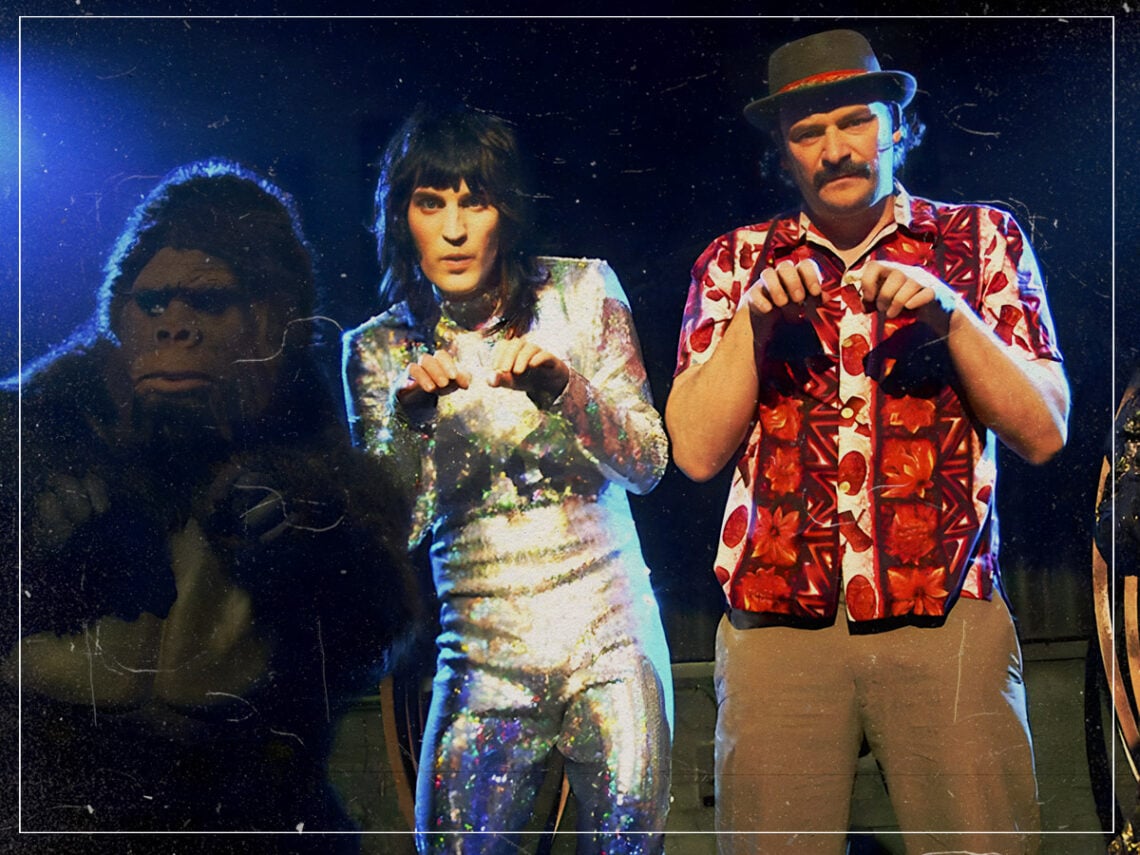
How ‘The Mighty Boosh’ transformed British comedy

In the whirlwind of The Mighty Boosh in 2004, attempting to describe the show posed a formidable challenge. Critics struggled with its complexity, and explaining it to parents likely felt like an exercise in futility. Many of us came of age enthralled by Julian Barratt and Noel Fielding’s unique comedic style. However, truth be told, unravelling the essence of the show remains a mystery for us all.
Even though the show hasn’t graced screens in recent years, the images of its iconic characters are likely still etched in your memory. From Old Gregg and The Moon to Tony Harrison, The Hitcher, Lester Corncrake, and more, these characters have become indelibly imprinted on our minds, whether we embrace it or not. The beckoning title card invites us, “Come with us now on a journey through time and space,” guiding us on a peculiar voyage through the bizarre.
The Mighty Boosh elevated the sitcom concept to new heights, infusing surrealism into its unabashedly impolite gaze. Even after the show ditched the zoo for a more series-typical apartment setting, it’s signature appeal remained intact, as did Fielding’s Vince Noir. Its comedy, centring around a characteristically naïve protagonist and his socially awkward, jazz-loving companion encountering mythical monsters and conversing animals, seamlessly blended expertly observed parody.
Prior to The Mighty Boosh, the landscape of British comedy was predominantly shaped by popular shows such as Only Fools and Horses, The Vicar of Dibley, Absolutely Fabulous, The Royle Family, My Family, The Office, and others. There was also The League of Gentlemen, which shared more similarities with The Mighty Boosh in terms of content, performance, and overall comedic approach when compared with the aforementioned classics.
Like The League of Gentlemen, The Mighty Boosh relied on the perfect amalgamation of complete abstract imagery and concepts alongside the folly of language—abstract settings and situations somehow felt well-matched to the scenes depicting Noir and Barratt’s Howard Moon engaging in deadpan disagreements. However, while our friends over at Royston Vasey were at the bleak hands of their own grotesqueness, the characters in the Boosh often appeared more weird than disgusting, with fewer undertones about society at large.
The allure of Boosh‘s comedy during that period can be attributed to several factors. Firstly, British culture was undergoing a shift, embracing the resurgence of nonsensical programming. This departure from conventional sitcoms injected a fresh and distinctive style into British television, addressing a void it had been experiencing. While shows like Little Britain were mocking marginalised groups, The Mighty Boosh depicted a giant head with tentacles shouting, “This is an outrage!”
It also included, in the most harmless way possible, one quintessential aspect of British culture: inexpressive conversation. The dynamic between Noir and Moon, whose contrasting personalities and interactions provided a rich source of humour, not only provided an extra layer but also became iconic figures in British comedy.
In many ways, The Mighty Boosh stands out as a distinctive chapter in British comedy history, particularly during the tumultuous landscape of early 2000s television and its issues with representation. While the show is not without its flaws, its inherent absurdity provided a unique and somewhat escapist experience during such peculiar times, achieving the seemingly impossible feat of incorporating timeless comedy.
