


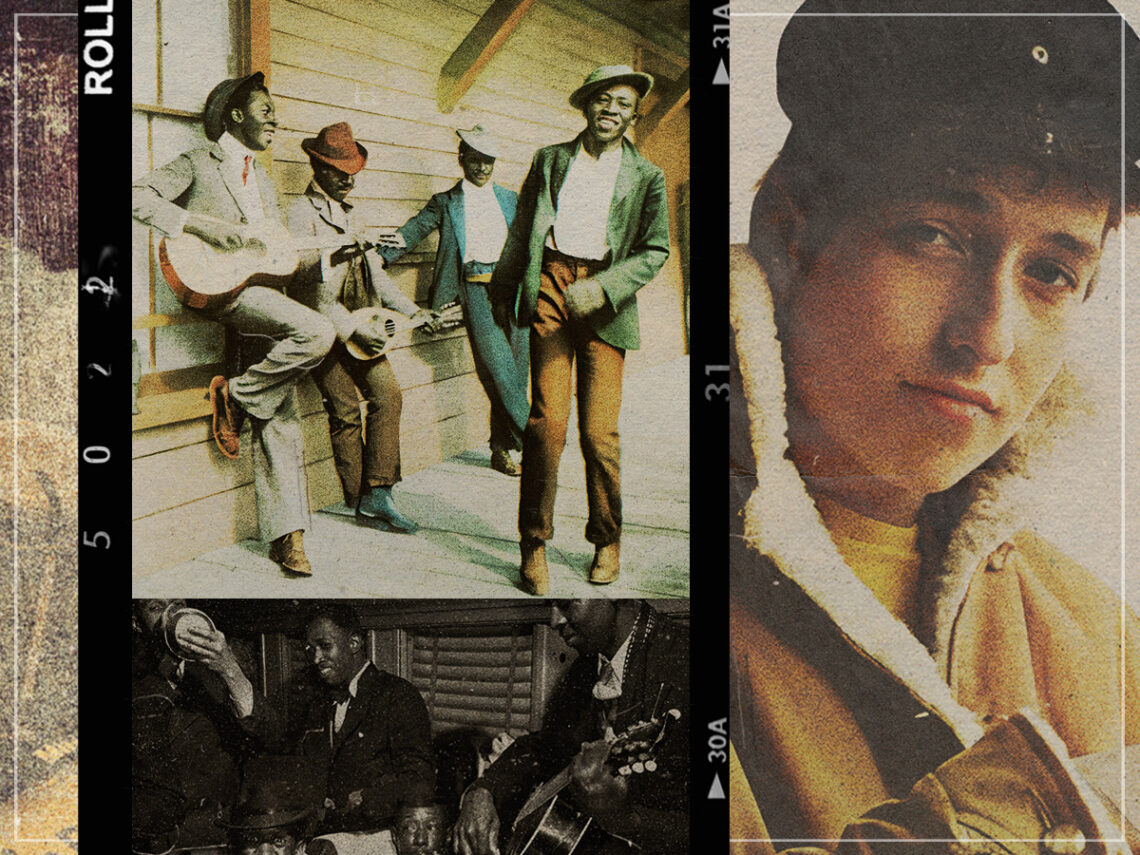
The Memphis Jug Band: the group Bob Dylan wishes he was in and spawned rock ‘n’ roll as we know it

“I was still an aspiring rock ‘n’ roller,“ Bob Dylan once explained. “The descendant, if you will, of the first generation of guys who played rock ’n’ roll — who were thrown down. Buddy Holly, Little Richard, Chuck Berry, Carl Perkins, Gene Vincent, Jerry Lee Lewis. They played this type of music that was black and white,” he told AARP.
“Extremely incendiary,“ he said of their style. “Your clothes could catch fire. When I first heard Chuck Berry, I didn’t consider that he was black. I thought he was a hillbilly. Little did I know, he was a great poet, too. And there must have been some elitist power that had to get rid of all these guys, to strike down rock ’n’ roll for what it was and what it represented — not least of all being a black-and-white thing.”
Indeed, rock ‘n’ roll, as we now know it, was the celebration of art’s ability to create a cultural mixing pot. This journey began in one single spot in New Orleans. African slaves would convene at Congo Square when they were permitted Sunday off. This foregathering was enforced by 1817 when the city mayor of New Orleans specifically selected the square as the only “gathering ground” permitted. This might have been an act of prejudiced oppression, but the mayor was hoisted by his own petard as this segregation brought all sorts of cultures together and resulted in a fortified defiance.
Sounds from all over the world came roaring from the swirled mixing bowl of the square, surrounded by crooked tupelo trees, serpentine dust roads and the giant clay ball moon that seems to be a few miles closer to the delta than the rest of the world. It was as though everything leaned in to catch a wisp of the windfall of communal celebration despite dower circumstances. Soon, white folk joined the fun and amid this progressive carnival, if only briefly on a Sunday, music was triumphing over cruelly enforced hardship. It was from this that jazz was borne.
However, by 1926, the new fight was not for emancipation but rather to end segregation. In part, this would help to spawn The Memphis Jug Band. Will Shade was the bandleader behind this collective, and he would continually book a rotating roster of musicians to work with. It also led to an eclectic array of instrumentation – usually harmonica, kazoo, fiddle and mandolin were backed by guitar, piano, washboard, washtub bass and jug – which eviscerated usual genre barriers.
This practice ensured that the band was not only a healthy academy where thousands of future musicians got a glimpse of the limelight, but it also led to a more direct impact on music at large: a swathe of different styles were brought together, and often with a dance show to play that every evening, things had to be honed towards a simple catchiness that audiences could instantly dig.
As a result, we saw jazz collide with country and folk to create rock ‘n’ roll in the making. The similarities between this and Dylan’s own spontaneous fusing of folk with the electric tenets of rock ‘n’ roll with The Paul Butterfield Blues Band at Newport Folk Festival are clear. Thus, it comes as little surprise that when Dylan told Interview the five bands he wishes he had been in, The Memphis Jug Band were one of them, alongside King Oliver Band, Muddy Water’s Chicago Band (with Little Walter and Otis Spann), The Country Gentlemen, and Crosby, Stills & Nash.
Furthermore, with song titles like ‘Cocaine Habit Blues’, this act that spanned from 1926 to the late 1950s was ahead of its time when it came to unapologetically capturing warts-n-all society. They were proudly a band for the people, and in a very punk fashion, they made it clear that music wasn’t meant to be elitist.

Never Miss A Tale
The Far Out Bob Dylan Newsletter
All the latest stories about Bob Dylan from the independent voice of culture.
Straight to your inbox.