


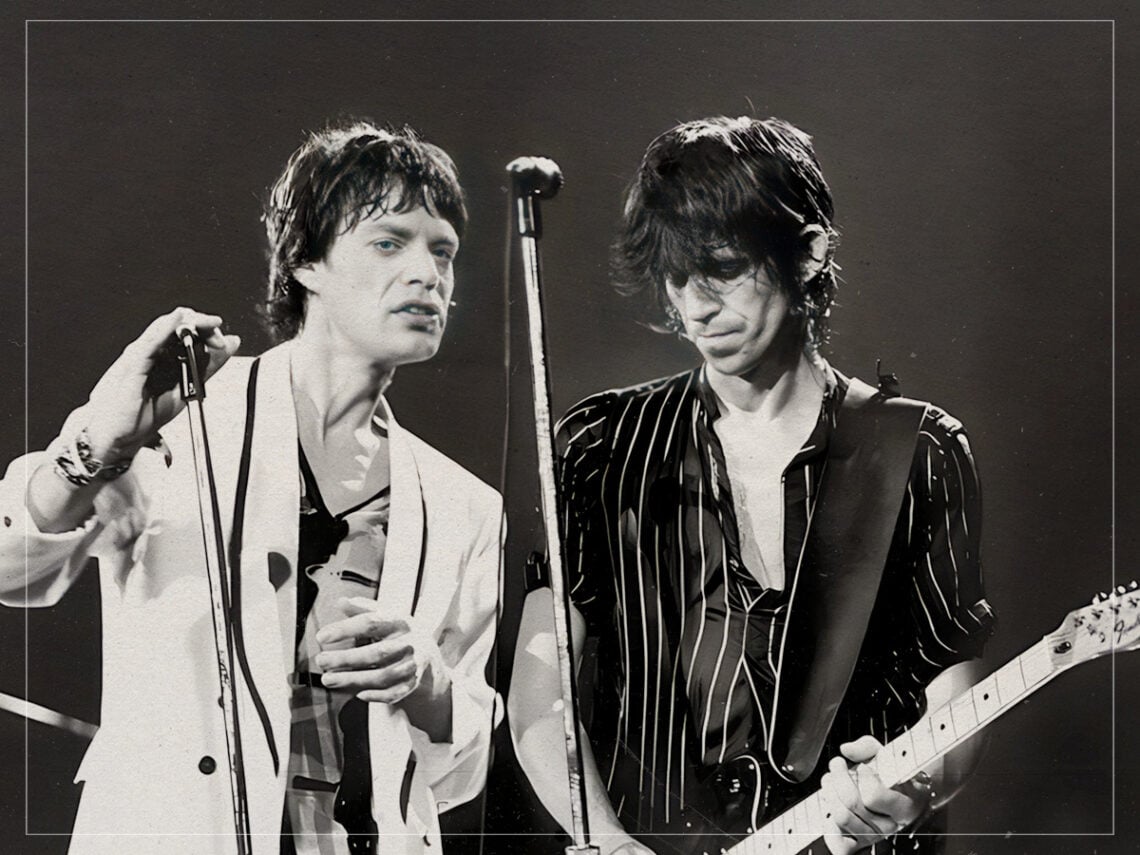
The true meaning behind The Rolling Stones’ song ‘(I Can’t Get No) Satisfaction’

During one night in May 1965, Keith Richards awoke in a daze, his mind blurred by the grip of sleep. Reaching over for his cassette player, he recorded a snippet of a melody and guitar riff stuck in his head before swiftly fading back into unconsciousness. When he woke again, he discovered that his tape had somehow wound through 45 minutes, so he rewound it and pressed play, hearing the initial stages of one of The Rolling Stones‘ biggest songs to date.
According to Richards, what he found was a recording of around two minutes, consisting of a guitar riff and a simple hook. “I can’t get no satisfaction,” Richards sang, followed promptly by “me snoring for the next 40 minutes”. Whatever had plagued Richards in the night, enough to scurry out of bed and sing about it, remains up for debate, but the night before had reportedly been chaos, with the band only getting through four songs before fans erupted into fights with a group of police officers.
The following day, Richards took the recording to Mick Jagger, who proceeded to write an extension of lyrics. On their own, the words “I can’t get no satisfaction” could have stemmed from several distinctive deep-seated frustrations about the music industry, from creative control to the mounting commercial pressures placed on their shoulders. There’s also, of course, the underlying sexual connotations present from the initial refrain through Jagger’s additions, all pointing towards physical frustrations in an alienated world.
“It had all the ingredients,” Jagger explained to Rolling Stone‘s Jann Wenner in 1995. He explained that the main crux of its appeal was that it had “a very catchy title”, “a very catchy guitar riff”, and “a great guitar sound”, all components that were “original at the time”. In terms of theme, he claimed that it “encapsulated the feeling of the times”, which was a “sexual kind of alienation”.
Considering the lyrics, these two facets are abundantly clear. While some branded the song too sexually controversial for mainstream listening, the convergence of this type of frustration with a broader societal disillusionment provides a deeply resonant reflection not only of the world at the time but of The Stones’ world, and how they constantly had to find to find authenticity through the haze of commercial artifice.
In the song, much of this despair can be chalked up to oversaturation and information overwhelm, and how, no matter how hard they try, it’s inescapable and inevitable. “When I’m drivin’ in my car and the man comes on the radio,” they explain, “He’s tellin’ me more and more about some useless information, supposed to drive my imagination.” It’s a struggle to distinguish the real from the pretence, and one that, quite literally, keeps Richards up at night.
Through the incessant hauls of infomercials, commercialisation, and commodification, Richards and Jagger delivered a rebellious pushback against a culture that not only denies freedom but simple pleasures, too. This frustration, with its deeper, overt sexual undertone, criticises a society with style but no substance, the kind that sprinkles flavourings of sexual promise but without any real delivery. As a result, for The Stones, there’s nothing left to play with other than endless hollowed desires.
