


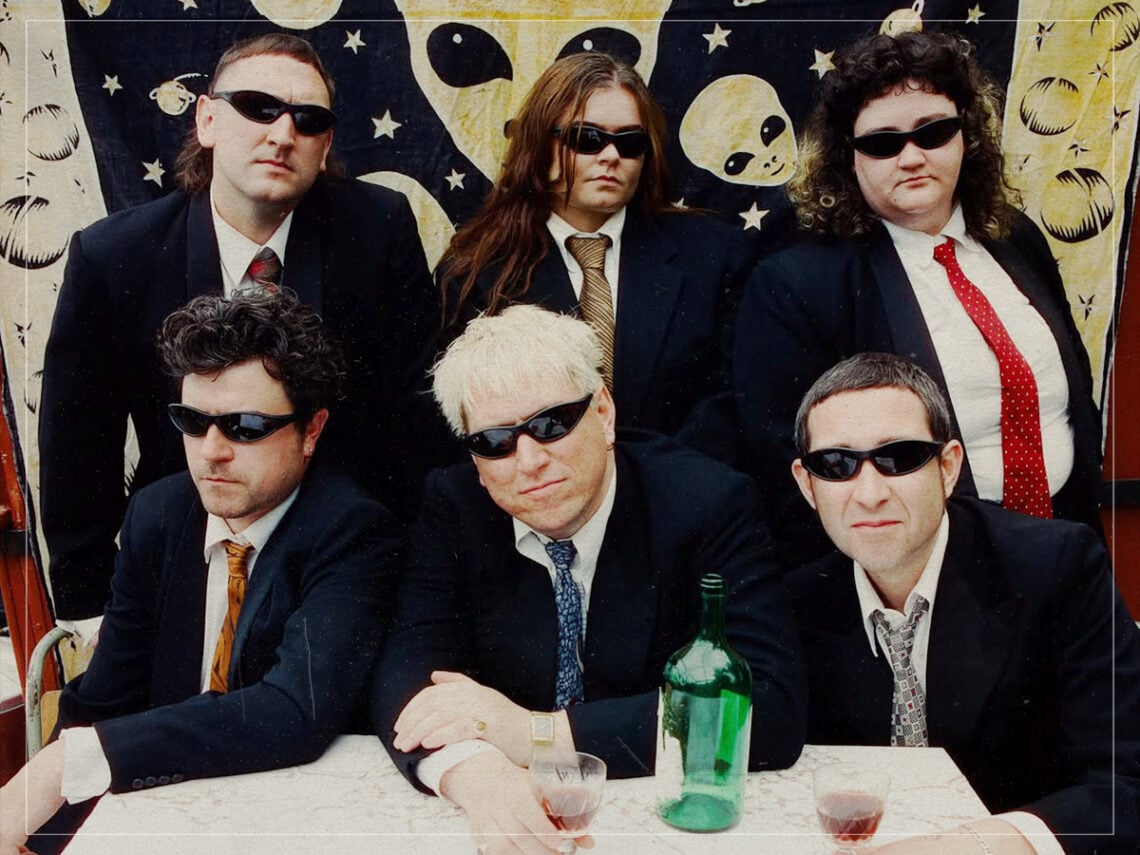
How The Mary Wallopers fight for free pints inspired the 2020’s trad-folk resurgence

Some of the world’s greatest cultural achievements have had their origins in the warm surroundings of a local pub, and the soundtrack to those achievements would invariably be the local folk musicians hammering out a tune in the corner.
Folk music has always thrived in pubs, and it doesn’t take a gifted musicologist to understand why. For starters, given that folk songs are typically passed through the generations retaining their original tune, they are tracks that more or less everybody can sing-along with, or at least follow the rhythm of. On a deeper level, though, folk music is the music of everyday men and women, and working-class musicians, just as the pub has been a stronghold for the proletariat for centuries.
Back in the late 2010s, a trio of musicians in Dundalk, Ireland, recognised that connection between pubs and folk music, and sought to utilise their skills in a scheme for free booze. Those musicians were Seán McKenna and brothers Andrew and Charles Hendy, who would soon become known under the banner of The Mary Wallopers.
Initially, the Hendy brothers found prominence as the hip-hop outfit TPM, performing satirical tracks like ‘Fuck RTÉ’ and ‘All the Boys on the Dole’ – catchy songs, admittedly, but not exactly the kind of music you would expect to find in a warm old pub in deepest Ireland. So, in search of a more suitable sound for their surroundings, they called upon McKenna.
“When we got back and moved to Dundalk,” Charles Hendy recalled to The Irish Times in 2021, “we knew Seán used to sing ballads when we were younger. So to get free drink around the pubs of Dundalk, me, Andrew and Seán would go into the pub and go like, ‘Will you give us pints and we’ll play music in the corner?’”
Luckily for the trio, that plan worked out pretty well, and they managed to procure many free pints in exchange for a selection of ballads and traditional Irish folk tunes. More impressively, though, those porter-fueled nights of trad folk eventually snowballed into a much larger operation, with The Mary Wallopers releasing their first EP, A Mouthful of the Mary Wallopers, in 2019, demonstrating their infectious mastery of the Celtic folk sound.
From there, the group have seemingly gone from strength to strength in the years that have followed, with two full-length albums and a third on the way, composed of a multitude of trad folk masterpieces, including interpretations of everybody from Hamish Imlach to Percy French and Barry Dransfield, in addition to various original efforts rooted in those same traditions of working-class folk music which would sound right at home in the confines of a pub.
Currently, The Mary Wallopers are at the forefront of a widespread resurgence in trad folk, which has extended far beyond the island of Ireland and the parameters of the folk genre. If you look at a group like Falkirk’s Brògeal, for instance, Celtic folk is an intrinsic aspect of their otherwise punk and indie offering, and given that the group have supported the Mary Wallopers during a show in Glasgow last year, it seems obvious that the Hanley brothers have had some impact on their sound.
Admittedly, trad folk has never truly disappeared from the airwaves, either in the pub or on hifis across the globe, and there have been countless groups to incorporate that sound into their own distinct output – The Pogues being the archetypal example.
It does, however, feel as though we are currently within a golden age of resurgence for the trad folk sound, and seeing the output of groups like The Mary Wallopers incorporated into a vast plethora of other groups across the musical spectrum. Yet, were it not for those free pints in the pubs of Dundalk, that folk landscape would be down one of its key players.
