


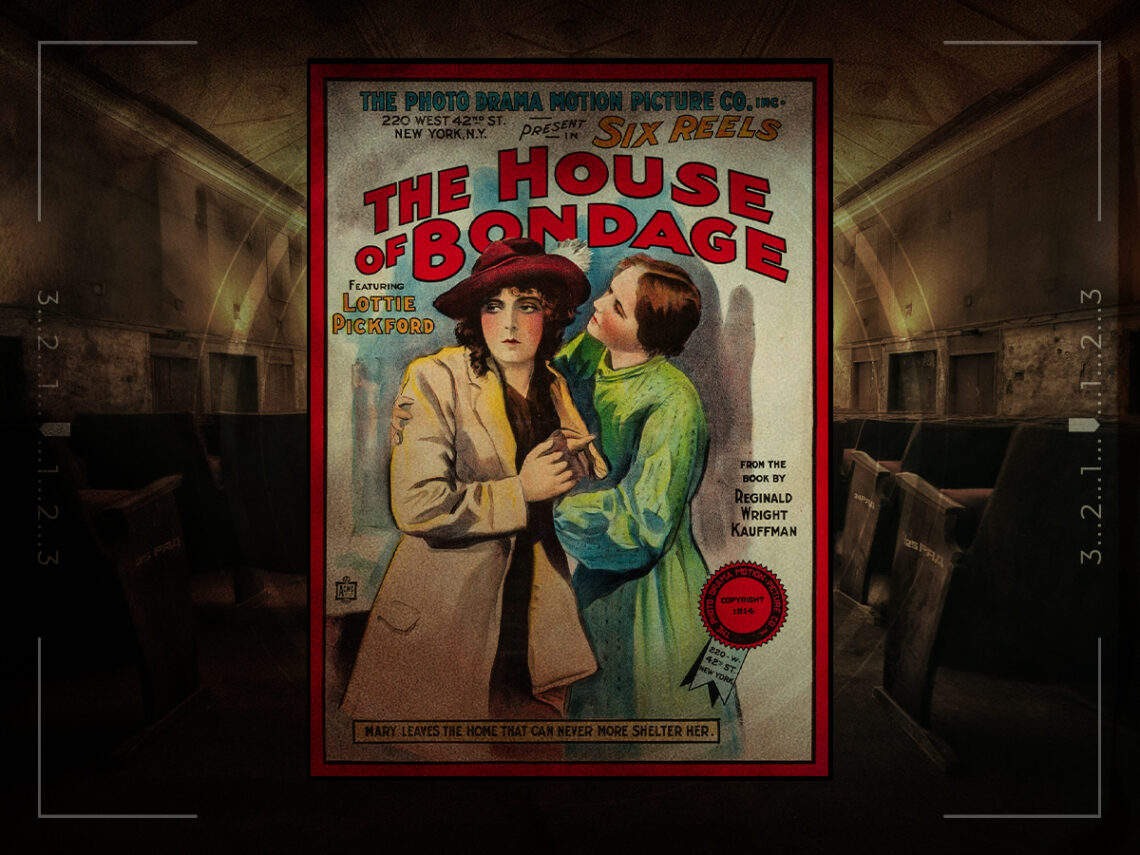
‘The House of Bondage’: The lewd movie that made an Oregon town form its own censorship board

Censorship went so far in a small American theatre that it caused a classic film to disappear entirely.
The fact of censorship has been an issue for cinema since its inception because filmmaking was not initially considered an art form that was protected by freedom of speech, with many films that pushed the boundaries of agreeable content being met with backlash, and there are some titles that still face issues being screened around the world.
There tends to be a larger conversation regarding censors for films that have already been critically acclaimed, such as The Exorcist, The Last Tango in Paris, A Clockwork Orange, Perfect Blue, or any other titles that are considered to be significant works of art, but controversy about censorship has existed long before the ratings board and the Hays Code were put into existence.
The St Johns Theatre in Oregon, which is now referred to as the St Johns Twin Cinemas, is one of the most historic screening locations in the United States, and although the theatre was announced to be constructed in 1913, the town’s ordinance board agreed that it could only be built if it played films that were agreed upon to be ‘family friendly’.
The issue was turned into a controversial instance of censorship when the St Johns City Council voted in 1915 to censor the film The House of Bondage, and created a policy in which any film that played at the theatre would have to be screened before the board first. Oregon wasn’t the only place in which The House of Bondage had trouble being distributed, however, as many other scenes set in a brothel were removed by censors in other screening locations.
The film is centred on a young girl who is tricked into prostitution after trying to rebel against her strict school, and despite the presence of two well-known stars in Lottie Pickford and Armand Cortes, The House of Bondage was censored across America, and was nearly incomprehensible because so many major plot points were cut out.
Given that there was a lack of formal institutions at the time that were made in support of filmmakers (as this was over a decade prior to the first Academy Awards), films were at the mercy of theatre owners who could determine whether or not they would be shown. Studios were not inclined to advocate for individual titles because of how many films were made on a yearly basis, and since it was not seen as a profitable endeavour, The House of Bondage became lost after it was removed from circulation.
In today’s market, where most films can be found on either streaming services or by illegal means, that there are some titles that are lost entirely because they weren’t preserved feels a bit shocking. It’s entirely possible that The House of Bondage was of significant artistic value, especially given the acclaim for director Pierce Kingsley, but it is now impossible to know.
Even if censorship isn’t as significant an issue today as it was a century prior, there is still a discrepancy when it comes to films that are accused of being ‘lewd’. In America, the MPAA tends to ascribe more restrictive ratings to films that include graphic sexual content, even if it is still possible to include a significant amount of violence within films that are rated PG-13.
