


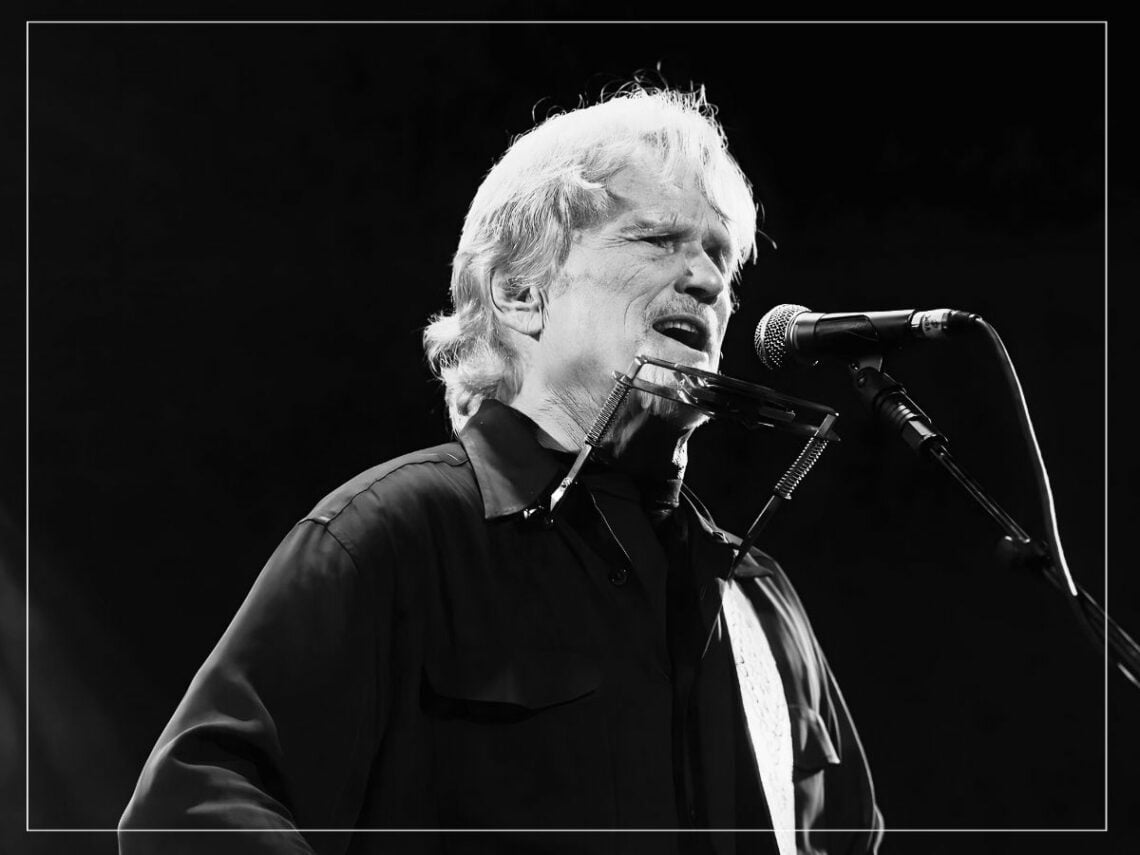
The lyrics Kris Kristofferson requested for his gravestone

“Tell the truth. Sing with passion. Work with laughter. Love with heart. ‘Cause that’s all that matters in the end.” – Kris Kristofferson (1936-2024).
Tombstones and lyrics are a funny old affair. It is a mark of how much music means to us and its transcendent majesty that the two so often meet. As the masterful writer Kurt Vonnegut once brilliantly declared: “If I should ever die, God forbid, let this be my epitaph: The only proof he needed for the existence of God was music.” Considering Vonnegut was a humanist, that line is all the more remarkable.
However, the flip side to that is the sad truth that was expressed by one of the finest modern lyricists, the late great David Berman of Silver Jews when he sang, “I came all this way to see your grave / To see your life as written paraphrased.” To call an epitaph reductive is an understatement, alas something has to be etched in Memoriam and that makes the words chosen all the more important. Particularly when it comes to a wordsmith like Kris Kristofferson.
Thus, if you’re opting for lyrics when your life is cast in granite, then you best make sure they were meaningful to you when your life was all but skin and bone. It is a mark of the depth of Leonard Cohen’s songwriting that the legendary late Kristofferson won’t be the only one who has proclaimed that they want their life in paraphrase to be lines from the folk star’s hymn to the dispossessed and symphony to the salvation of music.
Cohen played ‘Bird on a Wire’ just about more than any other song in his back catalogue, frequently opening his concerts with the anthem. “It seems to return me to my duties,” he said of the song’s spiritual impact. “It was begun in Greece and finished in a motel in Hollywood around 1969, along with everything else. Some lines were changed in Oregon.” And it remained evolving ever since, with Cohen concluding: “I can’t seem to get it perfect.”

Nevertheless, old Cohen, many musicians – from Kristofferson to Father John Misty – would disagree with you there. It is a widely held belief among Cohen’s peers that ‘Bird on a Wire’ is just about as perfect as it gets. “Kris Kristofferson informed me that I had stolen part of the melody from another Nashville writer,” the late Cohen once recalled. “He also said that he’s putting the first couple of lines on his tombstone—and I’ll be hurt if he doesn’t.”
Those first couple of lines in question read: “Like a bird on the wire / Like a drunk in a midnight choir / I have tried in my way to be free.” The brilliance of much of Cohen’s lyricism is that it etches itself on the sensibilities of any attentive listener. As such, the refrain of “I have tried in my way to be free” is one that flutters and then nestles into the psyche like a bird from flight into a nest. It is casual and seamless, but there is depth untold in its simplicity.
Cohen described ‘Bird on the Wire’ as a simple country song, and indeed, that is how the track first debuted via the Judy Collins version. In many respects, it does have the straightforward heart of a country song, but its wayfaring ways betray its creator’s literary stylings. It is a heartbreaking song of transcendence, and it clearly struck a befitting note with Kristofferson.
In his own time, Kristofferson mused on the sentiment of freedom and came up with the lyric in ‘Me and Bobby McGee’: “Freedom is just another word for nothing left to lose”. His sentimentality over the subject encapsulates his liberated outlook on life. Thus, it seems only apt now that his life has come to an end at the age of 88 that the closing quip on his life-affirming existence is a line from a songwriter he so dearly admired.
He valued the dreamers and drifters of this world like no other. This was typified perfectly when he starred in Heaven’s Gate, the extortionately over-budget blockbuster that flopped so bad it changed Hollywood forever.
Kristofferson, the country star so good they named him two-and-a-half time, began to see the first signs of the scale of the catastrophe at Cannes when a chance elevator encounter with UA president Norbert Auerbach resulted in the tycoon quietly remarking: “The money has to be taken from the creative people.” To which Kristofferson retorted: “Who you gonna give it to? The un-creative people?”
In his view, it flopped in the right way, with its integrity intact, much like the protagonist in ‘Bird on a Wire’. Thankfully, in Kristofferson’s noble pursuit of freedom, he offered far more to film and music than a mere drunk in a midnight choir—not that he would’ve cared much had he never had a hit but managed to sniff a sweet whiff of freedom, making Cohen’s fateful line the most fitting Kris Kristofferson obituary you could ever write.
