


The Led Zeppelin song that brought John Frusciante back from the brink: “If I could do that, then I was going to be good enough”

The 1980s and ’90s weren’t exactly bleak for rock music, but they certainly didn’t hold the same values as the two previous decades. In an era devoid of guitar heroes, John Frusciante couldn’t be matched.
Although the ethos of the alternative movement was to move away from the traditional guitar hero roles, Frusciante was happy to stretch the limits of his craft in Red Hot Chili Peppers, blending elements of Frank Zappa, Parliament-Funkadelic, and Television into one eclectic musical stew throughout albums like Blood Sugar Sex Magik. While Frusciante may have loved being in a big rock band, he didn’t have time for the baggage that came with it.
Throughout the 1990s, Frusciante would start to become more disillusioned with being a member of one of the biggest bands in the world. Not wanting to cater to the crowd and play whatever the fans wanted to hear, the guitarist ended up stuck in a group that he didn’t want to be in, often using heroin to make himself feel better.
Outside of famous meltdowns on shows like Saturday Night Live, Frusciante knew he wanted to quit the band, eventually telling the rest of the group that he would leave before taking the stage in Japan. While the band soldiered on with replacement guitarist Dave Navarro, Frusciante withdrew into himself and spent the rest of the decade in lousy shape.
Wasting away in his apartment, the guitarist would occasionally be seen in a skeletal state, looking to make the most off-putting music possible. When listening through some of the albums made during this time, the guitarist captured some of the darkest corners of his soul, often sounding like he’s on the edge of sanity.
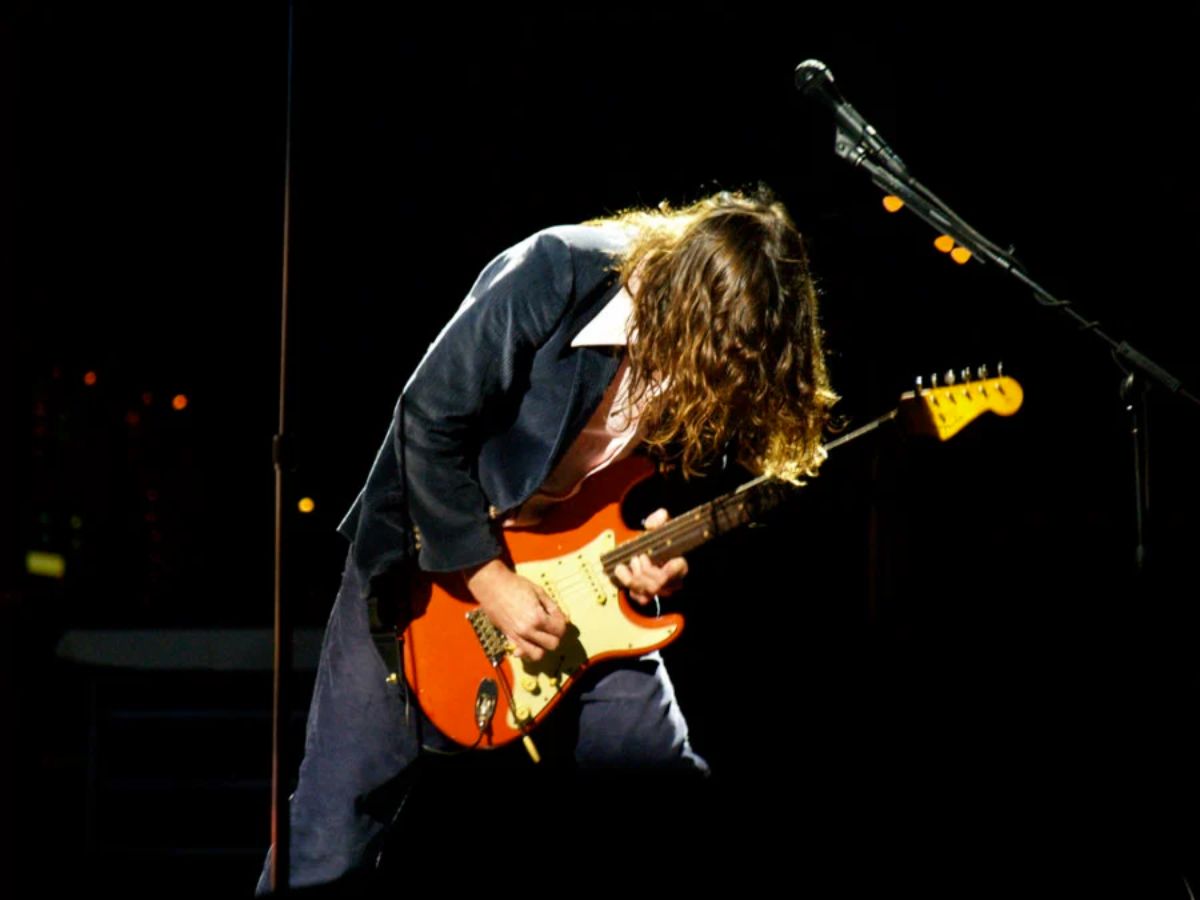
Once he realised that his narcotic demons had a hold on him, the guitarist felt that he needed to get clean. After kicking his habit, though, the question remained whether he could still play the guitar with the same ferocity that he could back in the day. While it would be an uphill battle for most of his career, Frusciante got inspiration from one of the classic rock titans.
When listening to Led Zeppelin’s catalogue, Frusciante became fascinated with their version of the blues classic ‘I Can’t Quit You Baby’. Although the song was a fixture of their debut album, Frusciante was drawn to the bootleg version found on their final release Coda, which captured somewhat ramshackle playing from Jimmy Page.
In fairness, the LP is openly confirmed as a collection of odds and ends, so it’s no surprise that it doesn’t land as well as the rest of the band’s canon. Thanks to this conception, the record has notable bumps in the road. When relistening to the album, it’s easy to see how these bumps could affect one’s love of the LP, but, in truth, the record is still imbued with some joyful moments. Taking music from the band’s heyday and repackaging it in a new format was likely the best way to go, only two years after Bonham’s tragic death, as it brought us away from the whimper of ‘In Through The Out Door’ and replaced it with a triumphant beat.
As Frusciante would recall later, the spontaneity of the track gave him incentive to make music again, explaining, “I thought if I could do that, then I was going to be good enough to go into the studio”. After being gifted a Fender Stratocaster by Anthony Kiedis, Frusciante returned to Red Hot Chili Peppers with a vengeance on the album Californication.
While it’s clear throughout most of the album that Frusciante is still working his chops back up, the amount of human ferocity on display makes for some of the most heart-wrenching melodic passages he has ever put to tape, like the clean tone on ‘Scar Tissue’ or breaking out the massive fuzz pedals on tracks like ‘Parallel Universe’. Frusciante certainly had a fair degree of flash in the early days, but by coming back with a minimalist approach to Californication, fans learned what a versatile musician Frusciante had always been.
Music is more than just notes on the page. Those notes are, more often than not, airborne vibrations that can not only resonate through your eardrums and lodge themselves in your consciousness. But they can even go further as some songs, some albums, some work that musicians produce can resurrect your soul. That’s certainly what happened for John Frusciante when he heard Led Zeppelin’s Coda.

Never Miss A Beat
The Far Out Led Zeppelin Newsletter
All the latest stories about Led Zeppelin from the independent voice of culture.
Straight to your inbox.