


What is the lasting legacy of China’s Aids villages?

Tourism to China is booming. In recent years, the East Asian country has opened up more and more, allowing travellers from many countries to enter visa-free and has become one of the most popular travel destinations at the moment.
These days, China is a superpower, and visitors are struck by how modern and futuristic its cities are, with high-speed trains and cyberpunk aesthetics, but it wasn’t always like this. The economic and social improvements have been both huge and rapid, lifting China from poverty into prosperity, and there’s no more chilling an example of the former than China’s Aids villages, a public-health disaster that scarred the nation and highlighted the poverty within rural communities. This is a look at that terrible period in modern Chinese history and the legacy of these problems, some 30 years on.
Even though the country was undergoing economic growth in the early 1990s, it was nowhere near the powerhouse that it is today. At the turn of the ’90s, it’s estimated that around 60% of the population lived on less than $1.25 per day, with around 280 million living on below a single dollar, and China accounting for 29% of the planet’s entire population under the poverty line. With over 70% of the Chinese population in 1990 living in rural areas, the majority of whom lived via subsistence farming or low-paid work, there was a real crisis outside of the cities, which is where the ‘plasma economy’ was born.
With its medical uses, the demand for blood plasma skyrocketed, and so did the money that people could earn by selling it. A single donation could pay up to 50 yuan, which could feed a family for a week at a time, making it a hugely attractive option for some people struggling financially.
Unfortunately, basic safety measures weren’t always followed, which had terrifying effects. In some instances, greedy collection centres cut corners to maximise their profit, which meant that instead of keeping each donation in separate, sterile containers, they pooled them all together in large vessels, and sometimes, after removing the plasma, they’d then re-inject the donors with the remaining red blood cells. This would allow them to regain blood more quickly and, therefore, meet demands, earning more money. Sadly, it also meant that if even one of the donors had HIV, and it wasn’t detected, then the reinjected blood would infect everyone grouped together in that pool.
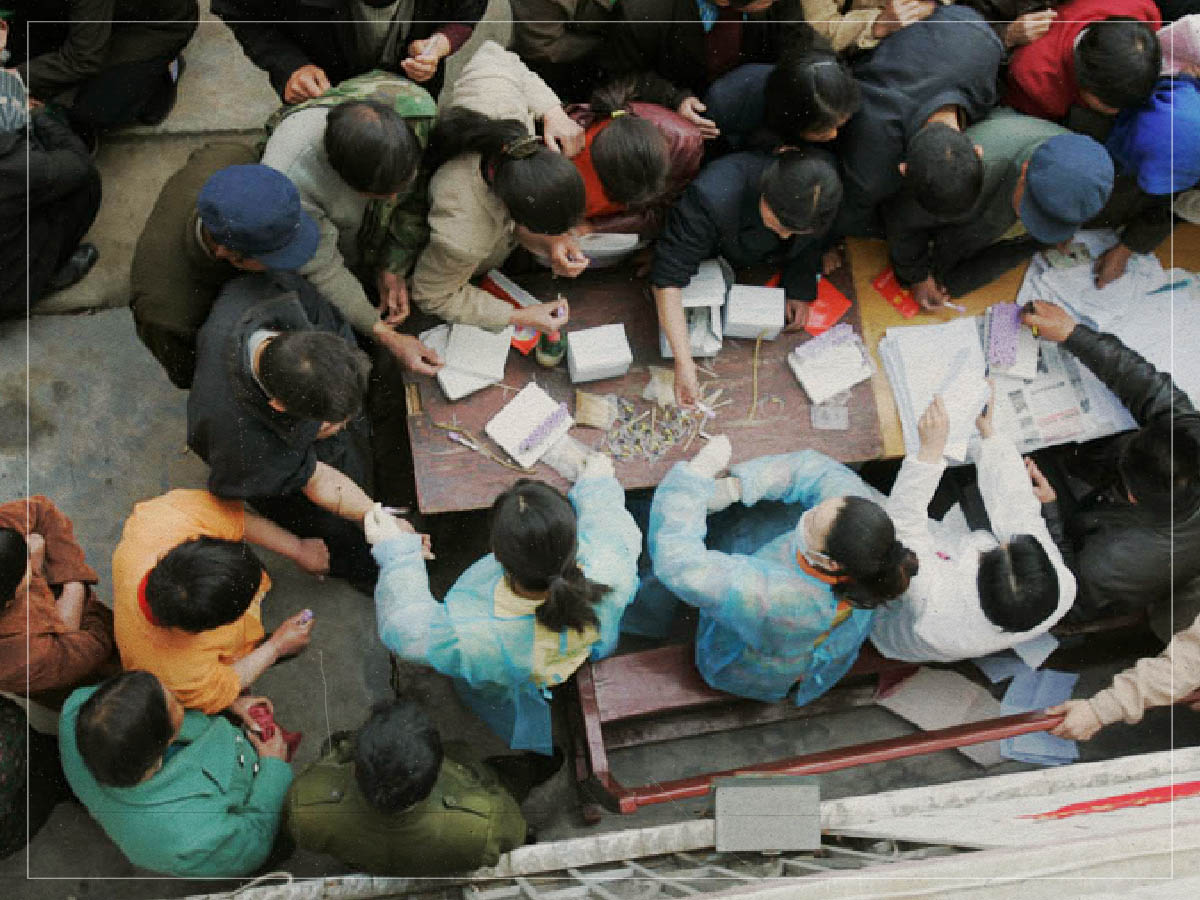
Combine that with poor sterilisation techniques, and some villagers donating multiple times within a week to earn money, and the results were devastating. Henan province, a poor agricultural region in the centre of the country, was hit the hardest, although Anhui and Hubei were also hit, too. It’s estimated that infections in Henan were at least in the hundreds of thousands, although there are some reports that it could have topped one million. The data is relatively unknown because local officials, desperate to avoid punishment, decided to suppress information about the outbreak.
By the end of the decade, some communities in the province were in dire straits. The province had at least 38 severely impacted villages, with around 20 in Shangcai County. Wenlou and Liuzhuang were two of the most damaged, with approximately 65% of people in Wenlou testing positive for HIV.
One whistleblower, Dr Gao Yaojie, discovered the scandal after trying to work out the unexplained deaths in rural Henan. She then looked to raise awareness by spreading leaflets and information into communities involved. By the turn of the millennium, deaths from ‘nameless fever’ were racking up, and it became impossible to ignore the situation any longer. Communities were torn to shreds, the number of deaths kept climbing, leaving a generation of ‘Aids orphans’, and with stigma around the infection, which meant some villages were shunned by their neighbouring towns and villagers. Combine that with a workforce that was dying or ill, and people not wanting their crops, and it continued to escalate, as did the medical bills.
Subsequently, blood collection stations were closed down, and HIV testing increased, with free antiretroviral treatment offered, marking a huge shift in Chinese public-health strategy, but it was too late for many families. The epidemic has stopped growing, but the legacy of the plasma economy is very much still there. New infections have dropped hugely, due in part to far stricter regulations. There’s still a stigma towards the impacted communities, with lower marriage and employment rates reported, but thanks to modern treatments, deaths are far fewer, although it has left the heaviest impact on villages with an ageing population.
A disaster that was entirely avoidable, with greed and corner-cutting, creating a man-made crisis that has gutted villages and still impacts communities around 30 years on. The crisis has stabilised, and while there has been some good come from it, in terms of regulations, HIV treatment and recognition of rural inequalities, it’s still a dark memory for the country, and has become a turning point for modern China.
