


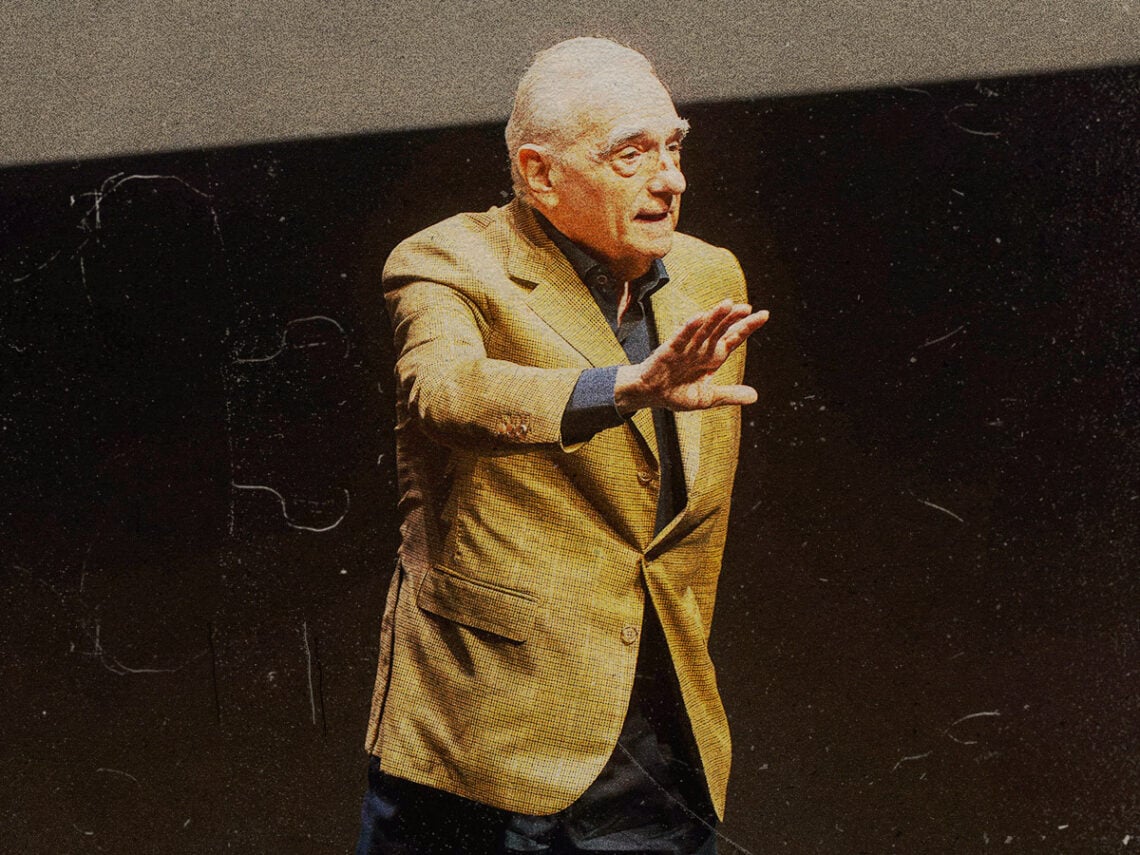
How ‘The Last Waltz’ influenced one of Martin Scorsese’s greatest movies

Throughout the film world, Martin Scorsese isn’t just known as one of the greatest working directors but also as one of the most vocal advocates for the cinematic medium. An active contributor to vital film preservation projects as well as an educator, Scorsese’s commentaries on classic masterpieces have introduced many fans to new forms of artistic expression. While he is often quick to cite his external influences, his own works also have an impact on each other.
In addition to his stellar features, Scorsese has approached the world of rock music as a documentarian on multiple occasions. One of the most well-known examples of this is his 1978 concert film The Last Waltz, based on footage of The Band’s 1976 performance in San Francisco, which was billed as the group’s final outing. Scorsese, who had previously worked on the Woodstock documentary, proved to be the perfect director for the occasion.
During the promotional campaign for his latest feature, Killers of the Flower Moon, Scorsese sat down with GQ to discuss some of his greatest cinematic masterpieces. According to the pioneering filmmaker, The Last Waltz had a profound impact on the visual language used in his 1980 opus Raging Bull. Starring Robert De Niro as a boxing champ who slides down a violent, self-destructive spiral, it’s among the most stunning studies of the human psyche in all of film history.
Scorsese said: “I also thought too that the boxing scenes had to be very powerful. The rest of the film, anything else, was concentrated in an almost meditative state in terms of framing, holding those people in that frame. But the boxing scenes would be like you’re on another planet. Primarily, it was based on.. I came up with the idea when I was doing The Last Waltz, being on the stage with the band and watching how the band worked.”
Both The Last Waltz and Powell and Pressburger’s The Red Shoes influenced the iconic boxing scenes in Raging Bull, but the complex narrative had other sources of inspiration as well. In a write-up posted to Letterboxd, the director cited On the Waterfront and Abraham Polonsky’s Force of Evil as two major works that informed the emotional dynamics of Robert De Niro’s character. Scorsese also referenced Carl Theodor Dreyer’s Gertrud as an influence on the unique visualisation of the boxing sequences.
“On the Waterfront related directly to the core emotional relationship of Raging Bull, between Jake and his brother Joey. Force of Evil was another model—but both of those pictures affected me deeply, permanently marked me, and their effects can be felt in many of my other movies as well,” the filmmaker wrote. “I wanted the fight scenes to feel as different from the rest of the action as the flashbacks in Gertrud feel from the main action—they shocked you onto a whole other plane, aesthetically and emotionally. I was looking for that kind of shock.”
Watch the interview below.
