


The last song America will ever hear in the event of the world ending

If you’re prone to panic attacks, you may be well advised to simply ditch this piece and click a related link. Because contained at the foot of this article is footage eerier than an empty school at midday.
It sounds like a typical online urban myth, but it’s true. Locked in a vault at CNN is footage that the world will only see broadcast when it’s all too late. At CNN’s launch in 1980, founder Ted Turner famously proclaimed, “Barring satellite problems, we won’t be signing off until the world ends”.
And even when the world’s end is impending, he had a plan. It was a harrowing plan known uneasily as The Turner Doomsday video. Perhaps when he uttered the following, he was merely meant to imply the permanence of America’s latest station – maybe that’s how it would still be interpreted in a brighter world – but now his decree has the chilling aura of the oxygen masks dropping from the panel above:
“We’ll be on, and we will cover it [the end of the world] live, and that will be our last, last event. We’ll play the National Anthem only one time, on the first of June [1980], and when the end of the world comes, we’ll play ‘Nearer My God To Thee’ before we sign off.”
Ted Turner, 1980
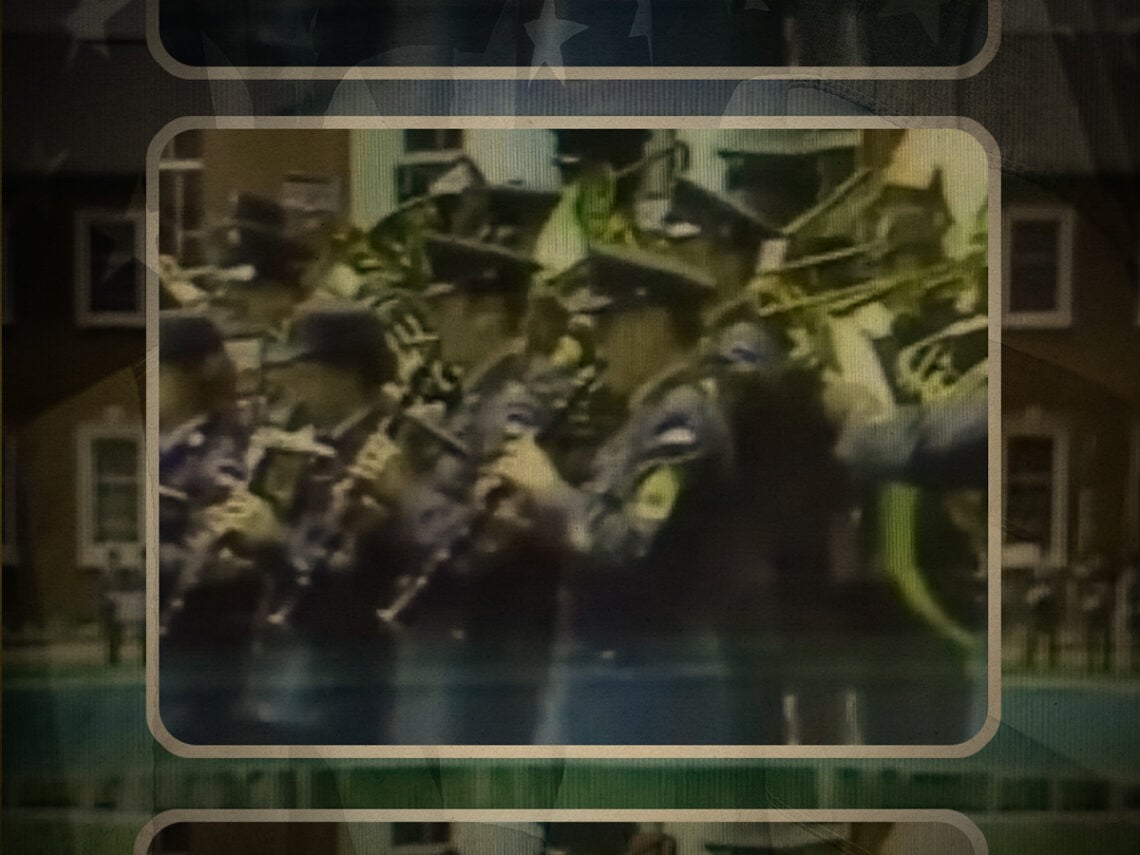
He was not being hypothetical. A tape was made and attached to the internal memo: HOLD FOR RELEASE ‘TILL END OF THE WORLD CONFIRMED. If this memo were ever acted upon, then the closing broadcast as a dying planet drew its last breath would be the haunting, flailing flicker of American civilisation. Its blurriness imbues it with a liminal sense of transition, its shoddy ineptitude showcases how cheap we were, and the devil horn facade above the mansion’s main door gives it a cult-like flourish.
It’s a measly minute of a military band performing an old hymn from the 19th century, retelling the tale of Jacob’s Ladder from the Book of Genesis, on the opulent front lawn of CNN’s grand, old Georgian headquarters. Although I suppose it is short and simple for very good reason. Alas, with American TV, there’s still a hint of surprise that it isn’t sponsored by someone.
Instead, it cuts straight to black. Behind the Sopranos, it’ll be the second most fitting fade to nothingness in human history. And it’ll remain that way forever.
The meaning of the Turner Doomsday Video
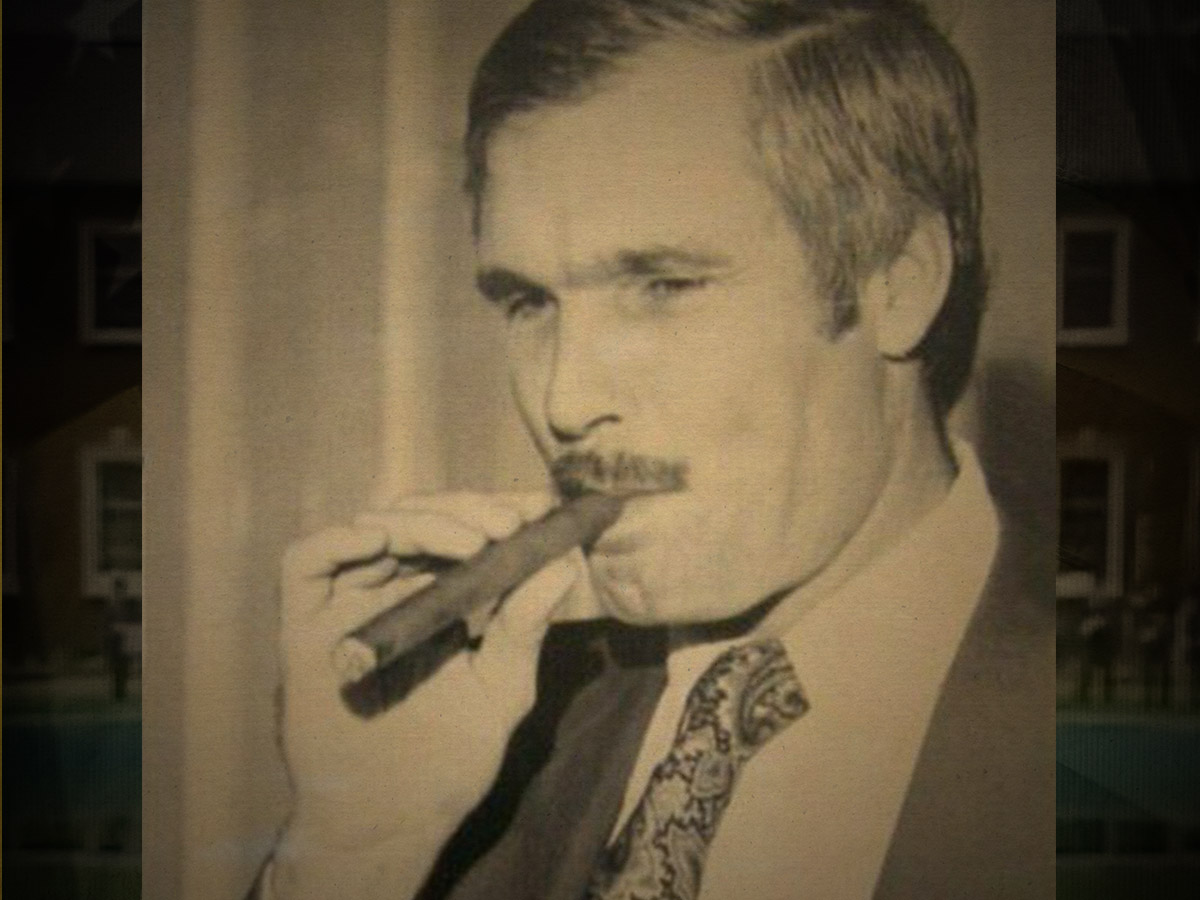
So, how did it come to be seen? Well, it’s a classic case of a bored intern being occupied by little more than his own curiosity. Michael Ballaban first heard about the tape from a professor prior to commencing work experience at CNN. A source then scoured the company’s archives and sent him the fabled footage. Ballaban couldn’t stop thinking about it for six years. So, he decided to leak it online.
The hymn, which was also said to be the last song the band on the Titanic ever played as they sank to their own demise, instantly terrified the foolhardy folks who dared to watch it. This was the obituary, prepared in advance, for the world.
But why was it created? Well, from a conspiratorial perspective, you could claim that it was a piece of Cold War propaganda. The footage, after all, was shot in 1980, the height of nuclear tensions, so CNN’s prepared footage, publicly implied by Turner’s decree, could effectively be seen as a declaration of America’s readiness for atomic warfare.
But it was perhaps too subtle for that. The doomsday hint in Turner’s inaugural CNN speech largely went unnoticed until years after Cold War tensions had fizzled out. Therefore, the more probable explanation can be pared down to the simple matter of Turner’s peculiar character. He was a reverential man who thought in civilisational terms. He didn’t just create a network in the hope that Parker-Spitzer might make it to a third season; he wanted to reflect humanity on his screen.
He said he knew that the network would never sign off, taking the role of being the first 24-hour news channel very seriously. To him, failing to broadcast during humanity’s final moments would be both a moral and business failure. Although I’m not sure who would hold him or CNN accountable for that. Unless, of course, whoever is on the other end of Jacob’s Ladder happens to be a big Stanley Tucci: Searching for Italy fan.
On a more serious note, biographers have noted that ever since Turner’s father committed suicide, he developed a lifelong fixation with mortality. But the tape was no morbid indulgence of this personal predilection. It seems he always strove to defy hopelessness. His network, to some extent, was devised to hold those who might herald the apocalypse to account.
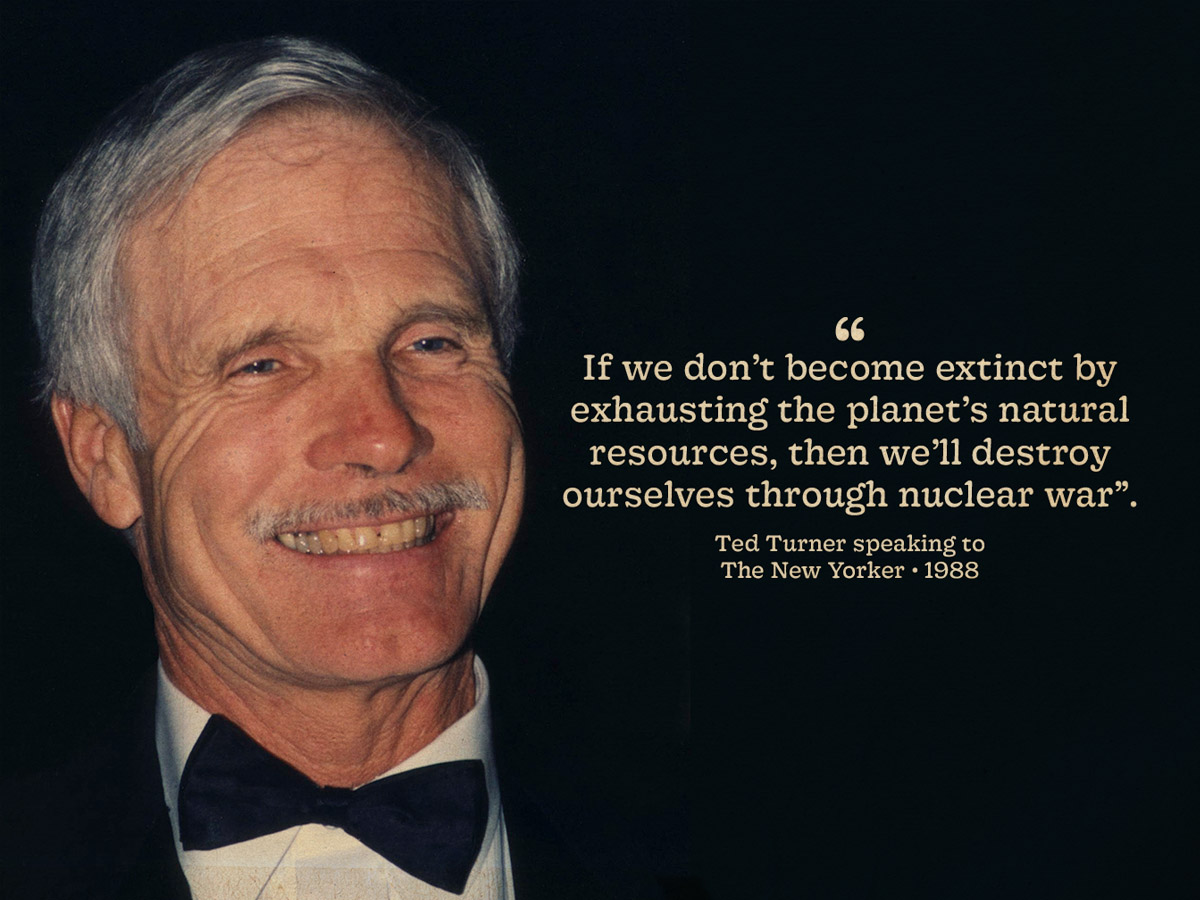
In this regard, the tape can be seen as evidence of how gravely he felt about the neglect and ignorance of the powers that be. As he told The New Yorker in 1988, back when the tape was a mere whispered legend, “If we don’t become extinct by exhausting the planet’s natural resources, then we’ll destroy ourselves through nuclear war”.
As a reminder of this solemn seriousness and his responsibility as the chair of the channel, Turner is said to have always kept the tape close at hand during his tenure, despite finding it too emotional to watch, fleeing the room when a journalist from The New Yorker once requested to watch the footage. Only re-emerging from the doorway when the minute was up to explain, “I keep this tape around because when the world ends it’ll be over before we can say what we wanted to say. Before we can leave any final messages.”
Perhaps in the dark present, the eeriness of the tape is elucidated further by the frightening fact that it has not faded into the form of a curious relic. It lingers on as a liminal paradigm of our unfortunate predicament: under capitalist realism, it is easier to imagine the end of the world and prepare a sign-off for it, than it is to think of an alternative and allay the absurdity of a branded, televised song being the last symbol of humanity.
This harrowing tape perpetuates the illusion of control over the unfettered chaos of modern disorder; it implies that we never rest and work till the very end, and the dated nature of the bygone hymn and grainy footage offers a tone of solemn inevitability, a fatal moment foretold in advance.
In short, it’s a perfect piece of satirical horror… and it’s real. The end is broadcast live: nothing happens off-screen. Personally, I think the Looney Tunes sign-off might be more apt, and maybe the Kurt Vonnegut quote, “We could have saved it, but we were too damned cheap.”
