


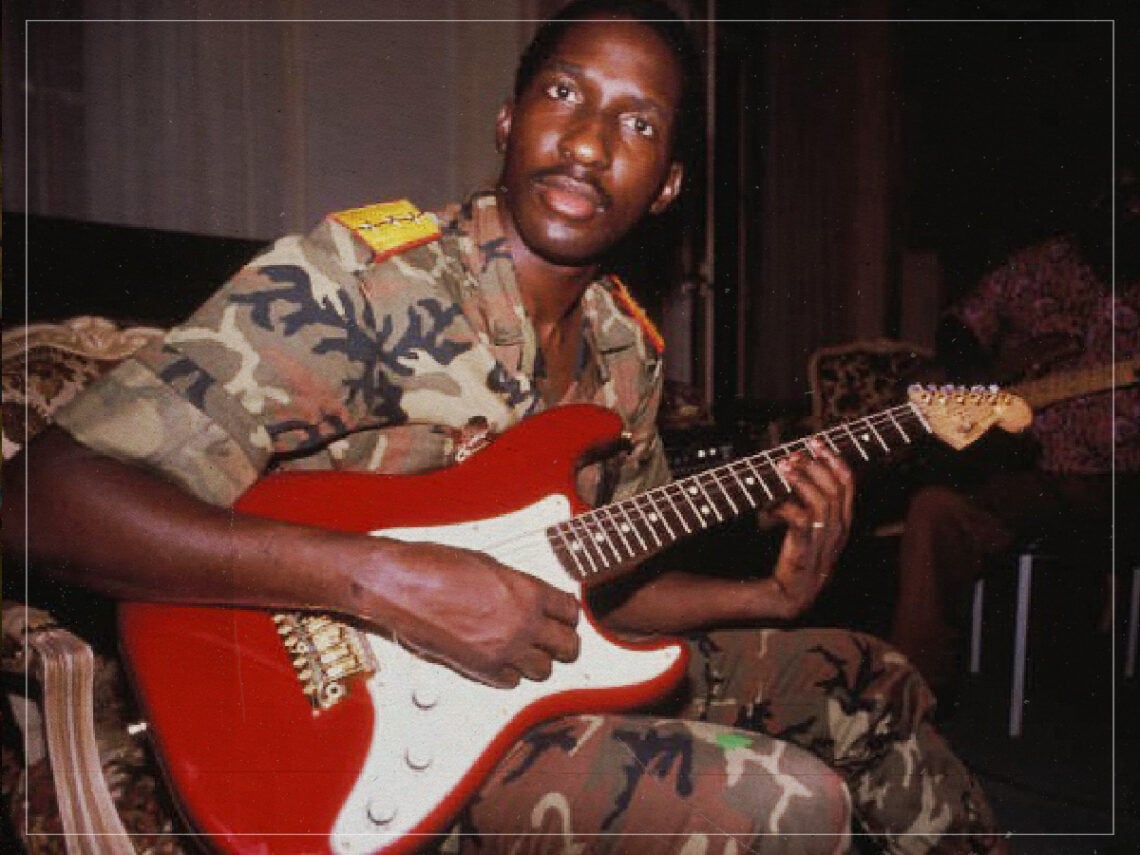
Tout-à-Coup Jazz: the band that featured two presidents

If only it were, but his musical ability is not the thing that Richard Nixon is best known for, as he was an accomplished piano player, could also get a tune or two out of the violin and accordion, and, proving that Bill Clinton is not the only disgraced former president who blows, the saxophone and clarinet as well.
From a young age, Nixon was encouraged by his mother to play the piano and was known to compose his own pieces, as well as learning others by ear, continuing to play through his ascent to the White House, and even performing in appearances with jazz giants Pearl Bailey and Duke Ellington, the latter of whom he hosted a 70th birthday party for and serenaded with a rendition of ‘Happy Birthday’.
Though Nixon and Clinton might have been able to swing with the singers they occasionally rubbed shoulders with, there doesn’t seem to be any evidence to suggest they were ever part of any kind of band. The same couldn’t be said of two of the presidents from the Republic of Upper Volta, today better known as Burkina Faso. In fact, not only has the Republic of Upper Volta had two jazz-musician presidents, but they were even in the same band together in the 1970s.
Colonel General Thomas Sankara and Captain Blaise Compaoré met each other during a war, with some reports stating their meeting came during the war with Mali in the early 1970s and others placing their meeting in Morocco in 1976, but wherever they met, the pair soon became inseparable, politically, socially and musically. The two had fought side by side and soon were playing alongside each other in their new group, Tout-à-Coup Jazz.
Remembering the pair, fellow jazz musician Abdoulaye Cisse, who experienced fame in the ’70s with his band Les Vautours, said that, “We were a group of friends and there was a good camaraderie between us. We used to call Sankara ‘comrade president’, but Compaoré was just ‘Blaise’. Sankara was a skilled jazz musician, but Compaoré just sang. There were more rehearsals than concerts, but every performance was magical. When in government, Sankara knew that music was a tool for cultural development, and could effectively be used to promote the revolution.”
In 1978, the duo formed a new group, the Missile Band of Po. “Compaoré was more serious than Sankara”, remembered their bandmate François Tapsoba, while Pascal Ouédraogo Kayouré, who taught Sankara to play guitar as a child, said that out of the pair, his pupil was “the special one”. “He will always be part of our history”, Karouré added. “His real passion was music.”
As a Marxist revolutionary, Sankara had been dubbed ‘Africa’s Che Guevara’ and was installed as president in 1983 following an uprising of the people, led by his bandmate Blaise Compaoré. When he was in power, Sankara used music as a tool to help spread his message and to bring communities together, overseeing the renaming of the nation to Burkina Faso (which translates to land of the upright people) and even writing the new national anthem for his country, ‘Une Seule Nuit’ (‘One Sole Night’).
His domestic policies included famine prevention schemes, agrarian expansion and land reform, as well as huge drives to increase the vaccination rate against diseases like meningitis, yellow fever and measles, and a drive to increase access to education for all the people of Burkina Faso. His government oversaw the building of new schools, health centres, water reservoirs, and other infrastructure projects and also enforced the prohibition of female circumcision, forced marriages and polygamy in the country. His progressive politics were also supported by a progressive culture, as he continued to support the arts both domestically and internationally, encouraging musicians such as Fela Kuti to perform in the country.
Just four years after he came to power, though, Sankara was killed in another military coup, again organised by his old friend and former bandmate Blaise Compaoré, who this time installed himself into the role of president, where he remained for 27 years until he was finally forced out of government, and out of the country, by a rioting public who had always remained faithful to their guitar-playing president of old, Thomas Sankara. In April 2022, Compaoré was sentenced to life imprisonment after being found guilty of complicity in Sankara’s 1987 murder and remains in exile since his 2014 removal from power, living in Côte d’Ivoire.
