


The inflatable octopus at the heart of Pink Floyd’s experimentalism

“All over the globe, it gets crazier every day,” said an exacerbated Roger Waters.
“And the craziness seems to be accelerating at a fantastic rate,” he added. “One gets the impression everything has got completely out of control, and nobody is in control of anything. There’s so much going on, it’s hard to evaluate anything specific.”
Perhaps it can offer some small comfort, in a weird way, to know that Waters was talking about the state of the world not in 2026, but in 1971, when he was a 28-year-old kid still figuring out Pink Floyd’s musical mission in the new decade. The band were working on their sixth studio album, Meddle, and was beginning to push the envelope in terms of their level of ambition both in the studio and in their stage show.
They were not, however, putting themselves forward as a political band, despite Waters’ famously strong opinions on such matters later in life. At the time, he actually told Melody Maker that a lot of people who involve themselves vocally in politics do so for “ego” reasons, and that the “people who should be running the country are just pottering about in their gardens… Altruism and power politics just don’t go together”.
So, at least for a while, Floyd’s political messaging remained obscured by clouds, for lack of a better phrase, in the early ‘70s, and instead, they put a lot of their effort into combining their meticulous studio experiments with increasingly elaborate visual companion pieces; big, bold sets and props and moving parts that allowed Waters, Nick Mason, and Richard Wright to think like they did back at Regent Street Polytechnic’s architectural school. Big stage shows, of course, brought substantial costs with them, and in turn, Pink Floyd came under some criticism for raising the rates of their performance fees, pricing themselves out of a lot of the college campuses and smaller venues they used to play.
“This past 12 months, we have just about broken even as far as income from gigs and expenditure on putting them on is concerned,” Wright said at the time, “We have a huge amount of equipment to keep up to scratch.”
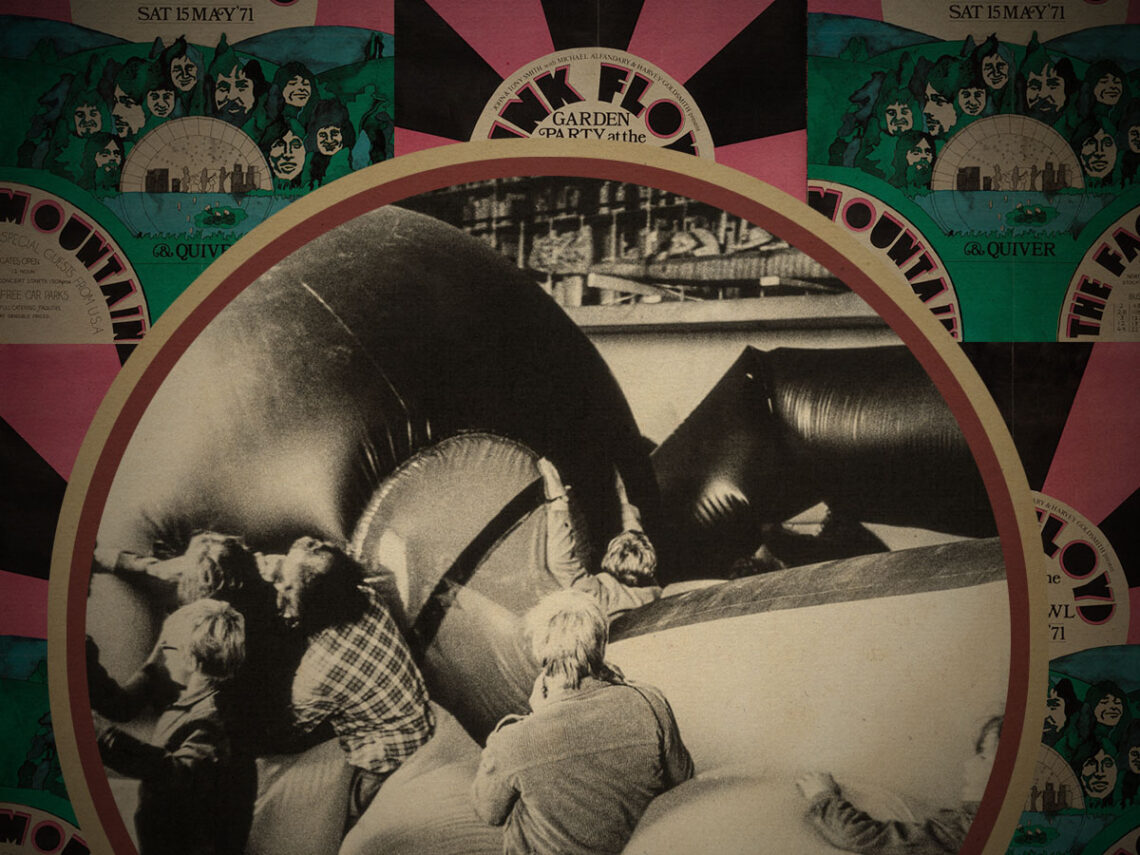
That “equipment”, by now, went well beyond instruments, amps, and mixing boards; this was the beginning of Waters’ ‘electric theatre’ era, as a great deal more thought was going into stage lighting and set pieces. The legendary flying pig prop was on the horizon, but in the spring of 1971, a different inflatable animal made a slightly more infamous debut during a Floyd gig at London’s Crystal Palace.
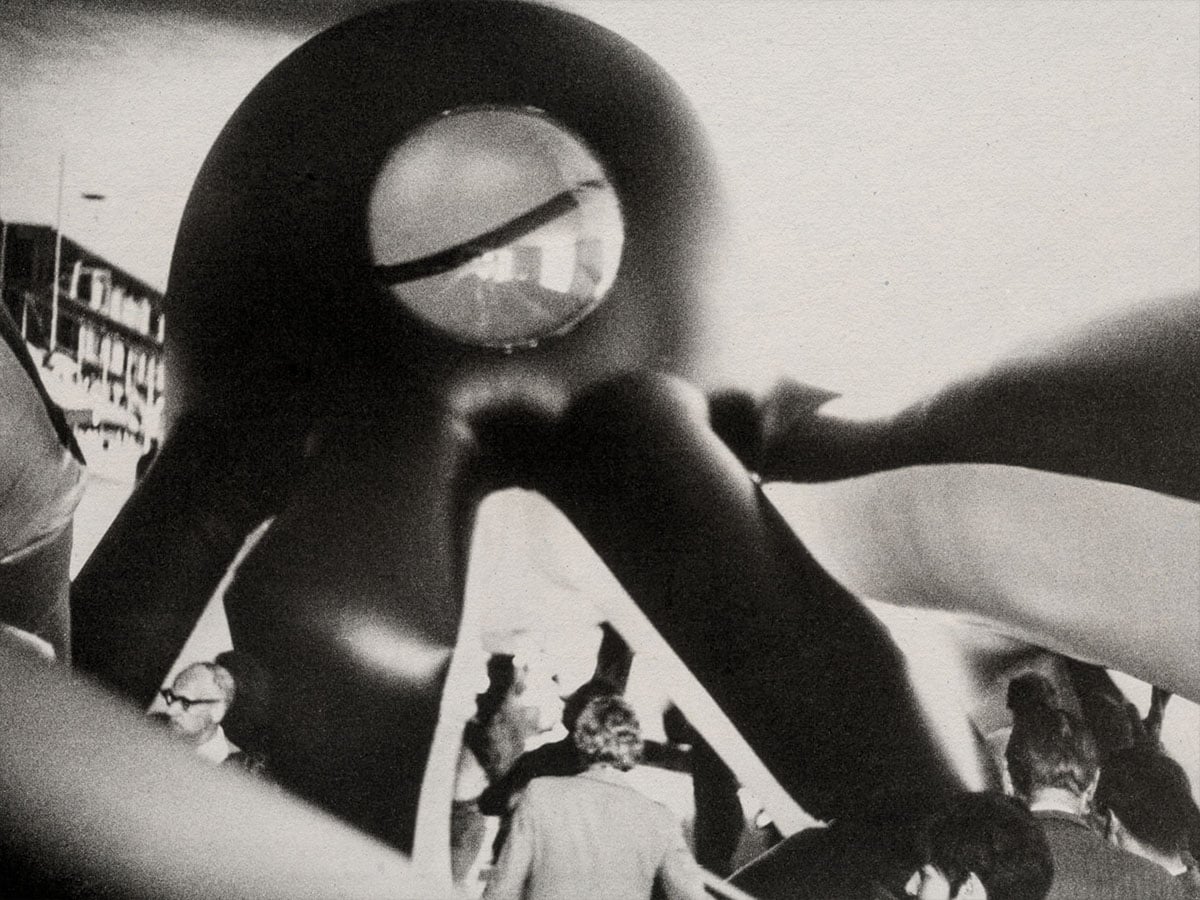
During the highly anticipated concert, which included one of the first complete run-throughs of the 23-minute song ‘Echoes’, the band rigged up a big visual stunt designed to take place during their closing number, ‘Astronomy Domine’. Somehow, their crew had hidden a massive rubber octopus in the pond out in front of the stage, and the plan was for the Lovecraftian beast to dramatically emerge out of the water, inflating with air as it did so, to the stunned amazement of the crowd. Instead, when the octopus did breach the surface that night, it was more pathetic than terrifying, as it had mostly failed to inflate, leaving it to bob lifelessly in stark contrast to David Gilmour’s crescendoing guitar riffage.
That’s not to say the image was entirely terror-free, though, as the combination of the rubber octopus and the high-decibel noise output from the stage had apparently overwhelmed more than a few of the real-life fish who lived in the Crystal Palace pond, sending them belly-up to the surface alongside the man-made mollusc. It was a failure of Spinal Tapian proportions, but it didn’t dissuade the members of Pink Floyd from continuing to take big swings afterwards.
As the band’s album cover designer, Aubrey Powell, recently told Uncut, “You can see this incredible progression, with Roger particularly. He was thinking all the time, ‘How can we better this?’ But it really started way back at that Crystal Palace gig with that inflatable octopus. I think he realised that the audience appreciated something more than just the band. You see him today, and he’s gone off the clock with it, which is fantastic!”
