


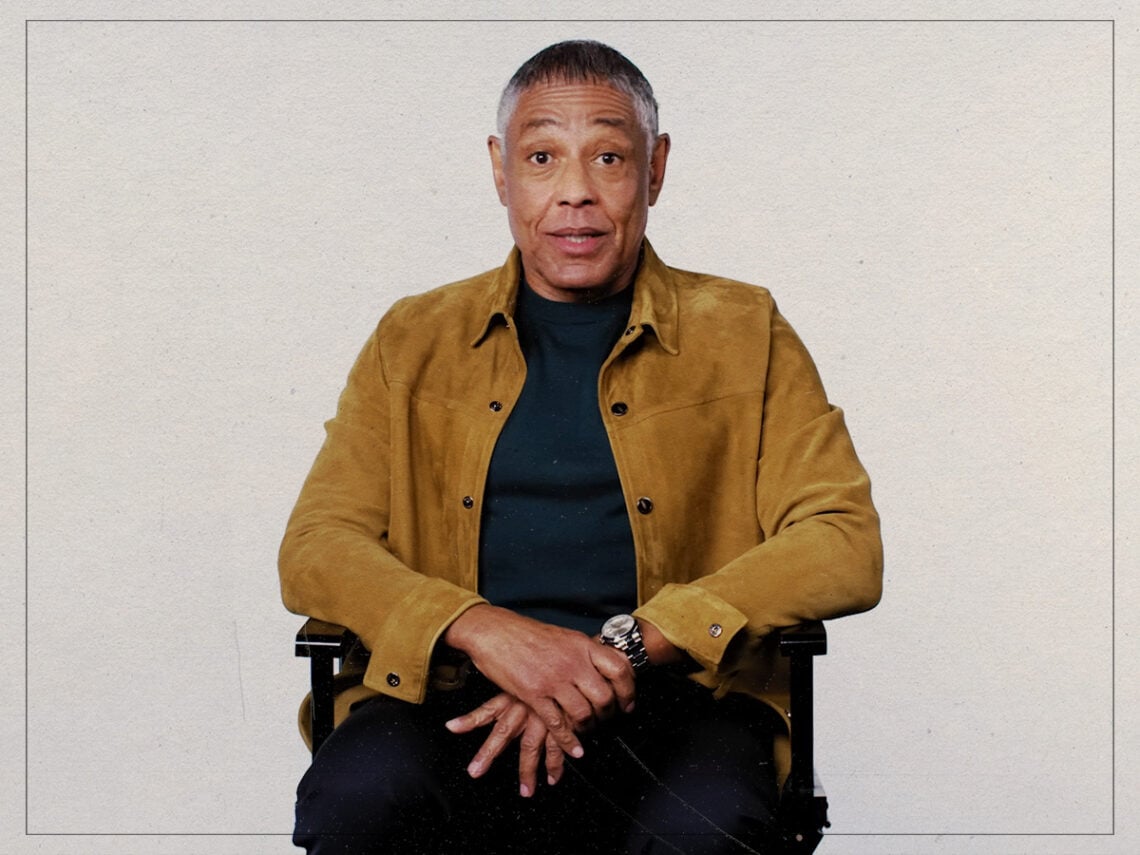
“He’s living as a human being”: the iconic mentor who defined Giancarlo Esposito’s eclectic career

Giancarlo Esposito’s career choices have never been predictable, but he’s followed the path of one of the all-time greatest actors.
There are many great actors who thrive on their capacity for reinvention, and that is certainly the case with Esposito, who embodies the often overused term of ‘character actor’ better than nearly any of his peers; he’s someone who will work in any capacity or medium, and always seems to be making choices that no one else would.
Esposito got his big break thanks to the films of Spike Lee, with his heartbreaking role in Do the Right Thing being an unforgettable showcase, and although the hype from that 1989 masterpiece would give him momentum to appear in ‘90s crime films like Fresh, The Usual Suspects, and King of New York, he was clear to not paint himself into a corner, and would often swerve to make more eccentric choices, such as the holiday comedy Last Holiday, or the bizarre fantasy adventure Monkeybone.
In recent years, Esposito has been the definitive villain of television, which started with his casting as Gus Fring on Breaking Bad, and while the AMC crime series has had a multitude of intimidating villains, Gus was the most cold, calculating antagonist that Bryan Cranston’s Walter White and Aaron Paul’s Jesse Pinkman ever faced off against.
In addition to reprising his role in the Breaking Bad prequel, Better Call Saul, Esposito has appeared as villains in other acclaimed shows, such as the Star Wars live-action series The Mandalorian, Guy Ritchie’s crime comedy The Gentlemen, and the dark comic book satire The Boys, and so, despite the gravity with which he has conducted his career, he’s been fairly open when discussing his major inspirations. While he has spoken fondly about many of his fellow actors, Esposito singled out one Academy Award-winning star as the person who made him want to get into the industry.
“One of my greatest mentors creatively, as a dramatic actor, was Sidney Poitier,” Esposito revealed, “He mentored me from afar without knowing it. My mother knew him, but I never met him until I became an adult. The reasons were that he carried himself as a man with dignity, grace, aplomb, intelligence and all who he was. He didn’t put any of it away.”
Esposito found that Poitier broke barriers for Black actors, which he had tried to reflect in his own career, noting, “I came up at a time where African Americans weren’t really first and foremost in theatre, television, and film. I learned how to take a part of me away and become the guy with the gun, the thug who robbed the old lady, the drug addict. I learned to be less than enough, and when I saw Sidney as I was growing up, I went, ‘this guy is not living in his skin, his colour, he’s living as a human being.’”
While Potier’s work slowed during the last decades of his career, Esposito got the chance to meet with him once at an Oscar party, where the former was walking towards the door, and the younger actor made a quick call to approach him anyway: “He turned around, looked at me, and I took a deep breath, and said clearly and succinctly, without rushing, ‘I just want to tell you how much you mean to me, and how you affected me as a creative artist and a man’.”
Poitier’s graciousness towards Esposito isn’t just something he’s valued, but a trait that he has attempted to embody, and as the latter continues to chart his own path forward, he has been praised for treating his co-stars with the same level of dignity.
