


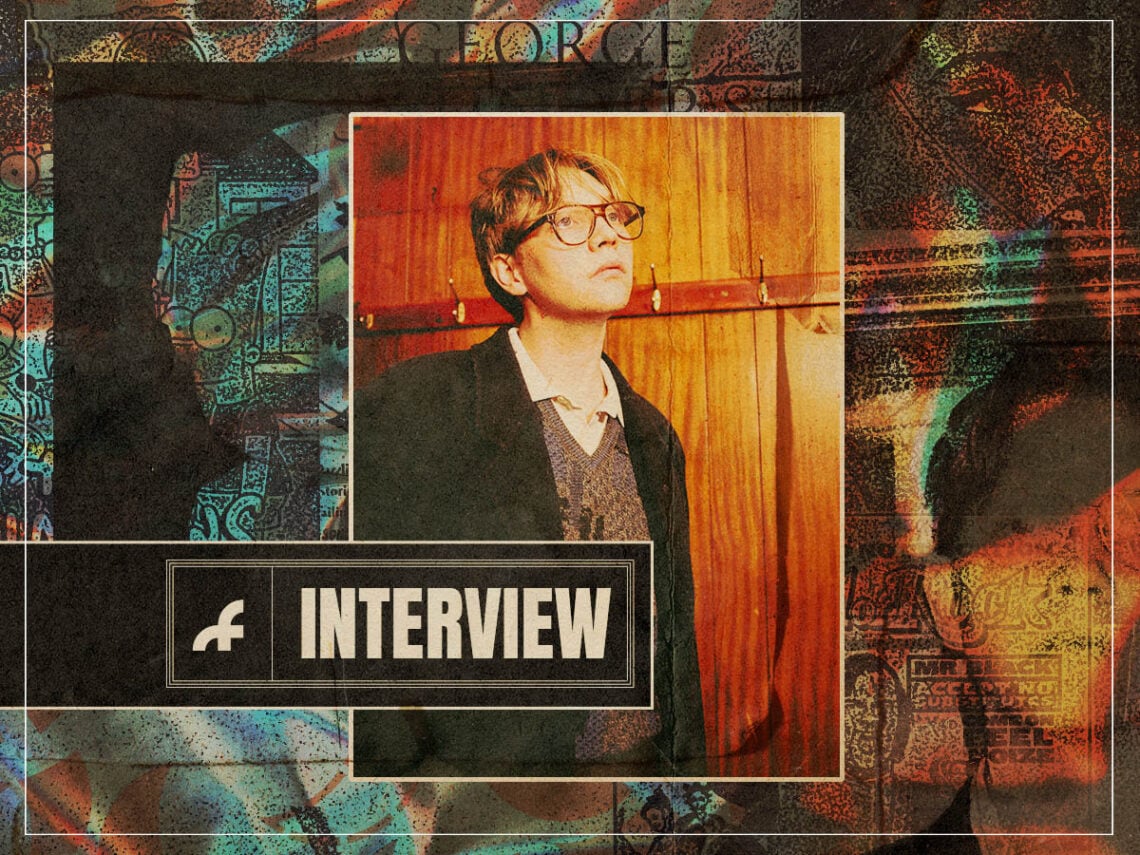
The Howl and the Hum’s five points of influence

Creativity defies explanation. It defies understanding as someone could analyse every stage of the creative process, keeping a watchful eye on any pieces of inspiration they consume, any life events that took place for context, or even closely study exactly how their drafts develop, and they still would never truly understand how the finished product came to be. That’s the riddle of art.
If every music maker throughout history were sat down and forced to reveal the secret of their spark, each answer would be different. But one thing is clear: it takes more than just good music to inspire the next great song. The Howl and the Hum know that well.
That’s the beautiful thing about art; it’s a marketplace. It’s a circular economy where people borrow from creation across the spectrum of songs, paintings, films, public persona, performers and beyond, get inspired and then return with a new offering that’s given back to the pool for someone else to borrow from. As each person slowly builds their own unique library of influences and inspirations, it’s that individual mix that makes sure that creativity will never end and it’ll never be anything other than mythological and magical to us.
It also makes my job very easy. There will never be an end to the stories that can be told about how some album or some film or some influential era moved and inspired some artist. That’s true of Bob Dylan, Joni Mitchell, The Beatles, and all the greats. But it’s also true of new acts who, as I write this, are still developing that unique recipe from an ever-growing font of past, present and future points of culture. With almost everything ever made at our fingertips now, I’d argue that those conversations about inspiration are only getting more and more interesting as the years go on.
That point is proved nicely by Sam Griffith, the man behind The Howl and the Hum, a Leeds-based act that has just offered up their new album, Same Mistakes Twice. Hit play on any song, and a listen of influences comes to mind immediately. The titular track delivers the sort of Bruce Springsteen-esque storytelling rock tune that’s spruced with a saxophone for good measure. Album standout ‘Pale Blue Dot’, on the other hand, is intimate to the point of intrusion as Griffiths weaves specific, neurotic wonderments into an instrumental that somehow sounds like a late night spent alone with your thoughts.
But influences go far beyond what’s heard on the track so the mic is getting passed to Griffiths for a guided tour of five corners of his creative brain.
The Howl and the Hum’s five points of influence:
All Hail West Texas – The Mountain Goats
Let’s dip our toes in first and test the temperature with an album, which seems to be a good place to start when attempting to understand the brain behind a new album. It’s pretty easy, and arguably pretty boring, for an artist to pull out some Dylan record or some Cohen cut that changed their life forever, but Griffiths opts for the 1990s troupe The Mountain Goats, claiming: “‘The Best Ever Death Metal Band Out Of Denton’, ‘The Mess Inside’ and ‘Jenny’ shaped my songwriting as much as Bob Dylan did.”
His relationship to the album is a tale of hard-earned understanding. “I was 15 when I first heard the Mountain Goats, and I hated it. His voice was so grating, and I found the stories so confounding, I just wanted to play San Andreas,” he said. But with a bit of distance, the band and this album taught him a lot about distance itself. “I was reading some online article about a year later, and they were worshipping John Darnielle’s lyricism, so I gave this album a go, and it was the first time I realised you could write about other people and the songs can still be about yourself,” he explained, “And it’s funny! Lyrics should be funny. And traumatising.”
School of Rock (2003)
After music, cinema is also an excellent place to begin. The relationship between the two is tight and undeniable, as soundtracks both provide and inspire music. Music journalists have co-opted the word ‘cinematic’ as a favoured phrase. Griffiths’ choice of a film about music ties the links even tighter.
“There are so many wanky answers I could give here (notable mentions Paris, Texas, Cache, Paddington 2), but the film I keep going back to and finding more joy in is School of Rock,” he said. Surprisingly, few musicians are willing to admit that Jack Black inspired them to take up the trade, but Griffiths is brave enough. “It made me save up for a Gibson SG to impress girls and introduced me to Jonathan Richman and The Modern Lovers to impress boys,” he said. “It shows you you can lose and still win. It shows you there is hope in getting 3000 people to a mid-afternoon ticketed local Battle of the Bands concert. Dreams are real.”
George Saunders – Tenth of December
A wise creative writing teacher once told me that no one can be a good writer if they’re not a reader. She said that in moments of writer’s block, put down the pen and pick up a book, and there is a good chance that by the time you’ve finished it, you’ll have written something. Griffiths’ love for one author seems to follow the same ethos as George Saunders, who not only writes short stories for people to read but writes about writing for people to read and then start writing.
He said: “Finding Saunders is like the first time you pick up a log and find a billion bugs under there: how did I not realise there was this much life here? How are their existences so beautiful and complex? Are they mad at me?”
But while picking out his book Tenth of December as a favourite, Griffiths also mentions Saunders’ online presence. “His Substack community has saved my writing countless times, and he has the transcendent ability to make you shake while reading, and you’re never sure if it’s through laughter or tears,” he said, adding, “If he reads this I have a chair with his name on at the dinner table.”
The Simpsons (seasons 3-9)
The specification of seasons here is incredibly important. Any Simpsons fan knows that this is the golden period. In this time frame, the show levels up to pure perfection that sees them do a remake of Pulp Fiction, parody Lord of the Flies and unleash several all-singing, all-dancing musical episodes, including one where Homer is essentially in the Beatles. Between 1991 and 1998, it was the glory days in Springfield.
“I am a regressive anxious person: I find comfort in familiarity and nostalgia, so I usually have The Simpsons on a loop as a source of nostalgic comfortable familiarity,” Griffiths explained of his choice. But comfort blankets can be inspiring, too, as the influence of the cartoon found its way into his writing. “There are a few Simpsons references in the new album (no prizes) because it reminds me of the joy of writing: all of my favourite jokes or moments in the Simpsons are due to imagining the writer’s room, how dumb they were to write (‘wallet inspector’, ‘enjoy your death trap ladies’ etc, IYKYK)”, he said.
His advice? “As soon as you think what you’re writing is really dumb or cringe, it’s probably the right thing.”
Cat Cohen
The story of inspiration never ends, and right now, writer and comedian Cat Cohen is probably busy working on some new bit that will be referenced by some other artist someday. “I got ‘God I Feel Modern Tonight’ in lockdown, I believe, and it inspired the writing of most lyrics on the new album, especially ‘Pale Blue Dot’, ‘All Your Friends Hate Me’, etc,” Griffiths said, picking out Cohen’s 2021 poetry collection.
Similar to the influence of George Saunders but in a distinctly different and far sillier way, Cohen’s substack is another one delivering inspiration right to his inbox. “Anyone with a heart and a wifi connection should subscribe to her ‘Sexy Little Email’”, he implores all readers, quoting, ‘I should think more about the government, but I just want you to tell me that fucking me is the end of the world’, I mean, please.”
