


‘The Horse’: Charles Burnett’s powerful social commentary

Within the landscape of American cinema, pioneering auteur Charles Burnett has created an incredible body of work that is widely studied by scholars as well as film fans around the world. Known for his masterpieces like Killer of Sheep, Burnett’s unapologetically original artistic vision has paved the way for multiple generations of younger filmmakers. His experiments are undeniable proof that the structures of independent cinema can lead to the creation of unforgettable works of art.
Often associated with the L.A. Rebellion movement, Burnett initially went to college to become an electrician, but he eventually gravitated towards filmmaking and attended classes at UCLA’s renowned film school. The unique artistic environment proved to be an essential catalyst for Burnett, who created some fascinating projects during his time there. One of those early works that deserve to be watched by everyone is a 1973 film called The Horse.
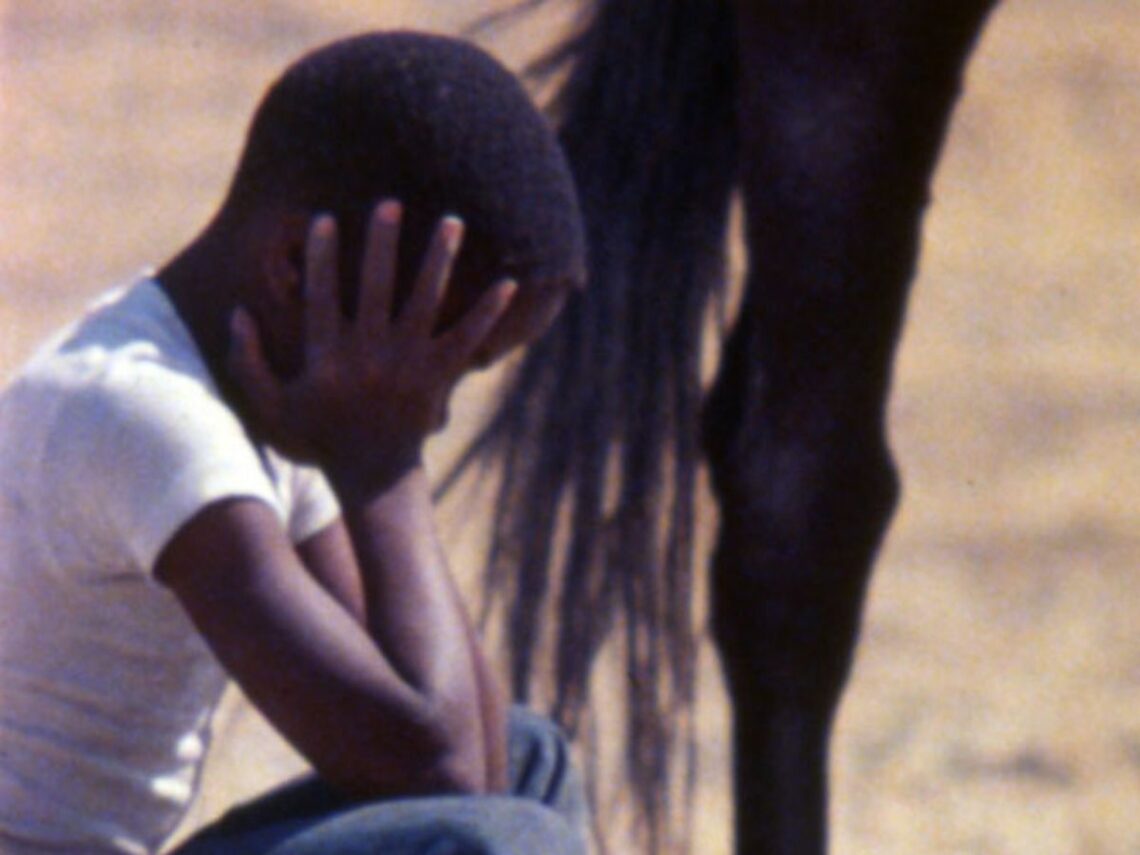
The Horse is an enigmatic work that revolves around a young Black boy who keeps a horse company during its final hours, stuck in an oppressive atmosphere with a white farming family. With all the dramatic conflict restricted to a sparse setting, it’s almost incredible how much subtextual sociopolitical commentary Burnett packs into this one. At a time when cinematic representation was inherently flawed, Burnett’s bold and striking brand of cinema brought something new to the table.
During a conversation with MUBI, Burnett explained: “The thing about making films about people of colour is that studios don’t want the depth and dimensions that take place. You try to make it realistic and true to life, and then you have people at the door saying, ‘No. I want it this way or that way.’ They have no clue what it was like there. So you’re constantly fighting people who somehow got the ear of these producers, and you’re trying to make these movies that don’t do justice to what’s going on. So it’s constant denial, somehow or another, you have to come back to that and squeeze it in or make it acceptable to them.”
While talking about the differences in audience perception, he added: “What happens is we’re the ones who have to answer for it. When you show these films at a festival like the Pan African Film Festival, you’re dealing with a level of intelligence, these audiences know all the history, and you can’t try to pull the wool over their eyes. They’ll see right through you. There’s a lot of people in this community who know exactly what happened.”
Almost bursting at the seams with the threat of violence and disaster, The Horse is a strangely unsettling allegory about America’s complicated relationship with its violent history. Translating the infinitely complex dynamics of racial tensions in the country into a visceral cinematic journey, it almost operates like a horror film for viewers who have similar experiences.
Watch the film below.
