


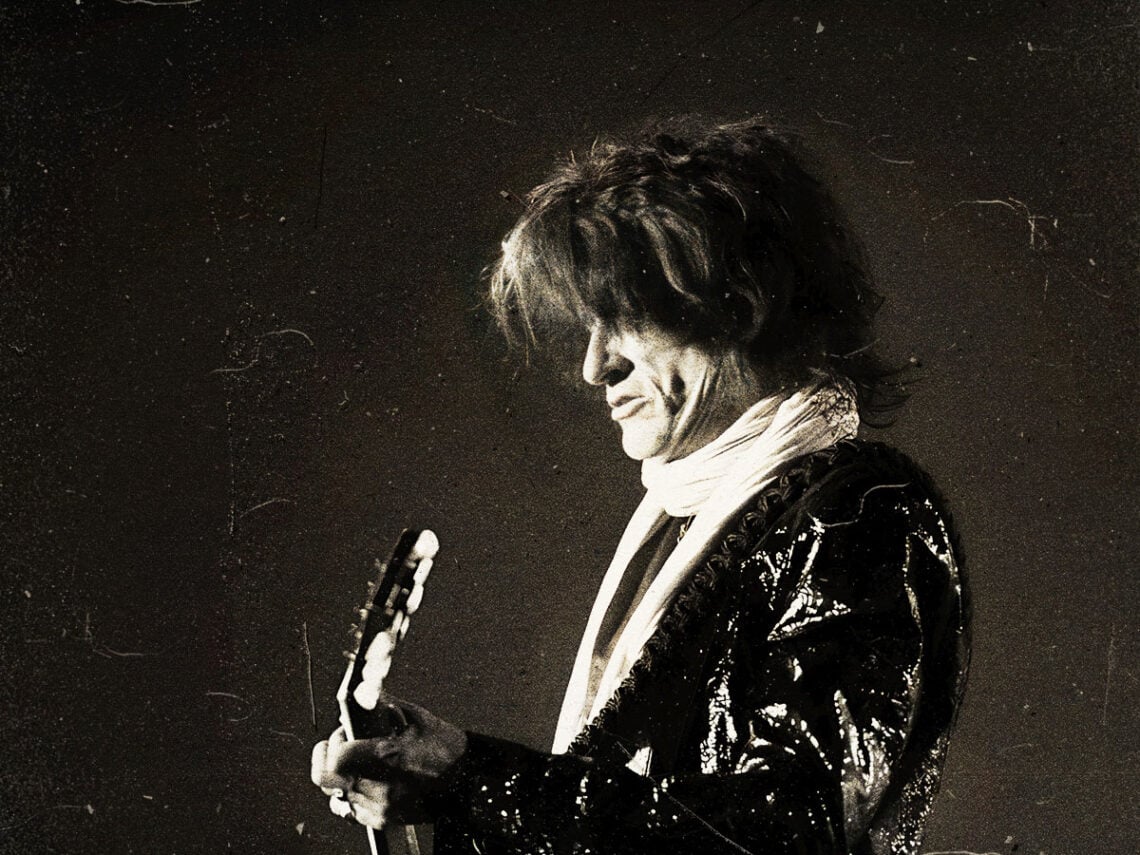
The guitarist Joe Perry called one of the best in blues rock: “Something new”

If there’s one thing Joe Perry understands more than most, it’s that originality is tough to master. As he once said, “It’s tough to work in such a finite space and do something new and interesting.”
Though this is probably a sentiment most rock icons share, it feels particularly expressive considering how Aerosmith has always been subjected to the same kind of criticisms as bands like Led Zeppelin, or any other polarising rock group deemed too commercial by a large chunk of rock fans with eyes only for the “real” ones like the Stones. But back then, none of it seemed to irk Perry all that much.
“We just wanted to make some noise,” he once told Louder. And for many in their circle, it was very much the same – a bunch of outsiders finding respite in the volume of not giving a shit about what it all meant so long as you were having a good time and doing what you wanted to do. “I was always kind of an outsider at school,” he said, adding, “Rock ‘n’ roll was a place I could go and nobody told me ‘No’.”
It was also the one place he could go where originality didn’t always mean doing something new by definition; it meant doing something “a little bit more electric” every time, despite the consistent external pressures and, of course, the judgmental eyes of others. This also meant maintaining authenticity when others seemed intent on placing them in a box; like calling them heavy metal when, in all honesty, they were anything but.
However, that’s also because Perry and his bandmates preferred to be likened to the nature of the concept itself, where ethos and attitude matched up to the sex, drugs and rock ‘n’ roll mantra like a proud banner that borrowed from metal without actually subscribing to it. Like they belonged only to themselves, no matter the ebbs and flows of their journey or the explosiveness of their comeback in the late 1980s. Originality was being untouchable because they could. It was crossing over into other territories because no one was stopping them.
This is also why Perry once praised Stevie Ray Vaughan: “It’s tough to work in such a finite space and do something new and interesting,” he told Classic Guitar in 2004. “I guess that’s why there aren’t too many fresh new blues songs. But you can’t be afraid to try it. I think Stevie Ray Vaughan was one of the best guitarists to get something new out that space.”
He added: “He knew his chops, obviously, and he’d paid his dues too, but he also wrote a lot of cool songs that crossed over into rock-land.”
Like many of their contemporaries, Aerosmith saw blues as a sort of springboard, but what Perry particularly appreciated about Vaughan was that he, too, didn’t stick to the same cloth he was cut from. He was a blues pioneer, yes, but he also ventured out whenever inspiration struck, decidedly establishing himself as someone who constantly shifted around, proving that you could leave your own camp once in a while and still be successful.
But Perry also knows that isn’t the sole recipe for success – you don’t have to be a jack of all trades to earn a name. He once used AC/DC as a “prime example” of a leading blues rock group, saying that they only “move the furniture around a little” each album, but it still “works” because that’s the space they’ve always held on to. But it comes with a subtle progression that ensures they never fall victim to stagnation. In that way, originality is rarely about something different as opposed to doing it well.
