


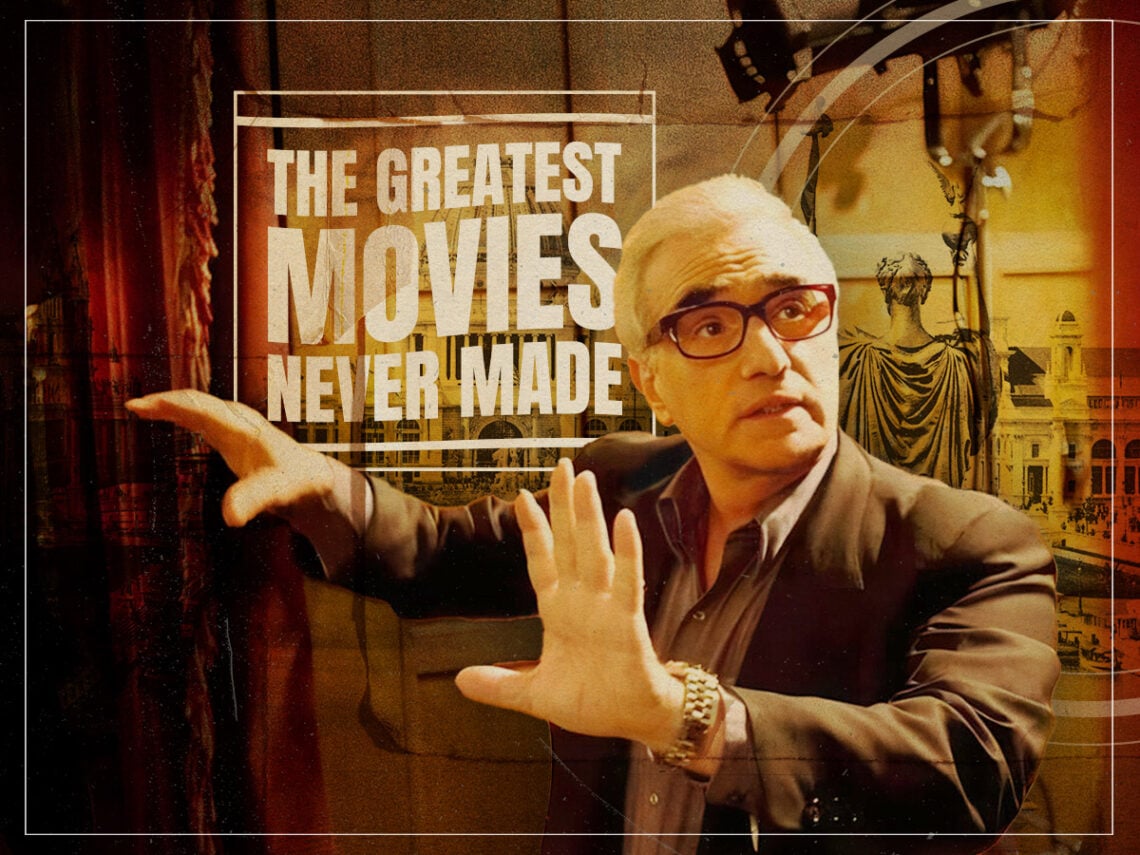
The greatest movies never made: Martin Scorsese’s ‘The Devil in the White City’

As one of the greatest directors in cinema with a career stretching more than half a century, Martin Scorsese has curated a diverse and eclectic filmography that’s right up there with the best. The Devil in the White City could have combined many of his hallmarks into a single tantalising movie, but it wasn’t to be.
The historical nonfiction book penned by Erik Larson seems tailor-made for the screen, with the interweaving narrative chronicling the development of the 1893 World’s Fair in Chicago and how it coincided with the atrocities committed by HH Holmes, the career criminal widely believed to be the first serial killer to ever plague the United States.
It goes without saying that Scorsese and crime stories go hand-in-hand, especially when there’s a complicated and complex figure at the centre. Mean Streets, Taxi Driver, Casino, and Goodfellas all operate in the grey areas between self-perceived heroism and infamy, turning irredeemable characters into engaging protagonists, more often than not realised through incredible acting performances.
Digging into unsavoury periods in American history has become another Scorsese hallmark, whether it was the brutality on which the ‘Big Apple’ was built in Gangs of New York, the horrors at the heart of unstoppable expansion that defined Killers of the Flower Moon, or the catastrophic domino effects of greed and corruption prevalent in The Wolf of Wall Street.
Psychologically driven stories in which the central figure is, at times, a terrifying force of nature, a misunderstood outsider, or a determined individual going against the grain of societal convention have been intrinsic to everything from Cape Fear and Shutter Island to Bringing Out the Dead and The King of Comedy, while The Age of Innocence showed Marty was no slouch mounting a lavish 19th-century period piece, either.
Taking all of those disparate elements that have yielded such consistently great work and then dropping modern-day muse Leonardo DiCaprio into the mix, playing decidedly against-type as the murderous Holmes, gave The Devil in the White City the potential to be the definitive Scorsese picture in more ways than one.
Confessing to 27 murders before being hanged in May 1896, many of his crimes were committed in a three-story building that was dubbed the ‘Murder Castle’, where a series of secret rooms and torture chambers lured a string of unwitting victims to their grisly demise.
Pitting it in direct opposition to the ambitious dreams of architect Daniel Burnham would have created a unique sense of juxtaposition that would, in the loosest sense of the term, have each man positioned as the notion of good and evil, operating at the same period tied together by the same event, but going about their business in drastically different ways with completely opposing goals in mind.
The Devil in the White City was first announced in 2010 when DiCaprio’s production company Appian Way purchased the rights, with Billy Ray on screenwriting duties and Scorsese attached to direct. For years it was on the cusp of happening, only for the key players to repeatedly busy themselves with so many projects that the acclaimed actor and filmmaker eventually stepped back altogether.
By 2019, Scorsese and DiCaprio had reduced themselves to ceremonial executive producer credits, and three years later, Keanu Reeves entered talks to star in a miniseries. When he dropped out, proposed distributor Hulu also jumped ship, leaving The Devil in the White City floating aimlessly around developmental oblivion as of 2024.
It had everything the world has come to expect from a Scorsese movie all in one place, complete with the mouthwatering prospect of seeing DiCaprio as a remorseless serial killer. Once the wheels began to fall off, they could never be attached, though, robbing cinema of what stood every chance in the world of being yet another one of the maestro’s masterpieces.
