


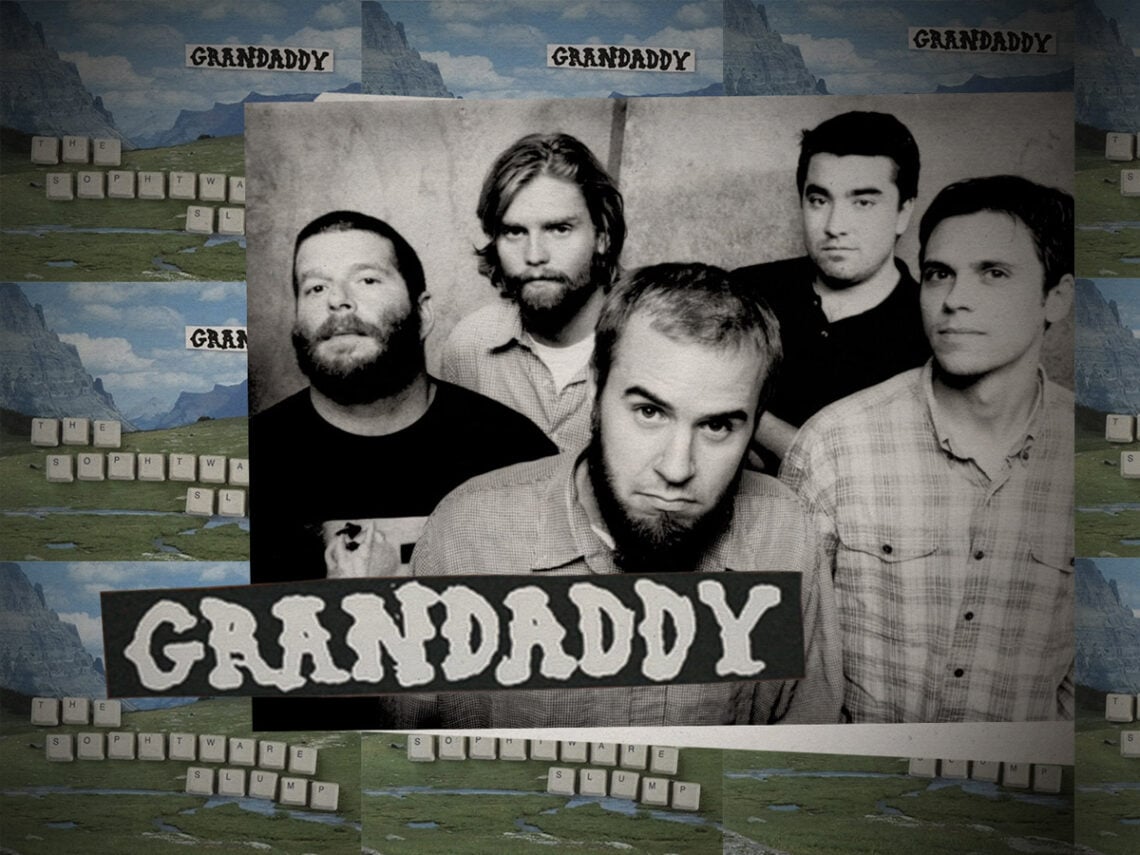
“America’s ‘OK Computer'”: The Grandaddy album that got AI right 25 years early

Social media didn’t exist. Smartphones and doom-scrolling didn’t exist. The internet was mostly a blissful carnival of GeoCities fan sites and hamster dances. So why was there such a sense of impending doom lurking over the technology-minded records of the late 1990s and early 2000s?
If anything, the music of the year 2000 itself should have been joyous and celebratory, as mankind had just managed to survive the existential threat of the dreaded ‘Y2K bug’ and could now carry on with business as usual, watching Friends, playing with their new PS2s, and investing in unsinkable dotcom start-ups.
Instead, the summer of 2000 brought with it an odd mini-wave of uneasy indie rock; glitchy dial-up music, resigned to be illegally downloaded, centrally focused on isolation and human frailty in a new world of simplified, front-facing emojis. Yes, that certainly sounds like a brief summary of Radiohead’s Kid A, but that record didn’t come out until the autumn.
The warm, sunny summer days of 2000, which were appropriately also my last before starting university, were spent with albums better suited to a bunker: Broadcast’s The Noise Made By People, Lambchop’s Nixon, Clinic’s Internal Wrangler, Black Box Recorder’s The Facts of Life, and Modest Mouse’s The Moon and Antarctica. The one arguably getting the most buzz in the music press, though, was the second album by a fairly obscure Modesto, California band called Grandaddy.
The record was titled The Sophtware Slump as a punny reference to the expression ‘sophomore slump’, a well-established rock and roll cliché about successful new bands always crapping the bed with their second album, usually because they try to get all experimental and pretentious instead of sticking with what had worked the first time.
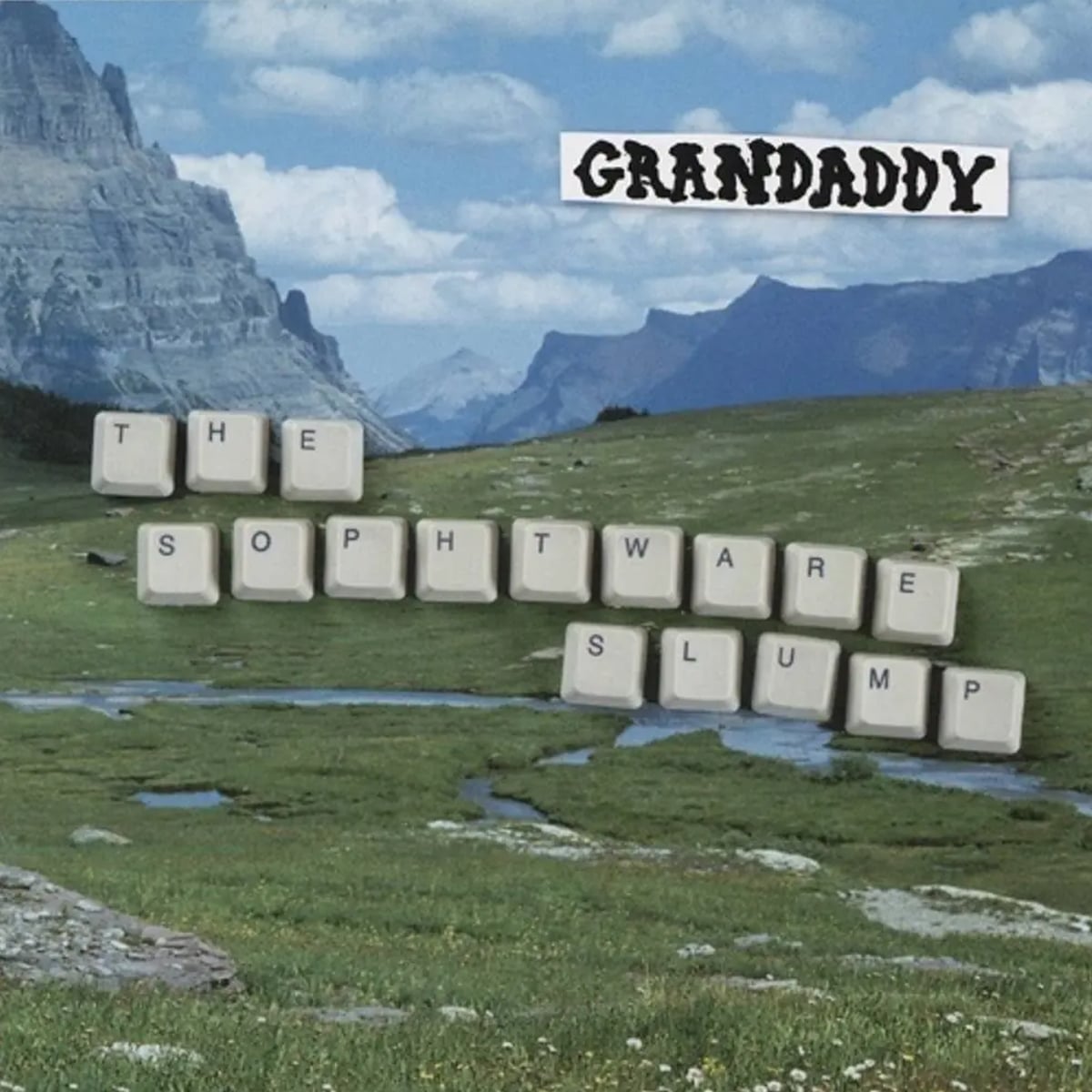
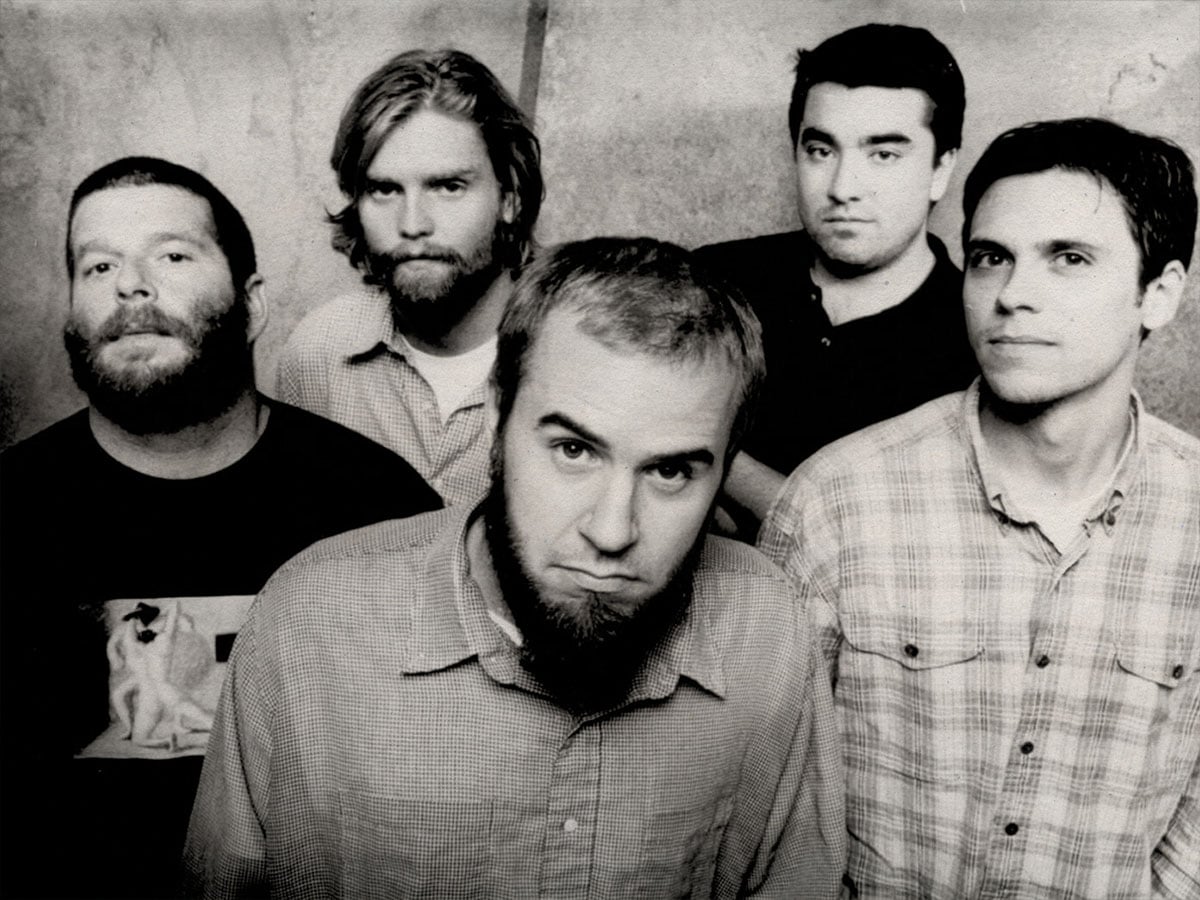
In Grandaddy’s case, the phrasing was doubly tongue-in-cheek, because their first album of plonky, Weezer-ish electro-pop, 1997’s Under the Western Freeway, hadn’t been successful in the first place; at least not in terms of record sales. Critics were at least interested enough to pay attention to their next effort, though, and singer/songwriter Jason Lytle rewarded them by making one of the best albums of the new millennium, even if he would eventually pooh-pooh its quality himself.
As would remain the case throughout Lytle’s career, the British public was inexplicably far more receptive to his offerings than his fellow Americans, and The Sophtware Slump avoided the sophomore slump by reaching number 36 on the UK charts (no such dents were made in the US). It also landed on numerous ‘best of the year’ lists on both sides of the Atlantic, with many critics understandably tucking Grandaddy into the same bed as The Flaming Lips, Mercury Rev, and Sparklehorse, indie bands that had all worked with producer Dave Fridmann, and all had a similar dynamic of a high-pitched, Neil Young-ish vocal hovering over a psychedelic space-rock lava pit.
Lytle freely admitted being a fan of those groups and being inspired by Fridmann’s production techniques while self-producing The Sophtware Slump, which he recorded alone in a Modesto farmhouse. Rather than merely trying to make his own version of a Fridmann record, though, as a younger artist might have done, the 30-year-old managed to carve out a distinctive Grandaddy sound, influenced as much by his drinking, cocaine use, depression, and countless days of obsessive keyboard tapping and tinkering, sweating profusely in the California heat.
His brain, like many of our brains in the year 2000, was an increasingly stressed-out mess of new-fangled, on-the-fly digital adjustments, whether in the studio or just existing in the world. Text messages were suddenly replacing phone calls, new songs could be leaked online and downloaded by random people in Argentina or South Korea, and any forgotten factoid could now be looked up and instantly recalled without having to exercise one’s brain tissue or utilise any previous life experience. MapQuest was cool for getting around, too, but you still had to print that shit out.
Anyway, out of all these confusing experiences came the songs of The Sophtware Slump, beginning with the mood-setting opening number, ‘He’s Simple, He’s Dumb, He’s the Pilot’, in which Lytle time-stamps the moment almost ham-fistedly before introducing his weary outlook on the digital age.
“Adrift again, 2000 man / You lost your maps, you lost the plans / Did you hear them yell, ‘Land, damnit, land?’ / You say you can’t / Well, I hope you can, I hope you can”.
On ‘Broken Household Appliance National Forest’, he tries to square the human obsession with new technology against our equal inclination toward the disposable, and how the vast, ignored natural spaces around us will wind up housing the latter: “Meadows resemble showroom floors / Owls fly out of oven doors / Stream banks are lined with vacuum bags / Flowers reside with filthy rags”.
The two tracks that really demanded attention on a first listen back in the summer of 2000, though, were the ones centred around the character of Jed, a self-aware, poetry-writing robot that Lytle had already introduced on Grandaddy’s 1999 EP Signal to Snow Ratio. The song ‘Jed the Humanoid’ is a slow, sparse, spoken-word tale told from the perspective of a man who managed to build a functional AI out of household items, an achievement he initially celebrates with glee: “Jed could run or walk / sing or talk / And compile thoughts / And solve lots of problems / We learned so much from him”.
After a while, though, Jed’s inventors start taking him for granted and paying him less attention, and while they’re away at a convention one day, the depressed robot drinks himself to death. “He fizzled and popped / He rattled and knocked / And finally he just stopped”.
It’s a devastating take on AI from 25 years ago, one that packs maybe a much stronger punch now, when our fear of sentient robots is growing, and the concept of AI’s ‘humanity’ is running us into philosophical and ethical whirlpools. Jason Lytle wasn’t actively thinking about any of those sorts of big questions when he created Jed the Humanoid, though. As he acknowledged to The Line of Best Fit in 2011, and as is somewhat more clear on another Sophtware Slump track, ‘Jed’s Other Poem’, the bot was a stand-in for Lytle himself.
“I used Jed as my therapy vehicle, I guess,” Lytle said, “…I was attempting to approach the subject of drinking, and possibly the fact that you may perhaps drink a little bit too much… Humour has always been way up there at the top of my list of dealing with anything that could be considered serious. Sometimes you don’t wanna be smacked in the face with certain bits of reality like that.”
Naturally, in 2000, the various appearances of sad androids and bleak landscapes drew Grandaddy a lot of comparisons to Radiohead, with The Sophtware Slump practically acquiring the unofficial subtitle of “the American OK Computer” (as noted, Kid A hadn’t quite come out yet).
Lytle wasn’t too bothered about the connection. “I think there’s some shared concern there,” he told the Daily News in 2001, “Radiohead seems to have better resources and better capabilities in getting a lot of the ideas across. I feel like we’re coming from a more backward version of that. Almost like the rancher or the farmer who held out for as long as possible and then decided to buy his first computer.”
Lytle explained in the same chat that he wasn’t a “technophobe”, but was merely worried about the “inevitable effect technology is going to have on innocence and creativity. I’m just trying to keep up, and I probably represent a lot of people out there who are just trying to keep up”.
Grandaddy put out two more records of big-sky, high-strung indie-pop before breaking up in 2006, never having broken through to chart success in the way some of the other ‘American Radioheads’, including The Flaming Lips and Wilco, had managed to. Lytle relocated to Montana and released a couple of solo albums before reforming Grandaddy in 2017.
In 2020, just in time for the terrible sadness of the Covid age, Lytle released a new version of The Sophtware Slump, recorded entirely on a wooden piano. What was electronic may yet become organic again.
